For years, the Chevrolet Bolt may have been one of General Motors most underrated success stories. It never carried the price tag of the 2026 Chevrolet Equinox EV, and it never matched the performance numbers of the Chevy Blazer EV SS. Yet for many Americans, the Bolt represented something rare in the electric vehicle market. An EV that ordinary people could actually afford.
Now, according to a new report from GM Authority, General Motors appears to be developing a new electric vehicle platform that could bring some of that Bolt philosophy into the next generation of mainstream EVs. Electrek reports that GM is now working on the next evolution of its dedicated EV platform, codenamed BEV-N internally, and that the first vehicle to use it could arrive within the next few years.
Before diving into what this new BEV-N platform could mean, ask yourself this question. What matters more to you in an EV, a long range number, or a price that makes the vehicle realistically affordable? Keep that question in mind, and share your answer in the comments below.
What Is GM’s Reported BEV-N Platform?
According to GM Authority, General Motors is reportedly working on a new architecture being developed for mid market electric vehicles. The report suggests it may eventually replace the current BEV3 architecture, the same underlying platform that today powers the Equinox EV, the Blazer EV, and a handful of Cadillac models. Electrek confirms this lineage, noting that GM’s current BEV3 architecture underpins the Chevy Equinox EV, Blazer EV, Cadillac Lyriq, Vistiq, and Optiq, as well as the Honda Prologue and Acura ZDX.
More importantly, the report suggests that the first production vehicle expected to use the new platform could be a familiar name. The next generation Chevrolet Equinox EV, with the Blazer EV following close behind. Electrek’s sourcing lines up with that timeline, reporting that the first vehicle to arrive on the platform will be the Chevy Equinox EV in late 2028 or early 2029, with the Blazer EV picking up the architecture afterward.
That detail may sound minor at first glance. It is not.
Why The Equinox EV And Blazer EV Matter More Than People Realize
When most people think about GM’s EV future, they often picture vehicles like the Hummer EV or the Cadillac Escalade IQ. Those are technological showcases. But they are not necessarily the vehicles that will decide whether GM wins the next phase of the EV race. The Equinox EV and Blazer EV sit much closer to the center of the market. They are crossovers built for families. We have already shown how one family found the Equinox EV better suited for kids and aging drivers than pricier alternatives in our piece on the Equinox EV’s everyday family appeal, and that mainstream usefulness is exactly why GM may be choosing these two nameplates to debut its next architecture.
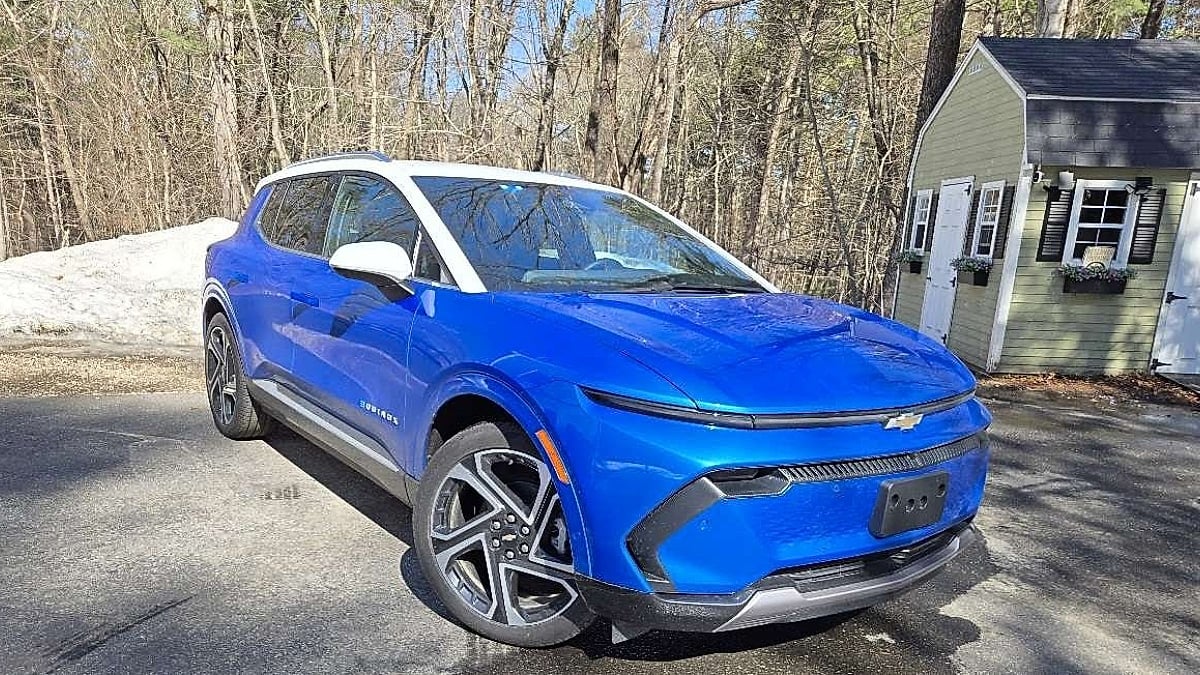
The Equinox EV has not just sold well, it has become a genuine sales leader. We documented this directly in our story on how the Equinox EV became a best seller despite a major weakness. If GM is staking its next platform on the vehicles people are actually buying, rather than the vehicles it expected them to want, that tells us something important about where the company’s priorities now sit.
GM May Have Learned A Lesson From The Bolt
The hidden story here is not simply that GM is building another EV platform. The hidden story is that GM may be quietly admitting what many shoppers have said for years. Affordable EVs matter. We saw this play out firsthand in our coverage of the returning Bolt, in the return of the Chevrolet Bolt as GM’s answer to the 2026 oil crisis, where a sub $30,000 hatchback became GM’s sharpest weapon against rising gas prices and an EV market full of premium options.
The Bolt was never the fastest EV. It was never the most luxurious. But it offered something competitors did not, a realistic path into EV ownership. Our own road test confirmed as much in our 2027 Bolt RS driving impressions, where a longtime Bolt owner and a Torque News tester both agreed on what GM got right. Even after the original Bolt’s production ended, owners kept singing its praises, something we found again when one owner reported just 2 to 3 percent battery degradation after 91,000 trouble free miles.
Is GM Moving Beyond Its Original Ultium Vision?
When GM first unveiled its Ultium strategy, the company promised an all electric future built on a highly flexible architecture. Large packs. Long range. Multiple vehicle segments. Much of that vision became reality, and our road trip coverage backs that up. One Equinox EV owner squeezed an unexpected 4.1 miles per kWh out of a 2,200 mile road trip in our story on tailwinds and drafting semis on a record setting Equinox EV trip.
But the market evolved. Interest rates climbed. Buyers grew more price conscious. That shift in mood is visible in real owner accounts too, including one driver who described winter range dropping to just a third of what GM advertised. Affordability, range honesty, and predictability have become the industry’s most important battleground, and that is exactly why the BEV-N story feels bigger than a routine platform update.
Why A Mid Market EV Platform Could Be Exactly What GM Needs
One of the biggest challenges facing automakers today is balancing cost, range, technology, and profit. Consumers want lower prices. Automakers need healthy margins. A dedicated mid market EV platform could help solve all three by leaning on high volume vehicles like the Equinox EV and Blazer EV. GM has already shown it understands the manufacturing side of that equation, something we detailed closely in our report on how GM’s new batch build process at Fairfax Assembly borrows from Tesla’s playbook to cut cost and complexity.
By focusing on vehicles people already buy in volume, GM can lower manufacturing costs without sacrificing the comfort and feature set that owners want. One Blazer EV owner put real numbers behind that tradeoff in our story on saving 350 dollars in energy costs over 6,000 miles compared to a Honda Civic, proof that affordability and practicality can coexist in the same vehicle.
What Could This Mean For Future Chevrolet EVs?
The Equinox EV and Blazer EV may only be the beginning. If BEV-N proves successful, the architecture could eventually support more Chevrolet, GMC, Buick, and Cadillac products. That raises questions shoppers are already asking. Will future EVs become cheaper. Will charging improve. Our coverage of GM’s broader energy ambitions, including how the GM Home Energy System is already working well with current Equinox EV owners, suggests the company is thinking beyond the vehicle itself toward a fuller ecosystem of affordability and convenience.
At this stage, many of those questions remain unanswered. But the existence of a new mid market architecture suggests GM is actively rethinking how to make its EV lineup more accessible to everyday families, not just early adopters with deep pockets.
The Bigger Question Facing GM
Perhaps the most interesting question is not whether the Equinox EV and Blazer EV will adopt BEV-N. It is what BEV-N says about General Motors long term vision. Is the company simply replacing an aging architecture, or is it building the foundation for a second, more mature wave of EV adoption. After 15 years covering this industry, I have learned that the companies that win are rarely the ones that innovate first. They are the ones that learn fastest, a lesson we have already seen play out in real time with the Bolt’s surprising comeback, detailed in our report on the return of Chevy’s once top selling Bolt for 2027.
If GM’s reported BEV-N architecture really is focused on affordability, scale, and mainstream buyers, it may show the company has been paying very close attention to the lessons of the last several years, including some hard ones, like those covered in our look at Consumer Reports sharply criticizing the early Blazer EV launch. The lesson learned there about software and quality control may be just as important to BEV-N as battery chemistry or platform cost.
What Do You Think?
Would you rather see GM focus on building more affordable EVs in the spirit of the Bolt, or continue pushing larger, more premium electric vehicles? And if the next generation Equinox EV and Blazer EV become the first vehicles on GM’s reported BEV-N platform, would that make you more interested in either model? Let us know your thoughts in the comments section below.
Return tomorrow, or check our Torque News Home Page for more interesting automotive news articles.
About The Author
Armen Hareyan is the founder and Editor-in-Chief of Torque News and an automotive journalist with over 15 years of experience writing car reviews and industry news. Now based in the Charlotte region (Indian Land, SC, he founded Torque News in 2010, which since then has been publishing expert news and analysis about the automotive industry. He can be reached at Torque News on X, Linkedin, Facebook, and Youtube. Armen holds three Masters Degrees, including an MBA, and has become one of the known voices in the industry, specializing in the landscape of electric vehicles and real-world stories of actual car owners. Armen focuses on providing readers with transparent, data-backed analysis bridging the gap of complex engineering and car buyer practicality. Armen frequently participates in automotive events throughout the United States, national and local car reveals and personally test-drives new vehicles every week. Armen has also been published as an automotive expert in publications like the Transit Tomorrow, discussing how will autonomous vehicles reshape the supply chain, and emerging technologies in vehicle maintenance.
Follow us today…