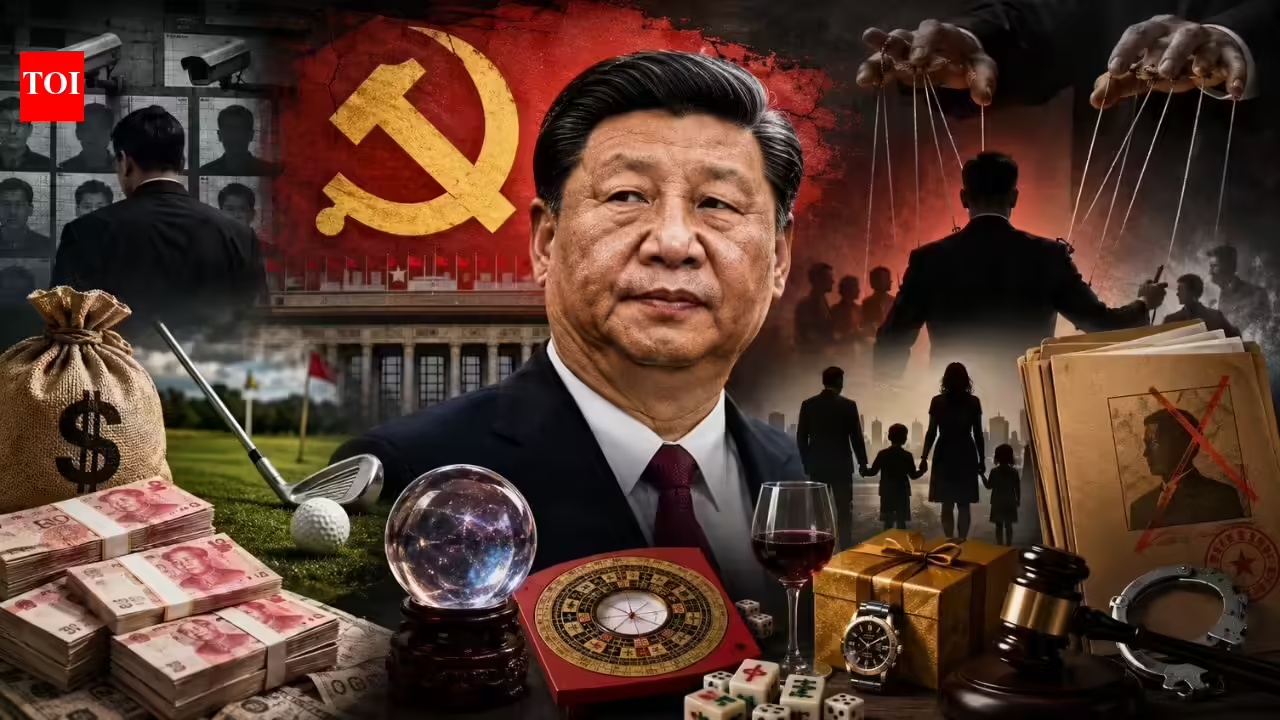
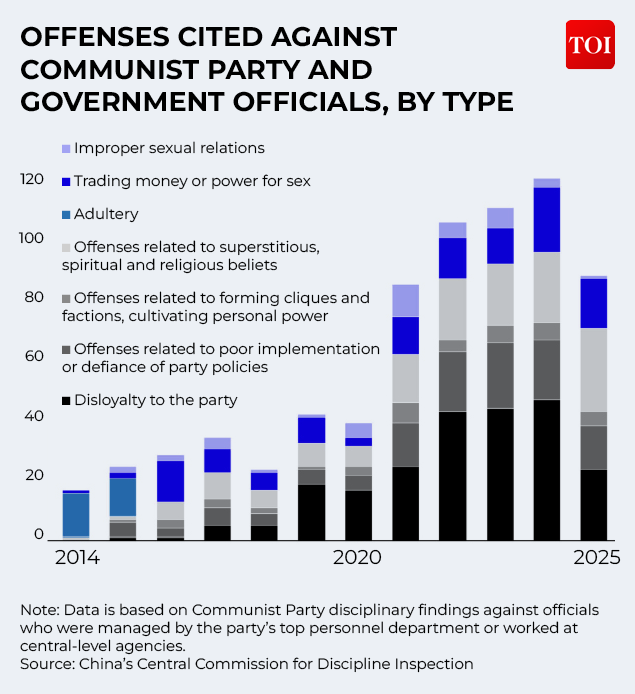
For more than a decade, Chinese President Xi Jinping has presented his anti-corruption campaign as a battle to cleanse the Communist Party of graft, excess and abuse of power. What began in 2012 as a drive against bribery and influence-peddling has since evolved into something much broader – a campaign that increasingly scrutinises not only what officials do, but also what they think, whom they associate with, how they spend their leisure time, what beliefs they hold and even whether they consult fortune tellers.A recent Wall Street Journal investigation revealed how disciplinary action against Communist Party officials has expanded from conventional corruption offences to an ever-growing catalogue of political, ideological and moral violations. Party watchdogs are now targeting behaviour ranging from accumulating excessive debt and forming political cliques to practising feng shui, playing golf, gambling, maintaining extramarital relationships and failing to properly supervise family members.The shift offers a revealing glimpse into Xi’s vision for governing China. Corruption remains a target, but the campaign has increasingly become a mechanism for enforcing political loyalty, ideological conformity and behavioural discipline across the vast Communist Party apparatus.
From anti-graft campaign to loyalty enforcement
When Xi assumed power in 2012, China faced widespread public anger over corruption. Lavish lifestyles among officials, misuse of public funds and allegations of influence-peddling had damaged the Communist Party’s credibility.Xi launched what became one of the largest anti-corruption drives in modern history, promising to pursue both “tigers and flies” — senior leaders and lower-level officials alike. The campaign quickly became a defining feature of his rule.
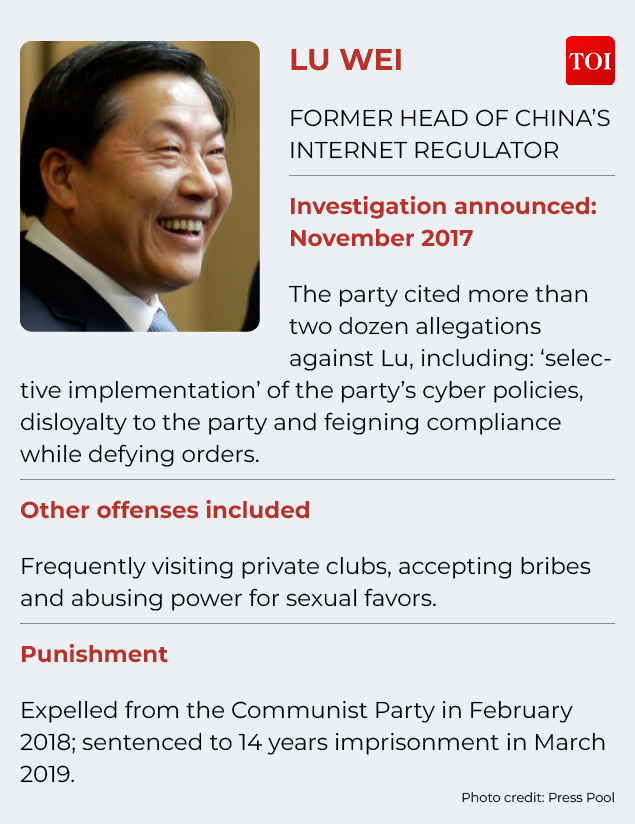
According to a 2023 report cited by Bloomberg, more than 1.5 million government officials had been brought down through disciplinary investigations since Xi took office. The campaign later expanded into major sectors such as finance, healthcare, energy and state-owned enterprises.But the Wall Street Journal’s analysis of disciplinary records covering more than 940 officials punished between 2013 and May 2026 suggests that the campaign’s focus has changed substantially. Punishment notices that once concentrated on bribery, embezzlement and adultery now contain lengthy political denunciations accusing officials of disloyalty, factionalism, ideological weakness and failure to implement Beijing’s directives.The result is a disciplinary system that increasingly measures not only corruption, but also political reliability.
The turning point: ‘Political discipline’ enters the equation
A major turning point came in 2014 with the downfall of Zhou Yongkang, a former security chief and one of the most powerful figures ever purged in Communist Party history.While corruption allegations formed the core of the case, authorities also accused Zhou of violating “political discipline”. The charge signalled a significant expansion of the anti-corruption campaign.
Thereafter, accusations of disloyalty began appearing more frequently in disciplinary reports. Officials were increasingly criticised for selectively implementing central directives, pretending to comply while secretly resisting orders, or failing to demonstrate sufficient commitment to party objectives.The language used by investigators also became more ideological. Rather than simply describing criminal misconduct, disciplinary statements started portraying fallen officials as moral and political failures who had betrayed the party’s mission.This reflected Xi’s belief that corruption and political disobedience are closely linked threats to Communist Party rule.
Why loyalty matters more than ever
Xi’s consolidation of power has coincided with growing economic challenges, geopolitical tensions and domestic pressures.As China’s growth slowed and structural economic problems emerged, Beijing increasingly demanded strict implementation of central policies. Local officials who previously enjoyed considerable discretion found themselves under closer scrutiny.The Wall Street Journal investigation found that officials are now routinely punished for failing to carry out national priorities, including environmental targets, industrial policy goals and economic restructuring plans.
In effect, corruption investigations have become intertwined with policy enforcement.For Xi, the campaign appears designed not merely to punish wrongdoing but to ensure that every level of government follows Beijing’s instructions without deviation.
The new offence: Failing China’s economic mission
One of the clearest examples of this shift involves officials accused of undermining Xi’s economic agenda.During earlier decades, local governments often pursued aggressive infrastructure expansion financed by borrowing. Massive investments in highways, railways, housing projects and industrial parks became hallmarks of China’s growth model.However, Xi’s administration has increasingly sought to reduce debt, encourage technological innovation and promote more sustainable development.
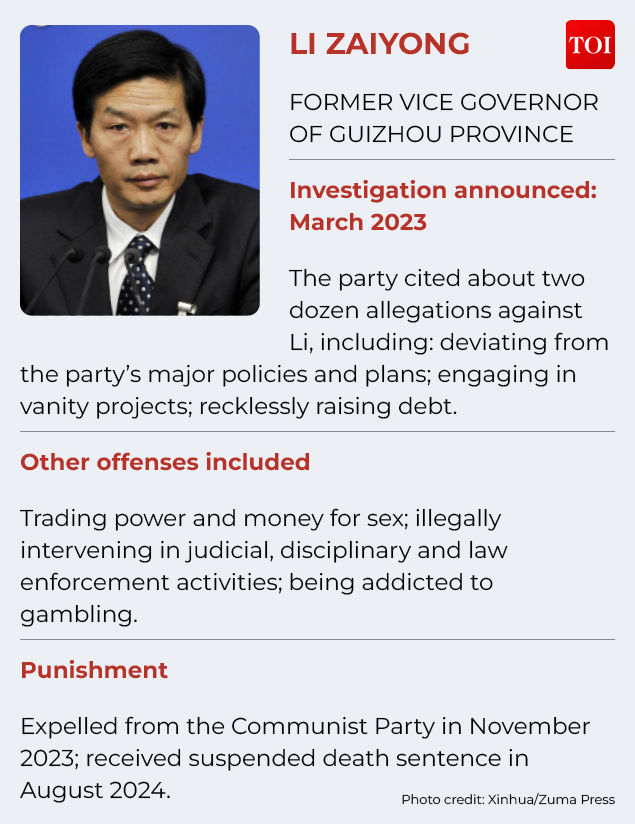
Officials who continue pursuing debt-fuelled prestige projects are now being punished not merely for financial mismanagement but for violating central policy.The case of former Guizhou vice-governor Li Zaiyong illustrates this transformation.Authorities accused Li of pursuing vanity tourism projects, recklessly accumulating debt and deviating from major party policies. Investigators said he backed numerous tourism ventures that later became inefficient or abandoned while generating substantial financial losses.Li later admitted that he pursued large-scale projects partly to attract attention from superiors and improve his promotion prospects.
His case demonstrates how economic performance is no longer judged solely by growth figures. It is increasingly evaluated through the lens of Xi’s policy priorities.
The war on superstition
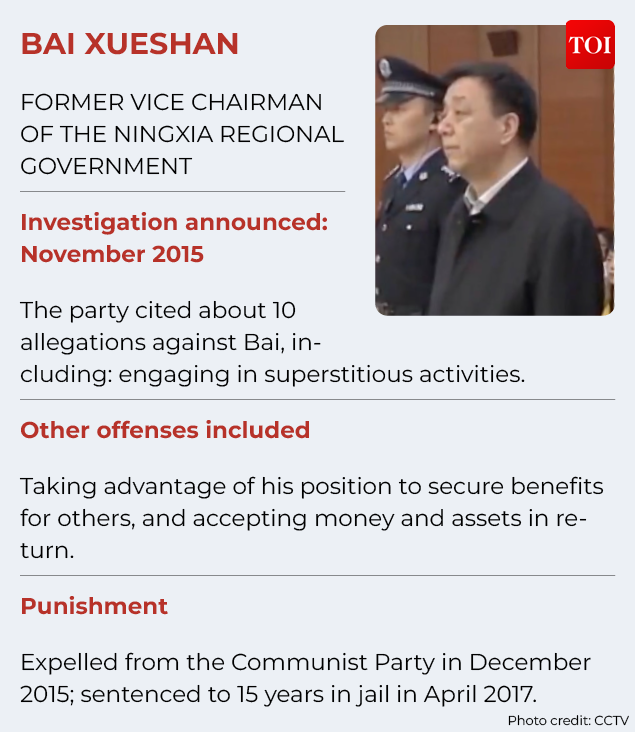
Perhaps one of the most unusual aspects of the campaign is its growing focus on what authorities describe as “superstitious activities”.The officially atheist Communist Party has long discouraged religious and mystical practices among members. Yet disciplinary records show a notable rise in cases involving fortune telling, feng shui, spiritual advisers and other forms of traditional belief.According to the Wall Street Journal analysis, more than 160 of the officials reviewed were cited for engaging in superstitious behaviour.
The offences range from consulting fortune tellers and praying to deities to relying on spiritual masters or altering construction projects based on feng shui principles.The campaign reflects a longstanding ideological concern within the Communist Party. Party doctrine is rooted in Marxism-Leninism, which promotes scientific materialism and rejects supernatural explanations.Officials accused of embracing mysticism are often portrayed as having abandoned communist principles.Some disciplinary reports specifically criticise cadres for “not believing in Marxism-Leninism but believing in ghosts and gods”.
Feng shui in the dock
One of the most striking examples involved Bai Xueshan, a former vice chairman of Ningxia.Authorities accused Bai of engaging in superstitious activities alongside corruption offences.Chinese media later reported that Bai repeatedly ordered reconstruction of a fountain outside a government square because he believed its positioning affected feng shui.According to accounts from former local officials, the fountain was demolished and rebuilt several times as Bai sought what he considered the ideal arrangement for fortune and prosperity.The case became symbolic of Beijing’s effort to portray superstition as incompatible with modern governance.
The curious case of golf
Another recurring target has been golf.To outsiders, golf may appear an unusual concern for a ruling party. Yet in China, the sport has long been associated with elite privilege, networking and behind-the-scenes dealmaking.In 2015, the Communist Party formally banned members from obtaining or using golf club memberships.According to BBC reporting at the time, party rules prohibited members from “obtaining, holding or using membership cards for gyms, clubs, golf clubs, or various other types of consumer cards”.The rationale was never stated explicitly. However, golf clubs had become widely viewed as venues where business leaders and officials forged relationships and negotiated deals away from public scrutiny.State media reported that dozens of state employees had already been punished for using public funds to play golf.The restrictions formed part of a broader crackdown on extravagance that also targeted luxury banquets, expensive gifts and lavish entertainment.Interestingly, the golf policy later softened. Chinese anti-corruption authorities eventually clarified that golf itself was not inherently problematic. What remained prohibited were special privileges, discounted memberships, gifts and other benefits connected to the sport.The distinction reflected a recurring theme in Xi’s campaign: ordinary activities are often acceptable, but they become suspect when linked to status, influence or corruption.
The campaign against ‘elegant corruption’
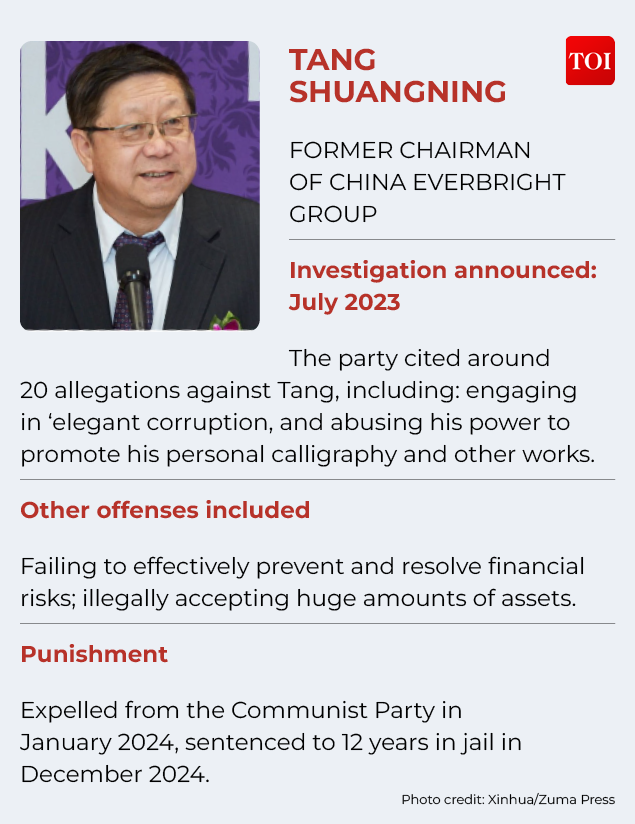
While bribery remains central to disciplinary investigations, authorities have expanded their focus to what they call “elegant corruption”.The phrase refers to more sophisticated forms of influence-peddling that may not resemble traditional cash bribes.Officials have been accused of accepting luxury liquor, cultivating expensive hobbies, promoting personal artistic works and using public office to enhance their private reputations.Former China Everbright Group chairman Tang Shuangning was accused of engaging in “elegant corruption” while promoting his own calligraphy and cultural works.The concept reflects the party’s concern that corruption has evolved alongside China’s growing wealth and sophistication.Rather than envelopes stuffed with cash, modern corruption may involve prestige, influence, luxury lifestyles and subtle exchanges of favours.
Family values become a political issue
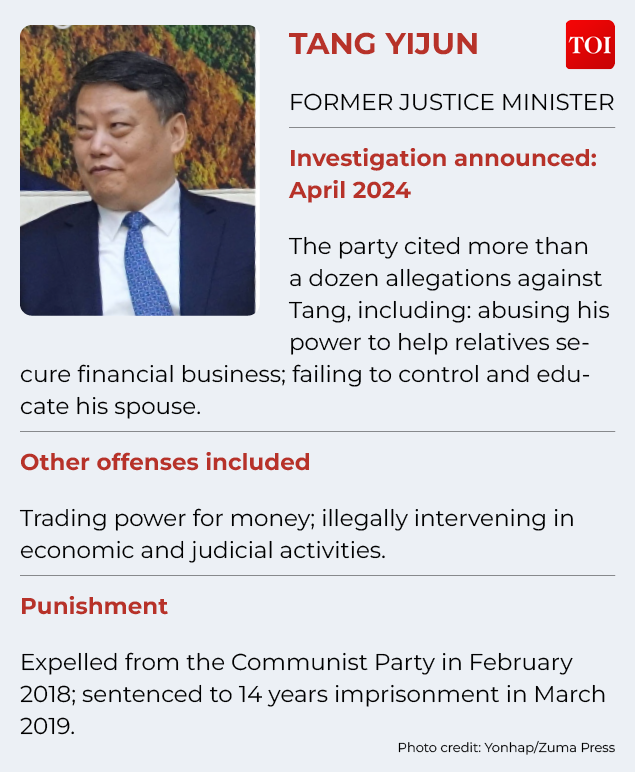
Xi’s campaign has also extended into officials’ private lives.Authorities increasingly scrutinise what they describe as “bad family values”, including failures to supervise spouses and children.Party investigators argue that corruption frequently spreads through family networks. Relatives may use political connections to secure contracts, investments or financial advantages while shielding officials from direct involvement.As a result, disciplinary reports increasingly blame officials for failing to properly manage family members.Former justice minister Tang Yijun was accused of helping relatives obtain financial benefits and failing to control and educate his spouse.Investigators alleged that family relationships became vehicles for concealing corrupt activities and receiving illicit benefits.The message is clear: officials are now expected to police not only themselves but also their households.
Sexual misconduct and moral discipline
The party has also broadened how it defines sexual misconduct.Historically, disciplinary notices often referred simply to adultery or keeping mistresses.Around 2015, authorities began using broader terminology such as “improper sexual relations”. This allowed investigators to capture a wider range of conduct deemed incompatible with party standards.The expansion mirrors Xi’s effort to present corruption as not merely a legal issue but a moral one.Extramarital affairs, sexual favours and relationships linked to political influence increasingly appear alongside financial crimes in disciplinary reports.In many cases, the language suggests that personal moral failings are viewed as indicators of broader political unreliability.
Private equity joins the blacklist
The party’s expanding definition of misconduct is also evident in financial investments.In 2023, Chinese authorities warned Communist Party cadres against investing in private equity funds.An article published by the Central Commission for Discipline Inspection argued that such investments could create conflicts of interest, provide opportunities for insider dealing and undermine public trust.Investigators found cases where officials allegedly established private equity vehicles after obtaining confidential information about companies preparing for stock market listings.Others reportedly used political influence to support businesses in which they held indirect financial interests.The warning illustrated how Xi’s campaign increasingly seeks to prevent corruption before it occurs rather than merely punish it afterwards.
The fear of factions
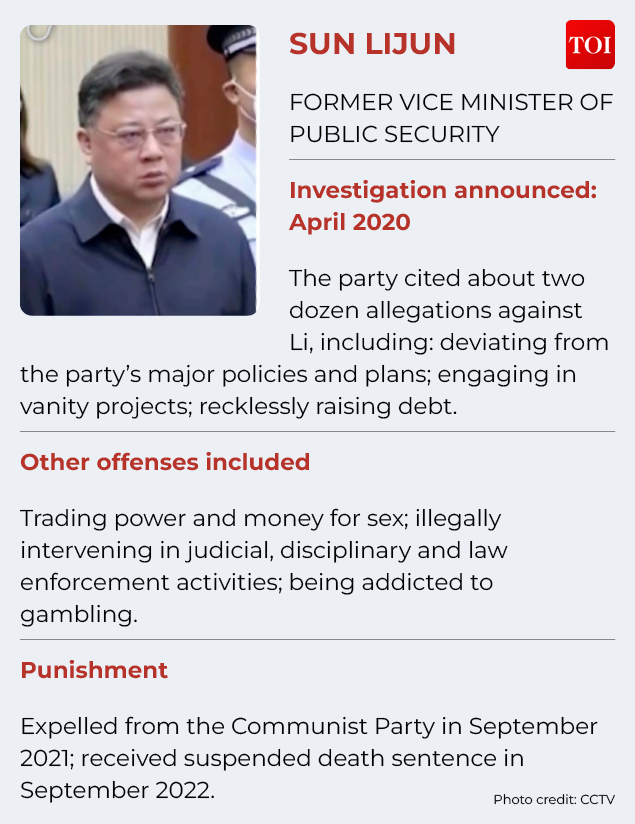
Few themes concern Xi more than political factionalism.The Communist Party officially emphasises unity under central leadership. Any alternative power centres are viewed as potential threats.Consequently, authorities have increasingly targeted officials accused of forming cliques, cultivating patronage networks or presenting themselves as intermediaries to senior leaders.The case of former vice public security minister Sun Lijun became one of the most prominent examples.Authorities accused Sun of forming factions within the party and severely damaging party unity.The charges reflected Beijing’s broader determination to eliminate networks that might challenge Xi’s authority or weaken central control.Critics have long argued that anti-corruption investigations sometimes overlap with political struggles inside the party. Supporters counter that factionalism itself creates conditions for corruption and abuse.Either way, accusations involving political cliques have become a growing feature of disciplinary actions.
A historical shadow: The party’s obsession with ideological control
The campaign’s emphasis on loyalty and ideological conformity has deeper historical roots.The Communist Party has long viewed ideological discipline as essential to maintaining power. Memories of political upheavals, including the Cultural Revolution, continue to shape elite thinking.Yet the legacy of those campaigns remains sensitive.Writing four decades after the launch of the Cultural Revolution, critic Xiaobiao Liu argued that China had never fully confronted the political excesses of that era. He contended that official narratives often obscured deeper institutional problems and discouraged independent reflection.While today’s anti-corruption drive is fundamentally different from Mao-era political campaigns, both reflect a recurring concern: ensuring ideological unity within the ruling party.The difference is that Xi’s system relies on modern disciplinary institutions, surveillance mechanisms and internal investigations rather than mass mobilisation.
Xi’s expanding definition of corruption
Viewed together, the cases reveal a significant evolution in China’s anti-corruption campaign.The traditional targets remain: bribery, embezzlement, abuse of power and illicit enrichment.But the definition of misconduct now extends far beyond criminal behaviour.Officials can be investigated for:
- Failing to implement central policies.
- Forming political factions.
- Consulting fortune tellers or feng shui masters.
- Maintaining inappropriate sexual relationships.
- Allowing relatives to exploit political connections.
- Pursuing vanity projects and excessive debt.
- Investing in private equity structures that create conflicts of interest.
- Accepting luxury privileges linked to hobbies such as golf.
- Resisting or obstructing investigations.
The result is a disciplinary system that increasingly governs behaviour, ideology and personal conduct alongside corruption.
More than an anti-corruption campaign
Xi recently told party inspectors that “The task of eradicating the soil and conditions that breed corruption remains arduous and onerous” and that authorities must maintain a “high-pressure posture unswervingly.”That statement captures the philosophy driving the campaign.In Xi’s China, corruption is no longer defined solely as taking bribes or stealing public money. It increasingly encompasses behaviour that signals disloyalty, ideological weakness, moral misconduct or deviation from party priorities.For supporters, the campaign has strengthened discipline, curbed excess and reinforced central authority. Critics argue it has become a powerful instrument for enforcing conformity and eliminating potential rivals.Either way, the boundaries of acceptable conduct inside the Communist Party continue to expand. What began as a war on graft has evolved into something much broader: a system designed to regulate how China’s officials govern, behave, associate, invest, socialise, believe and, increasingly, think.