The first round of World Cup group games is over. All 48 teams have now played once — and their adventure in the United States, Canada, or Mexico, is underway.
England impressed in an exciting 4-2 win over historic overperformers Croatia, while another pre-tournament favorite, Portugal, labored to a 1-1 draw with DR Congo. The day after Lionel Messi scored a hat-trick for Argentina against Algeria, Cristiano Ronaldo had an afternoon to forget.
Elsewhere, Ghana scored the latest winning goal of the tournament so far to deny dogged Panama a point, while tournament debutants Uzbekistan, the first ever side from Central Asia to compete at the World Cup, provided a massively spirited performance in a 3-1 defeat by Colombia.
And the day began with The Athletic revealing that Ivory Coast starting striker Elye Wahi is playing at the tournament despite being arrested on suspicion of fixing offences less than two weeks before the tournament. The 23-year-old has not yet been charged.
Here is what happened on day seven…
Matchday seven results
Is this the greatest Golden Boot race ever?
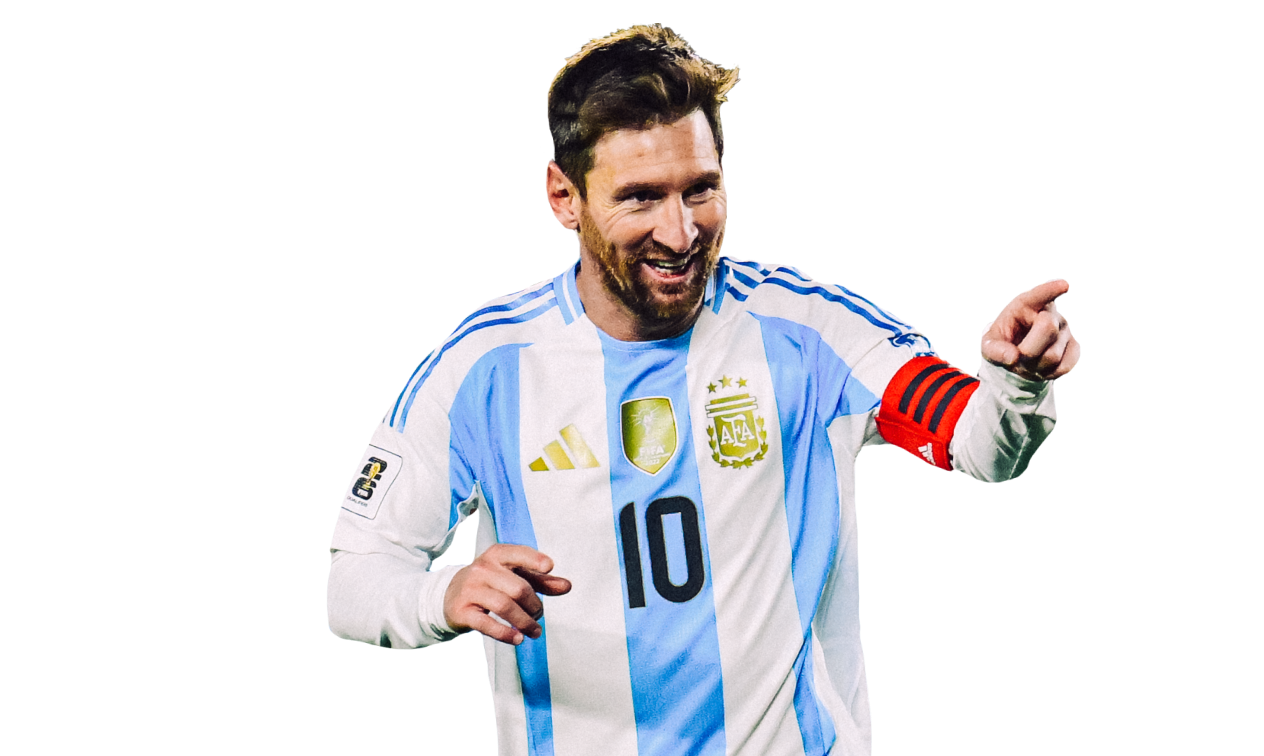
As Lionel Messi drove towards the Algerian goal in the opening minutes of Argentina’s eventual 3-0 win on Tuesday night, it felt as if the crowd did not just stand in anticipation of the goal — he would score it, of course — but in the knowledge that this is a player of which this might be the final glimpse.
Of course, that was a feeling which was also evoked by Messi’s last World Cup appearance — the Argentine magician lifting the trophy into the Doha sky — meaning it is scarcely believable that the 38-year-old is still starring four years on.
His hat-trick against Algeria means that he is leading the World Cup Golden Boot race awarded to the tournament’s top scorer — probably the only major honour in his senior or club career that he had not secured.
The list of its 21st century winners is a roll-call of the great and good — Ronaldo, Miroslav Klose, Thomas Muller, James Rodriguez, Harry Kane, and Kylian Mbappe. For a truly surprise winner, you have to go back to 1994 and Russia’s Ukrainian-born striker Oleg Salenko, who jointly won the award alongside Bulgaria’s Hristo Stoichkov.
The Golden Boot race in 2026 seems to be shaping up into a special battle. Trailing Messi by one goal are Mbappe and Kane, both former winners themselves, as well as Norway’s Erling Haaland, who also has an argument to be the world’s best striker on current form. Rounding out the chase group? The USMNT’s Folarin Balogun, after a superb performance against Paraguay.

Folarin Balogun and his USMNT team-mates celebrate during the win against Paraguay (Robert Gauthier/Los Angeles Times via Getty Images)
What’s more, amid the frenetic pace of the tournament’s opening, it seems that a far larger number of goals than previous editions may be needed to win it. Over the past six tournaments, the average number scored by the Golden Boot champion has been 6.3 — Messi is almost halfway there already. The record in a single World Cup was set by France’s Just Fontaine, who hit 13 goals in six matches in 1958.
The last male player to score 10 goals in a single World Cup — the USWNT’s Michelle Akers managed the feat in 1991— was West Germany’s Gerd Muller back in 1970. Fifty-six years on, it looks as if this year’s winner may need to match that feat.
Is this a tournament too far for Ronaldo?
On the day he joined Messi in appearing at his sixth World Cup, Ronaldo’s introduction to this tournament could not have been more opposed.
Portugal were poor as a collective in their 1-1 draw against DR Congo — failing to record a shot on target after Joao Neves’ sixth minute opener. But part of the reason why they looked poor as a collective was a tactical outlook which appeared designed to feed the ball to Ronaldo’s feet, rather than exploit DR Congo’s undefended seams.
As Thierry Henry, a World Cup winner with France in 1998, said on Fox News post-match: “The team needs to score, not you need to score.”
When Ronaldo took possession, the 41-year-old striker looked leaden. There were other attacking options in this Portugal team — as a unit, this is probably their strongest side for at least two decades.

Ronaldo on the floor at Houston’s NRG Stadium during Portugal’s 1-1 draw against DR Congo (Leslie Plaza Johnson/Icon Sportswire via Getty Images)
At club level, Paris Saint-Germain duo Joao Neves and Vitinha are the strongest midfield in world football. In front of them, Bruno Fernandes just won Premier League Player of the Season. Bernardo Silva has joined Real Madrid after a glittering spell at Manchester City. Ronaldo was the only starting outfield player who is not playing in Europe’s top five leagues.
Yet as manager Roberto Martinez tried to find a winner, he took those options off; and left Ronaldo on.
This was a sight that had been seen before — most notably when Portugal exited their last major tournament on penalties after drawing 0-0 with France in the quarter-finals at the Euros two summers ago.
Now, they are doing the same thing again — and expecting different results.
The world went wild for England. Are they the standout performers so far?
“That was the best game of the World Cup,” proclaimed German tabloid Bild. “Thank you for these 90 minutes. What a spectacle! What a festival!”
For much of the 2000s, English football overestimated itself. Proclamations of tournament wins, of golden generations, were followed by penalty shootout losses and quarter-final exits. The football itself was rarely exciting.
Perhaps the lingering effects of that feeling are why, twenty years on, English football has flipped the other way, and begun to underestimate its own ability. Heading into the tournament, a lot of analysis hinged on perceived difficulties England faced — a question mark at left-back, the players left at home, the absence of a metronomic midfielder — rather than the depth and quality they did possess.
A major part of Thomas Tuchel’s job — in many ways, the only part — is unlocking the talent latent in England’s 26-man squad, particularly going forward. In Germany two years ago, England’s run to the final was all the more startling due to their complete lack of attacking fluidity.
This England performance, in beating Croatia 4-2, was different.
Despite their ageing legs, Croatia are still a high-quality side — committed, well-organised, and exceptionally mentally strong. For a period of the second half, England’s onslaught resembled a Premier League side taking on a nursing home.

(Paul Ellis/AFP via Getty Images)
The key was finding their wide players early and in space — a privilege afforded by the regularity and fizz of their line-breaking passes. Anthony Gordon and Noni Madueke are not England’s most high-profile attackers, but both looked empowered by their centrality to the gameplan. Jude Bellingham meanwhile, in a battle for his position with Morgan Rogers, was outstanding in large spaces. Even Declan Rice’s set-pieces were exciting.
Put it together, and England’s attacking performance, given the quality of the opposition, was arguably the strongest of the tournament so far — making the world take notice. For them, the only disappointment was the concession of two sloppy first-half goals, for which they were shredded by head coach Thomas Tuchel at half-time.
But given a choice of issues, lax concentration or a blunt attack, Tuchel will be pleased with the path England chose. One is far easier to fix than the other.
What to know about Thursday’s games
Two World Cup hosts are in action as both Canada and Mexico look to build on positive starts.
Canada are in with a very realistic chance of their first World Cup win when they play Qatar in Vancouver, both sides having drawn their opening games — with the home support’s fan march to their side’s opener in Toronto one of the highlights of the first week.
Later tomorrow evening, Mexico and South Korea will play to effectively decide the winner of Group A. South Korea’s comeback win against Czech Republic last week came despite star player Son Heung-min struggling to finish his chances, with the 2002 semi-finalists tricky opponents for Mexico amid the noise and humidity of Guadalajara.
Wednesday’s first game will be seen as an opportunity by both Czech Republic and South Africa to put themselves in pole position to qualify as a third-place finisher with a win. After that, Switzerland have the opportunity to rebound from a disappointing opening draw with Qatar as they face Bosnia & Herzegovina.
Fixtures
- Group A: Czech Rep v South Africa (12pm ET; 5pm BST)
- Group B: Switzerland v Bosnia (3pm ET; 8pm BST)
- Group B: Canada v Qatar (6pm ET; 11pm BST)
- Group A: Mexico v South Korea (9pm ET; 2am BST)