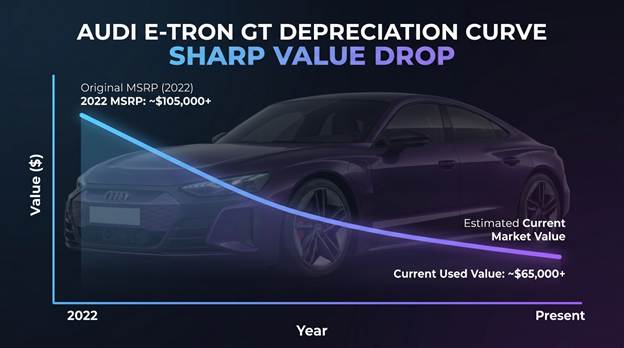
In my decades of analyzing consumer technology, computing hardware, and automotive industry trends, I have rarely seen a market overcorrection as severe – and as highly opportunistic for the savvy buyer – as the current state of the used luxury electric vehicle segment. Early adopters paid a massive premium to beta-test the future. Now, the secondary market is flooded with high-end electric vehicles that have shed tens of thousands of dollars in value. While the mainstream media focuses on slowing EV sales growth and charging infrastructure hurdles, a quiet phenomenon is taking place. If you analyze the data, the build quality, and the sheer driving dynamics of the current secondary market, one vehicle emerges as an absolute steal. The 2022 Audi e-tron GT is, without a doubt, the best high-performance electric vehicle you can buy right now. It represents a perfect storm of technological maturity, breathtaking design, and catastrophic initial depreciation, resulting in a buyer’s market anomaly that simply will not last.
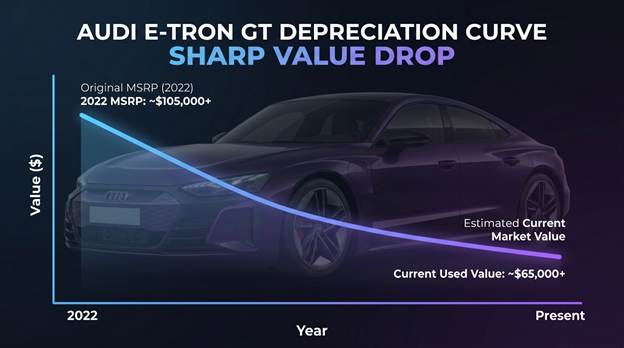
To understand why the 2022 Audi e-tron GT is currently dominating the value proposition metrics, you have to look at the math and the broader market context. According to a comprehensive five-year depreciation study published by Autoblog and iSeeCars, electric vehicles are shedding value at an alarming rate, losing an average of 58.8 percent of their value over five years. High-end luxury electric sedans often fare even worse in their first three years. When this vehicle launched, it carried a base sticker price comfortably north of $100,000, with heavily optioned Prestige models pushing much higher. It was priced as an exclusive halo car, a technological showcase for Audi’s electrified future (my own car sold for $132K when new and I bought it for under $60K last year, and it has held its value well since then).
Today, a quick scan of the secondary market reveals a vastly different landscape. Thanks to the broader EV market cooling and the heavy depreciation curve typical of high-end German luxury sedans, lightly used 2022 models are trading hands for a fraction of their original MSRP. Buyers are stepping into a near-supercar experience for the price of a well-equipped mid-tier crossover. For a comprehensive breakdown of the vehicle’s original feature sets, trims, and initial market positioning, I highly recommend consulting Edmunds’ detailed review of the 2022 Audi e-tron GT. As Edmunds correctly pointed out at the time of its release, the e-tron GT offered a thrilling mix of performance and comfort. What they couldn’t predict was how aggressively the market would discount that thrill just a few years later, turning a great car into an unbeatable bargain.
The J1 Platform And The Porsche Taycan Connection
To declare the e-tron GT the best used high-performance EV requires benchmarking it against the heavyweights it outranks, starting with its closest corporate sibling. First, we must address the elephant in the room: the Porsche Taycan. The Taycan and the e-tron GT are built on the same highly lauded underlying architecture. As detailed in a comparative technical analysis by Vanarama covering the Audi e-tron GT and Porsche Taycan, both vehicles utilize the specialized Volkswagen Group J1 platform. This platform was designed from the ground up specifically for high-performance electric vehicles, completely separate from the mainstream MEB platform used in standard consumer EVs like the Volkswagen ID.4 or Audi Q4 e-tron.
Because they share this J1 platform and the same 800-volt architecture, they deliver remarkably similar foundational dynamics. However, the used market treats them very differently. Due to the notorious “Porsche Tax” and the brand’s historically strong residual values, a used 2022 Taycan still commands a significant premium over the Audi. Furthermore, Porsche famously charges extra for nearly every conceivable feature. A base Taycan on the used market is often stripped of essentials like adaptive air suspension, advanced driver assistance, and premium audio—features that Audi included as standard or bundled in far more accessible packages. The e-tron GT gives you 95 percent of the Taycan’s dynamic brilliance and engineering pedigree for significantly less money, making it the mathematically and practically smarter financial play.
My Daily Life Driving A 2022 Audi E-Tron GT
It is one thing to look at market analytics and engineering schematics; it is quite another to experience the product daily. I don’t just analyze this vehicle from a safe, theoretical distance; I live with it. I purchased my 2022 Audi e-tron GT early last year, fully intending to keep it as a daily driver to test the realities of long-term EV ownership in the high-performance bracket.
It has proven to be an absolutely wonderful car. The driving dynamics are sublime. The dual-motor all-wheel-drive system delivers a concussive 522 horsepower (on overboost), but it is the refinement that truly impresses me. Unlike many tech-first EVs that feel like heavy, soulless computers on wheels, the Audi feels like a precisely machined driver’s car that just happens to be electric. The two-speed transmission on the rear axle—a rarity in the EV world shared only with the Taycan—gives it a violent, relentless pull at highway speeds that single-speed EVs simply cannot replicate.
Beyond the engineering, there is the undeniable emotional factor. The e-tron GT is an automotive celebrity. Nearly every time I park at the grocery store or plug in at an Electrify America charging station, it attracts a crowd. I receive constant envious comments, thumbs-ups in traffic, and questions from curious onlookers. It possesses a low-slung, wide-body presence that commands respect. In a sea of ubiquitous, egg-shaped aerodynamic commuter EVs designed in wind tunnels with no artistic flair, my e-tron GT looks like a menacing concept car that somehow escaped the auto show floor and ended up in my driveway.
How The Tesla Model S And Mercedes EQS Fall Short
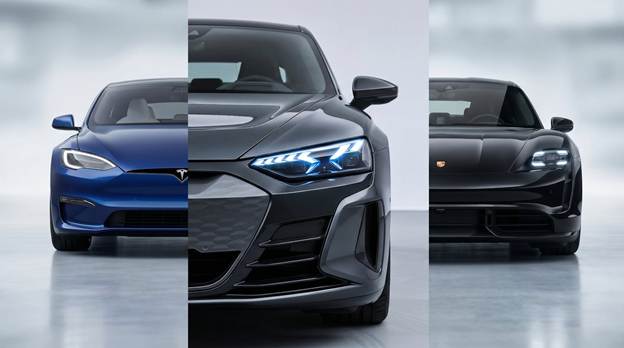
When evaluating the used high-performance electric vehicle market, two other primary contenders inevitably surface: the Tesla Model S and the Mercedes-Benz EQS. Let’s examine why neither can match the holistic value of the Audi.
The Tesla Model S, specifically the Long Range and Plaid variants, represents the old guard. On paper, testing metrics will show you that a Model S Plaid is vastly faster in a straight line. But a car is much more than a 0-60 spreadsheet. The Tesla Model S exterior design is over a decade old; it has become automotive wallpaper, blending seamlessly into the background of any affluent suburb. More importantly, Tesla’s inconsistent build quality remains a massive liability. As highlighted in a Jalopnik report on Tesla’s lingering manufacturing challenges, issues with inconsistent panel gaps, misaligned trims, and subpar paint finishes continue to plague the brand, even on its most expensive flagship models. Inside my e-tron GT, everything feels carved from a single block of granite. When you buy a high-performance luxury car, you expect an uncompromised luxury experience, and a used Model S often feels like a highly expensive tablet computer wrapped in a compromised shell.
Then we have the Mercedes-Benz EQS sedan. Mercedes prioritized aerodynamic efficiency to an absolute fault, resulting in a vehicle that resembles a melted jellybean. While the interior is packed with massive screens—the much-touted Hyperscreen—the driving dynamics are distinctly boat-like and detached. The EQS is a traditional luxury cruiser, not a high-performance driver’s car. It severely lacks the visceral steering feedback, low center of gravity, and planted cornering ability that the e-tron GT delivers effortlessly.
Ergonomics And Future-Proofed 800-Volt Charging
The definitive reasons the 2022 Audi e-tron GT outranks these competitors extend beyond aesthetics, platform sharing, and depreciation. It comes down to the human-machine interface and forward-thinking electrical architecture.
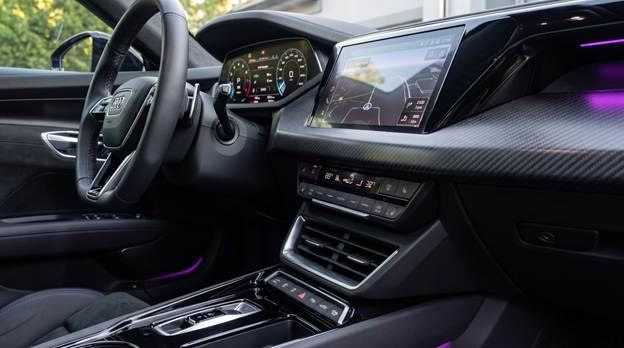
In an era where every automaker is desperately shoving every control into a massive, distracting central touchscreen, Audi took a brilliantly contrarian approach with the e-tron GT. They retained physical, tactile buttons for the climate controls and drive modes. From an ergonomic and safety standpoint, this is vastly superior. I don’t have to take my eyes off the road and navigate three sub-menus just to turn on my heated seat or adjust the cabin temperature – a frustrating reality for Tesla and Mercedes owners. This adherence to traditional, driver-focused ergonomics ensures the car feels timeless, intuitive, and safe, rather than acting like an outdated smartphone interface that will age poorly.
Additionally, the underlying technology remains cutting-edge. The 800-volt charging architecture ensures the 2022 e-tron GT is highly future-proofed. While many older EVs languish at 150kW charging speeds, Zapmap’s comprehensive EV charging guide confirms that the e-tron GT can pull an incredible 270kW from a compatible DC fast charger. Under ideal conditions, it can replenish its battery from 10 percent to 80 percent in roughly 23 minutes. Even as battery technology advances rapidly across the industry, the physical charging speed capabilities of this 2022 model remain highly competitive with brand-new vehicles rolling off the assembly line today.
Wrapping Up
The automotive industry is currently navigating a chaotic, unpredictable transition, and in that chaos lies immense opportunity for the educated consumer who refuses to blindly follow the herd. The 2022 Audi e-tron GT represents a rare glitch in the matrix: a vehicle that combines world-class driving dynamics derived from Porsche engineering, head-turning concept-car aesthetics, exceptional German build quality, and future-proofed 800-volt charging technology, all wrapped in a depreciation curve that makes it incredibly accessible today.
While the Porsche Taycan demands an unjustified premium for its badge, the Tesla Model S suffers from a stale design and questionable craftsmanship, and the Mercedes EQS prioritizes a soft, isolating ride over genuine driver engagement, the Audi hits the perfect equilibrium. My personal experience daily driving this machine over the past year has only validated what the market data unequivocally suggests. If you are looking to enter the high-performance electric vehicle space, there is absolutely no need to spend six figures on a brand-new model. The ultimate sweet spot is already waiting for you on the used market, bearing the four rings of Audi, and turning heads at every corner.
Disclosure: Images rendered by Artlist.io
Rob Enderle is a technology analyst at Torque News who covers automotive technology and battery developments. You can learn more about Rob on Wikipedia and follow his articles on TechNewsWord, TGDaily, and TechSpective.
Follow us today…