The long-awaited update to the Chinese Military Companies List, also known as the 1260H or CMC list, was released Monday and significantly expands U.S. scrutiny of Chinese internet, artificial intelligence, electric vehicle, robotics, biotech and advanced manufacturing firms.
The designation does not amount to formal sanctions. But it is a serious reputational blow and can bring heightened scrutiny from U.S. investors, policymakers, suppliers and government agencies. Companies placed on the list have often later faced export controls, procurement bans or other U.S. restrictions.
Under recent U.S. law, the Defense Department will be barred starting later this month from contracting directly with companies on the list. Beginning in 2027, it will also be prohibited from buying their products or services through third parties.
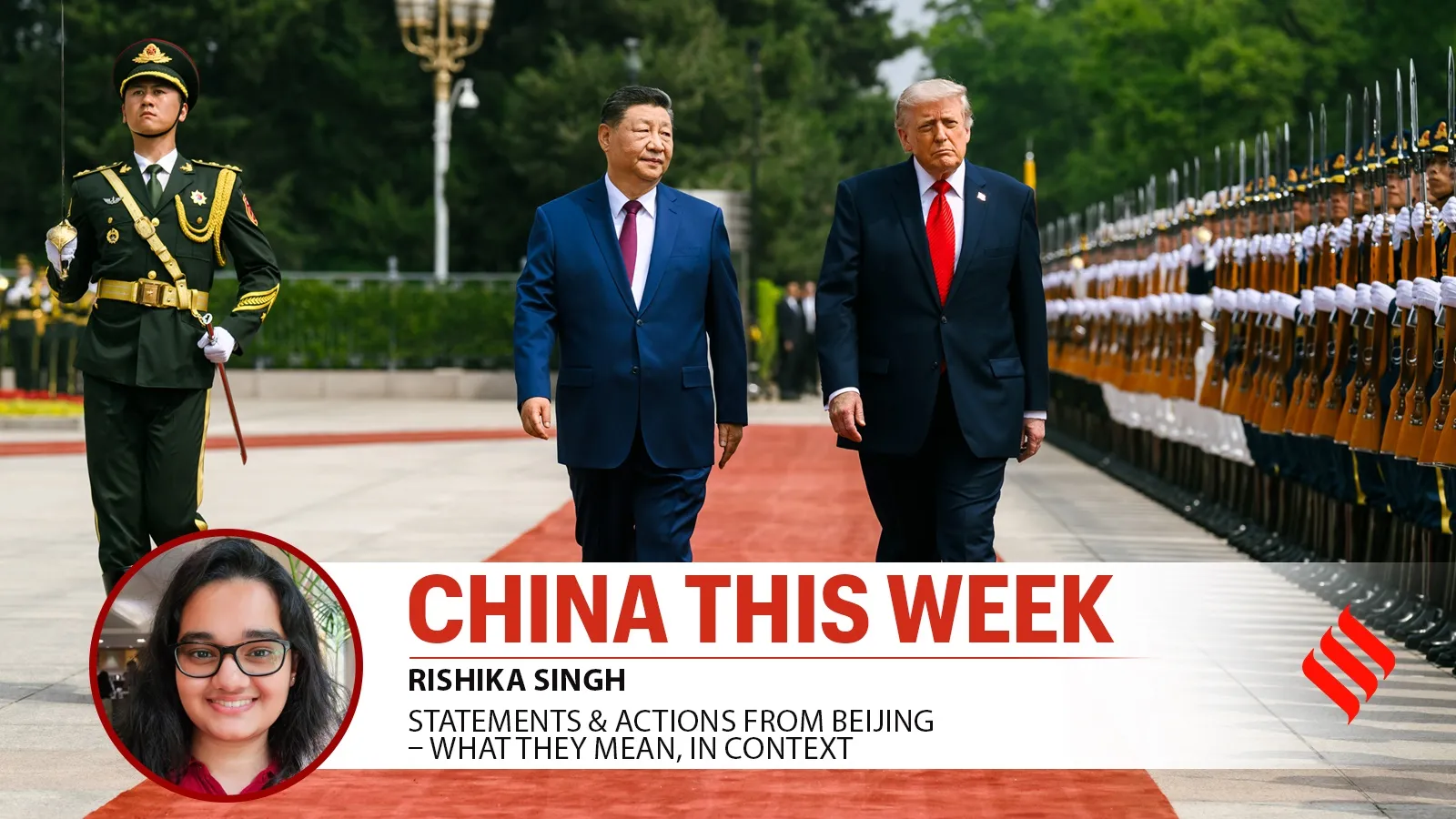
The update comes less than a month after U.S. President Donald Trump met Chinese leader Xi Jinping in Beijing, where the two maintained a fragile truce in the trade war. Analysts said the timing shows Washington intends to keep pressure on China despite the cordial tone of the summit.
“It serves as a post-summit reality check,” said Craig Singleton, a senior fellow at the Foundation for Defense of Democracies. “The administration is not treating the perception of summit success as a reason to stand down. It is using the post-summit window to sequence pressure, leaving enough distance before a possible September Xi visit to manage diplomatic fallout.”
Singleton also told Reuters that Washington is “no longer treating these as isolated companies. It is treating the entire technology stack as strategically contested.”
With Alibaba and Baidu now included, the Pentagon list covers China’s three largest publicly traded internet companies, which together have a market value of about $850 billion. Tencent, China’s largest listed technology firm, was added in January 2025 and has said it intends to challenge its designation.
Other firms added in the latest update include electric vehicle makers BYD and Nio, memory chipmakers CXMT and YMTC, biotech firm WuXi AppTec, robotics companies Unitree and RoboSense, TP-Link Technologies, BOE Technology Group, Tianma Microelectronics, CALB Group, EVE Energy, Zhongji Innolight, JA Solar Technology and Trina Solar.
2 View gallery
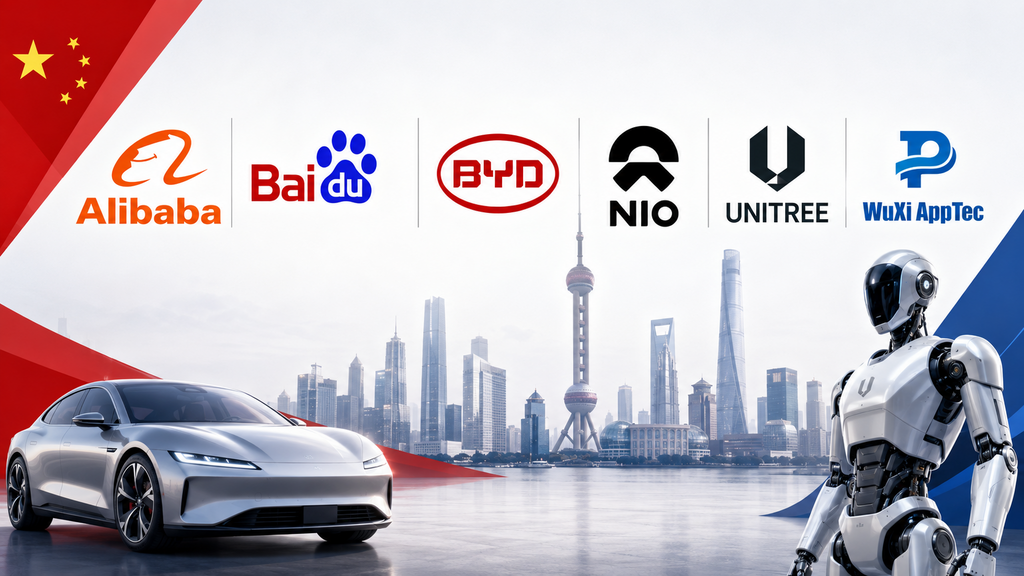
With Alibaba and Baidu now included, the Pentagon list covers China’s three largest publicly traded internet companies
The inclusion of CXMT and YMTC is especially notable. In February, as preparations for Trump’s Beijing visit were underway, the Pentagon briefly posted an updated version of the list before withdrawing it the same day without explanation. That version drew criticism from China hawks in Washington because the two memory chipmakers, viewed as central to Beijing’s AI ambitions, had been removed.
The new version released Monday includes both companies.
China’s Foreign Ministry condemned the move Tuesday, calling the list discriminatory and saying it “unreasonably suppressed” Chinese companies.
“China will take necessary measures to firmly safeguard the legitimate rights and interests of Chinese enterprises,” ministry spokesperson Lin Jian told reporters.
China’s embassy in Washington also criticized the designation, calling it an abuse of national security powers.
“The U.S. should stop its wrong practice and create a fair, just and nondiscriminatory environment for Chinese companies,” the embassy said in a statement.
Several of the companies rejected the Pentagon’s claims and said they would seek to be removed from the list.
Alibaba said there was “no basis” for its inclusion. “Alibaba is not a Chinese military company nor part of any military-civil fusion strategy. We will take all available legal action against attempts to misrepresent our company,” the company said.
Baidu also rejected the designation. “The suggestion that Baidu is a military company is entirely baseless. We will not hesitate to use all options available to us to have the company removed from the list,” it said.
BYD, the world’s largest electric vehicle seller, said it firmly opposed being labeled a military company and would use all “feasible administrative and legal means” to protect its rights and interests. The company said the decision harmed “its development achievements in the United States.”
WuXi AppTec said its inclusion was “incorrect” and that it would “take immediate actions to challenge and correct this erroneous designation.”
Nio said in a filing with Hong Kong’s stock exchange that it would not be affected by the procurement restrictions, while Alibaba said the listing would not affect its ability “to conduct business as usual in the U.S. or anywhere in the world.”
The Pentagon list is required to be updated at least annually under U.S. law. Companies can petition for removal, but getting off the list can be difficult. Some firms have launched aggressive legal challenges. Xiaomi, the smartphone maker, successfully sued to be removed from an earlier Pentagon list in 2021.
Some companies were removed from the latest version, including two entities owned by Chinese state oil major CNOOC, CNOOC China Ltd. and CNOOC International Trading. However, CNOOC subsidiary China BlueChemical Limited was added, with the Defense Department noting that CNOOC is directly controlled by the Chinese government.
The updated list highlights sectors that have come under growing scrutiny from China-focused lawmakers, including semiconductors, AI, robotics, electric vehicles, pharmaceuticals and communications hardware.
Rep. John Moolenaar, the Michigan Republican who chairs the House Select Committee on China, said the designations should serve as a “warning” to U.S. businesses and consumers.
“These Chinese companies are working with the Chinese military against our national interests. Any of them that are publicly traded on U.S. exchanges should be immediately delisted and their products should be removed from supply chains our country depends on,” Moolenaar said.
The list also includes TP-Link, an electronics hardware company that claims more than 30% of the U.S. market for some networking devices, including WiFi routers. Another company added was Baicells, a telecom equipment maker that Reuters reported last year was under investigation by the FBI and Commerce Department.
Unitree Robotics, a Hangzhou-based maker of humanoid and quadruped robots, was also added. The company recently drew public attention when a dance troupe of its humanoid robots appeared on “America’s Got Talent.” Last week, Nvidia CEO Jensen Huang said the U.S. chipmaker planned to partner with Unitree to develop robotic platforms for researchers.
The move sends a potentially damaging message to Pentagon suppliers and other U.S. agencies about the U.S. military’s view of the listed companies, even if the designation does not immediately freeze assets or ban ordinary commercial activity.
For Washington, the update signals that the technology competition with Beijing is not limited to one sector or one kind of product. For China’s largest firms, it is another sign that their global business ambitions are increasingly entangled with the broader strategic rivalry between the world’s two largest economies.