“I have been in this job for 16 years, and every day I take a patrol to inspect and protect this tree every two hours,” he said in an interview in Huangshan, where mayors from around the world gathered last week to discuss how to protect their cities from climate change and overtourism.
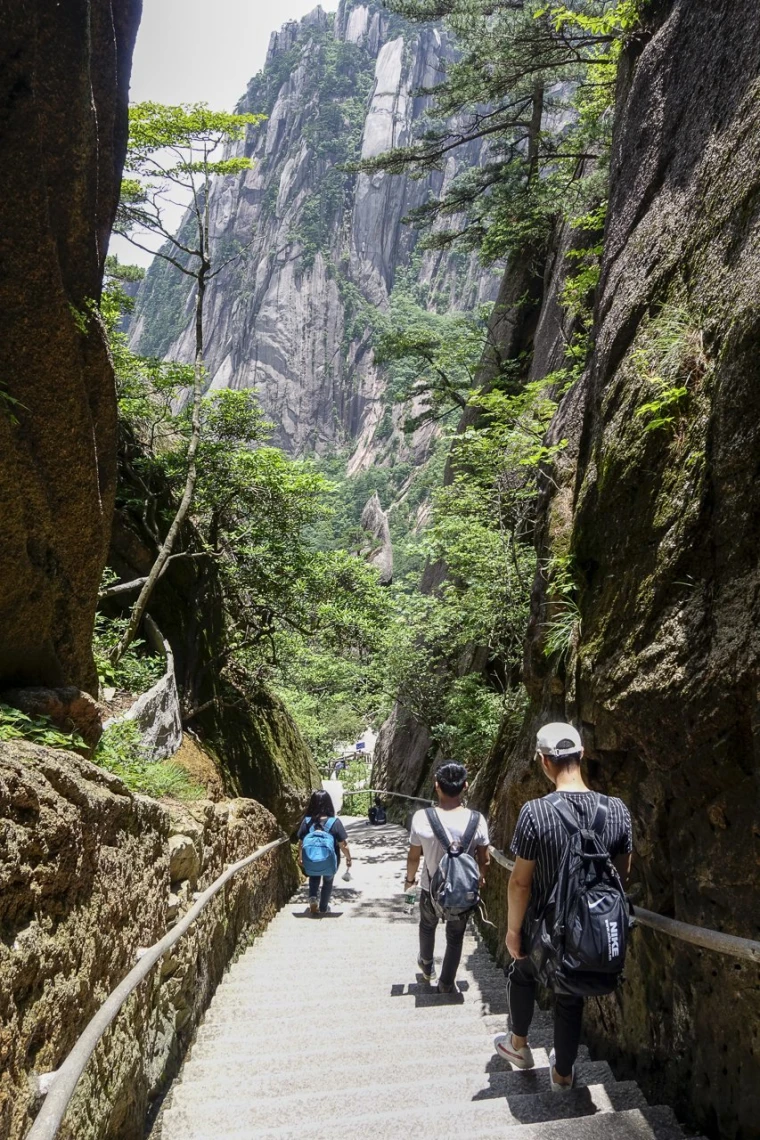
When NBC News last spoke with Hu in 2018, he said that while he also protected the tree from monkeys and squirrels, his biggest challenge was getting tourists to leave it in peace. Since then, the number of visitors to Huangshan — known as the most marvelous mountain in China — has only grown, surpassing 5 million for the first time last year.
But Hu says tourists these days are better behaved — and that technology is helping to keep them at bay.

“I can feel that the tourists’ overall behavior has improved over the years,” he said. “And we have also added some new high-tech monitoring methods compared with eight years ago.”
An intrusion prevention alarm system was installed in 2020, with an app that raises an alert if a tourist is coming too close to the pine.
“I can conduct the inspection as soon as I see the alert, and this can save a lot of time,” Hu said.
He said it was “the happiest thing” to see the precious pine still doing well at what is considered a relatively vulnerable age for a tree. But it faces another challenge as changing weather patterns create increasingly severe conditions on the mountain.
“The pine is afraid of the freezing rain the most, as the rain may cause damage to the branches if not handled properly,” Hu explained.
Eastern China recorded more extensive areas of severe freezing rain in 2024 and 2025 compared with historical averages in what the China National Climate Center says is the result of climate change.
“I need to inspect every 30 to 40 minutes when it comes to severe weather, and we stay up all night if there is strong wind or flooding,” Hu said. “It feels heart-wrenching to see it endure that harsh weather.”

It is not just Huangshan that is concerned about climate change.
During the global dialogue in Huangshan last week, mayors from 10 countries, including Italy, Germany and Thailand, discussed how to build more resilient cities.
Dhana Raj Acharya, the mayor of Pokhara, Nepal, said his city had similar concerns to Huangshan’s.
“Pokhara is located within a fragile mountain ecosystem, so we face challenges such as uneven rainfall, flooding, landslides and rapid urbanization,” he said.
Some mayors who are worried about overtourism said they wanted to emulate Huangshan’s visitor diversion system. They included Filippo Gasperi of Gradara, Italy, whose town of 5,000 people gets more than 500,000 visitors a year.
“It is a significant imbalance,” he said during the dialogue.

