Welcome to The Athletic’s 2026 World Cup tactical group guides, walking you through the key battles on the pitch, the players to look out for, and the fun facts to impress your friends ahead of the tournament.
In this article, we will break down Group B, containing Canada, Bosnia and Herzegovina, Switzerland and Qatar.
The host nation are looking for their first point at the World Cup on their third participation after 1986 and 2022. Canada’s opponent in their opening match are Bosnia, who want to follow their penalty-shootout victories against Wales and Italy with more surprises in the World Cup.
As for Qatar, it’s a chance to redeem the three home defeats in the 2022 edition, while Switzerland’s impressive performances in the 2024 European Championship under Murat Yakin makes them the favorites in Group B.
Will Canada’s home advantage ignite the team? How will Bosnia’s young talent perform at the tournament? Can Switzerland go far in this World Cup?
The games
Matchday one
- Friday, June 12: Canada vs Bosnia and Herzegovina (3pm ET, 12pm PT, 8pm BST) — BMO Field, Toronto
- Saturday, June 13: Qatar vs Switzerland (3pm ET, 12pm PT, 8pm BST) — Levi’s Stadium, San Francisco
Matchday two
- Thursday, June 18: Switzerland vs Bosnia and Herzegovina (3pm ET, 12pm PT, 8pm BST) — SoFi Stadium, Los Angeles
- Thursday, June 18: Canada vs Qatar (6pm ET, 3pm PT, 11pm BST) — BC Place, Vancouver
Matchday three
- Wednesday, June 24: Switzerland vs Canada (3pm ET, 12pm PT, 8pm BST) — BC Place, Vancouver
- Wednesday, June 24: Bosnia and Herzegovina vs Qatar (3pm ET, 12pm PT, 8pm BST) – Lumen Field, Seattle
Key tactical approaches
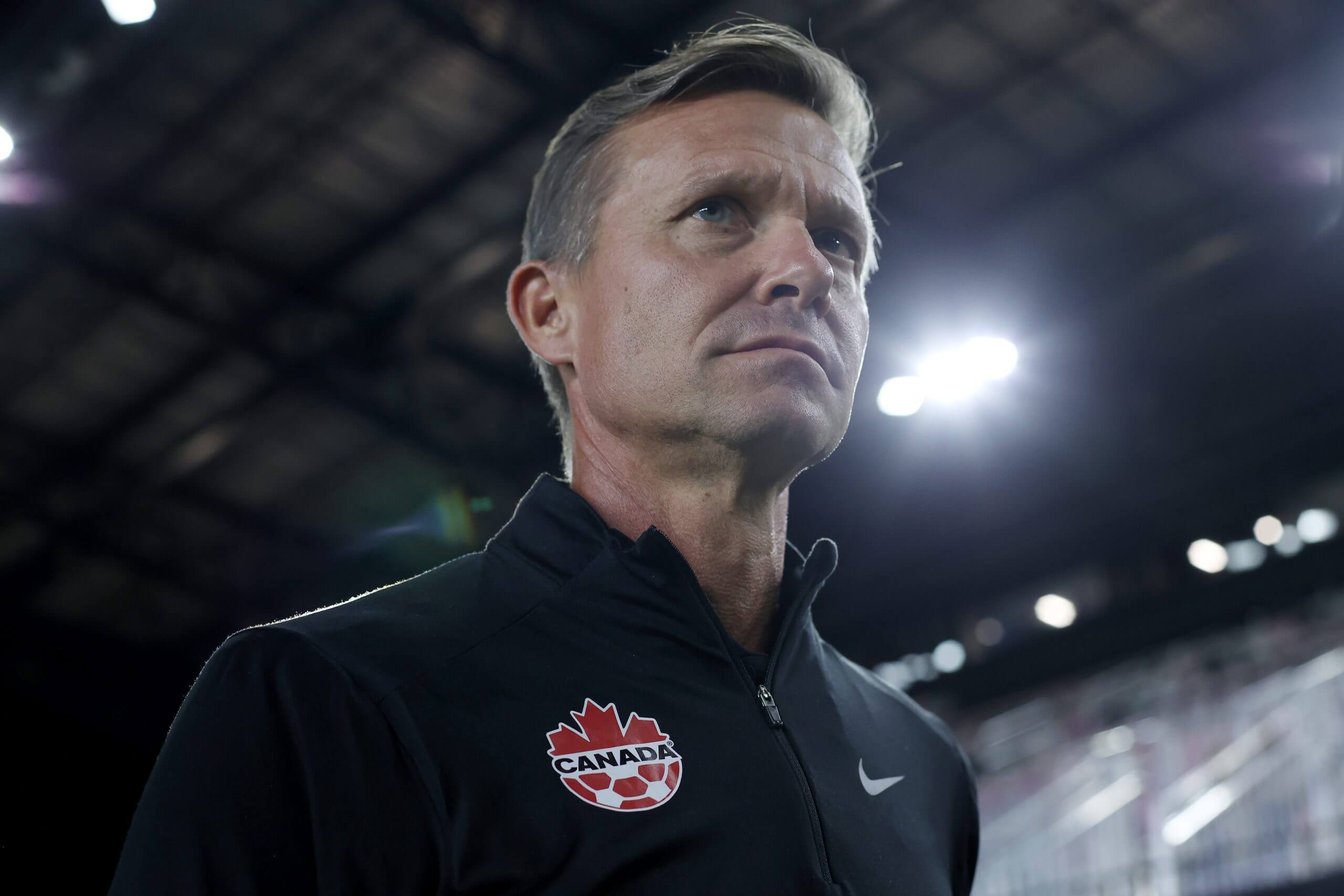
Canada’s style of play under Jesse Marsch is probably what you expected — an energetic, direct team, with a focus on pressing and counter-pressing.
Once they win the ball they seek to attack the opponent quickly on the transition, and this approach is mirrored in their in-possession game too.
Canada, who operate in a 4-4-2 shape, focus on progressing the ball through their wide areas to quickly find their wingers, Tajon Buchanan, Ali Ahmed or Alphonso Davies, with the left side being supported by an advancing full-back in the Bayern Munich star or the multi-positioned Richie Laryea.
Marsch has brought his distinctive style of play to Canada (Leonardo Fernandez/Getty Images)
Canada’s direct approach under Marsch is visible in how fast they progress the ball up the pitch (Direct speed) and their average number of passes per sequence.
Looking at their performance in the 2024 Copa America, they moved the ball forward faster than any team in the competition, with a direct speed of 1.9 m/s.
Meanwhile, they only made 2.8 passes per sequence — the sixth-lowest rate at the tournament.

Up front, Jonathan David is likely to partner Tani Oluwaseyi or Cyle Larin. The Juventus forward had an up-and-down debut season with the Italian side, but he is essential to Canada’s attack.
In addition to his goals, David regularly drops to attack the space behind the opponent’s midfield and link the play, as seen in this example from the 1-0 victory against Wales in September.

The most pressing question for Marsch, though, is who starts in goal for Canada. Maxime Crepeau and Dayne St. Clair offer two different solutions, with their contrasting profiles suiting different types of games.
It will be interesting to see how Canada’s high press fares against Switzerland’s flexible approach on the ball when the sides meet in what could be a pivotal final group game.
Yakin’s side caught the eye during Euro 2024 with their fluid approach in possession, switching seamlessly between a 3-4-3 and 4-3-3, with Michel Aebischer roaming into midfield from a wing-back position.
It’s how they shaped up against Norway in March, but this was different from their setup during the World Cup qualifiers, where Switzerland lined up in a 4-2-3-1.
The formation is dynamic, though, with Ruben Vargas and Dan Ndoye roaming inside from the wings, and either both full-backs pushing forward or right-back, Silvan Widmer, being in a higher position than Ricardo Rodriguez.

Switzerland boast an experienced squad with eight of the likely starting XI having more than 50 appearances with the national team.
The responsibility of progressing the ball up the pitch lies on the experience of captain Granit Xhaka — coming off an excellent season at Sunderland where he helped the club to a seventh-place finish — plus defenders Rodriguez, Manuel Akanji and Nico Elvedi.
The four play an important role in finding the attackers’ runs behind the defence and switching the play from one side to the other.
In this example, from the 3-0 victory against Slovenia in September, Switzerland are building the attack in a back three, with Widmer ahead of the right-winger, Vargas.
As Rodriguez carries the ball forward, Widmer dashes inside and pins Slovenia’s left-back, Erik Janza, creating space for Vargas down the wing to enable the switch of play.

The front line of Vargas, Ndoye and Breel Embolo — supported by attacking midfielder Fabian Rieder — have a license to interchange positions in the final third.
Ndoye’s goal in the 4-1 victory against Sweden in November, where Xhaka picks out Vargas’ in-field movement between the lines, and the latter finds the Nottingham Forest forward behind the opponent’s defence is the perfect example of that.
The other European nation in this group are Bosnia, who attack in an old-school 4-4-2 consisting of attacking full-backs, talented wingers and two strikers up front.
Unsurprisingly, Sergej Barbarez’s side play their football in the wide areas to find one of the wingers, whether that’s Amar Memic, Esmir Bajraktarevic or Kerim Alajbegovic, with Edin Dzeko dropping to support the attack, as illustrated in the example below from the 1-1 playoff draw against Italy in March.

Dzeko leads the line alongside Haris Tabakovic or Ermedin Demirovic, providing Bosnia a dual aerial threat inside the penalty area, which complements the team’s focus on attacking the flanks and putting crosses into the 18-yard box.
Off the ball, Bosnia aren’t afraid to contest a duel or put in a tackle. Their 17.7 fouls committed per match in the UEFA 2026 World Cup qualifiers was the highest rate among the 54 participating nations.
Bosnia’s progression to the knockout stages will likely depend on their ability to beat Qatar in the final group game. Julen Lopetegui’s side want to build the attacks from the back, aiming to progress the ball to their talismanic forward Akram Afif.
Operating in a 4-4-2 — which is a common formation across Group B — Qatar are similar to Bosnia in their focus on width, but have less attacking solutions, with Afif being the main creative force.
Attacking set pieces proved to be an important tool for Qatar on their way to the 2026 World Cup, though.
Their two free-kick goals in the 2-1 victory against the United Arab Emirates in October sealed their qualification to the tournament, and made it eight set-piece goals in the third and fourth round of qualifying out of a total of 19 — the third-highest rate among teams who scored at least 10 goals.

Standout players
If Davies’ anterior cruciate ligament (ACL) injury in March 2025 wasn’t enough to cause Canada a scare, a tear in his right hamstring this February followed by another muscle injury in his left in May poses questions about his participation in the World Cup.
On his day, Davies’ pace and dribbling ability makes him a threat down Canada’s left side, whether as a full-back or winger.
He scored Canada’s first men’s World Cup goal in the 4-1 defeat against Croatia in 2022, and will be hoping to have a bigger impact on home soil.
In case Davies doesn’t make it, Buchanan is the player to watch in this Canada side. The right-winger is full of pace, can dribble past his opponent and is a threat on the counter.
As for Switzerland, it’s Xhaka, who is closing in on 150 appearances for his national team — the Sunderland captain plays an important role on and off the pitch.

Is Granit Xhaka the most influential player in Group B? (Sona Maleterova/Getty Images)
His impact in and out of possession is vital to Switzerland’s success, intercepting passes and winning duels off the ball, while building up the attacks and finding runners in behind with his passing ability.
Another thing that stands out is Xhaka’s line-breaking passes, which have their fingerprints all over Switzerland’s goals in the World Cup qualifiers. These are defined as passes that progress the ball through, over or around defensive blocks.
Using data from SkillCorner, we can see Xhaka’s most common line-breaking passes with Sunderland in the 2025-26 Premier League season.

Another captain to keep an eye on is Dzeko. The centre-forward is Bosnia’s all-time top scorer (73 goals) and also holds the record for the highest number of appearances.
Dzeko offers Bosnia an aerial target if they want to go direct with long balls or chipped passes, but he can also drop to link the attack.
Inside the penalty area, Bosnia’s focus on crossing plays to the striker’s strengths, especially his positioning and heading ability.
Rounding the quartet is Qatar’s Afif, who can play anywhere across the front line and basically does everything. He is a creative playmaker, who can dribble past opponents, spot a pass and score goals.
On top of that, his pinpoint delivery from set pieces is the main reason behind Qatar’s threat from dead-ball situations. Afif guided Qatar to the 2019 and 2023 Asian Cup, winning the Golden Boot and player of the tournament awards in the latter.
Things to look out for
Canada’s high press has been a feature of the side under Marsch. It’s not always intense, but Canada often make sure the opponent can’t comfortably build the attack.
Pressing out of a 4-4-2 shape, Marsch’s side block the opponent’s passing lanes, force them into the wide areas, before increasing the intensity and going for the ball.
In this example, from the 1-0 victory against Wales in September, Oluwaseyi is pressing Wales’ right centre-back while blocking the passing lane into Charlie Crew, with David ready to move towards Ben Davies if the ball is played towards the left centre-back.
Behind them, Nathan Saliba is marking Harry Wilson and Canada’s left-winger, Ahmed, is closer to the opposition’s full-back than Buchanan due to the proximity of the ball.
When Wales reset the attack and build down the left, David presses Davies and Oluwaseyi keeps an eye on Crew. With Buchanan in position to press Wales’ left-back, Neco Williams, Davies goes long and Canada are able to retrieve possession.

Switzerland’s fluidity in attack takes on a whole new level with their right-back, Widmer. The Mainz defender can be a threat inside the penalty area with his in-field movement from the right flank.
Here, in the 4-0 victory against Kosovo in September, Widmer is in a more advanced position than Vargas when Gregor Kobel plays the long ball forward.
After Rieder wins the second ball and combines with Ndoye, Widmer dashes forward and attacks the space between Kosovo’s full-back and left-winger.

Rieder then finds Widmer’s run into the penalty area, and the right-back puts the ball into the net.


Since Bosnia’s independence in 1992, they haven’t qualified for a European Championship and only managed to reach the World Cup once in 2014, when they beat Iran 3-1, but finished third in the group.
Being placed in Group B gives Bosnia an opportunity to make history if they manage to qualify to the knockout stages.
Qatar are in a similar boat having only participated once before in the World Cup, as hosts in 2022. However, this Qatar squad are two-time Asian Cup champions and have the highest number of appearances in the national team’s history.
Whoever advances from this group will make a significant landmark in their country’s record book at the World Cup.