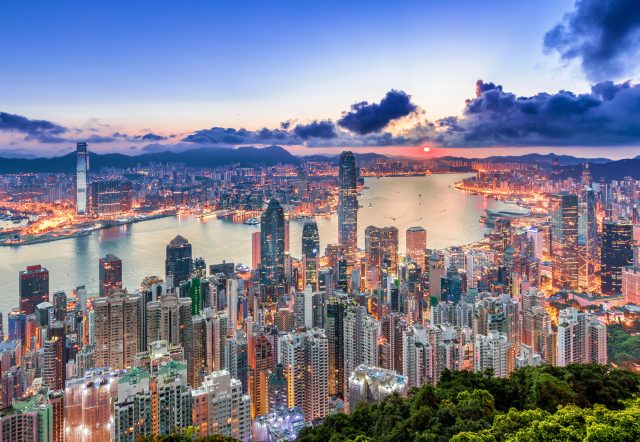
Vinexpo Hong Kong 2026 drew a geographically diverse field of visitors and exhibitors, with white wines generating strong buyer interest from across the region. Nimmi Malhotra reports on who was there and what they were spotlighting.

Over three days from 26 to 28 May, Vinexpo Hong Kong occupied Halls 1-3 of the Hong Kong Exhibition and Convention Centre in Wan Chai, a venue it has called home for 10 years, though this may be set to change.
The numbers from this year’s show are uplifting when measured against a backdrop of US tariffs, slowing consumption and tighter marketing budgets, with an increase in participating nations pointing to sustained commercial interest in Asian markets and their growing appetite for white wine styles.
Exhibitor breadth
The 2026 edition of the show attracted 14,273 trade professionals from 76 markets. The previous Hong Kong edition drew a comparable 14,203 visitors, but from 59 markets. The contrast with last year’s Singapore edition is starker, when visitor numbers fell below 10,000.
Exhibitor breadth also increased significantly. Thirty-eight producing countries were represented on the floor this year, with nine new additions: Austria, Belgium, Georgia, Greece, Hungary, Moldova, Slovakia, Tunisia and Uruguay.
Not every major name returned, however. Penfolds was absent for the first time in many years, and Bordeaux representation was thinner. The UGCB collective occupied a noticeably smaller space than the previous editions.
Notably, 75% of attendees hailed from established markets across Greater China, reaffirming Hong Kong’s status as a gateway to China. Others came from Japan and South Korea, while Southeast Asian representation from Singapore, Thailand and Vietnam continued to grow.
On the show floor: white wine regions
Consumption patterns are shifting, and in Asia’s largest market, China, people are increasingly drinking white wine, with New Zealand Sauvignon Blanc, Riesling and Moscato leading demand.
New Zealand Winegrowers is well-positioned to capitalise on this. The organisation’s pavilion was given a prime floor position and featured more than 63 Sauvignon Blancs across 20 exhibitors, double the number present in the 2024 edition of Vinexpo Hong Kong.
Mainland China accounted for half of all visitors to the New Zealand pavilion, with Korea, Japan, Thailand and India making up much of the remainder. The geographic spread reflects Sauvignon Blanc’s appeal across the region.
“Sauvignon Blanc continues to generate strong interest across Asia,” said Charlotte Read, GM Brand, New Zealand Winegrowers. “Buyers were primarily seeking premium, distinctive wines with a clear sense of origin, and there was strong engagement across both established and emerging New Zealand styles.”
Burgundy appeal
The Bureau Interprofessionnel des Vins de Bourgogne (BIVB) pavilion arrived with 26 producers and a clear commercial strategy: tap the white wine momentum sweeping Asia with “lesser known, better priced” appellations.
“We want to show Saint Romain, Rully, Pouilly- Fuissé – villages which are a little bit under the radar, but are making really good wines at better prices,” said Nelly Blau, export marketing and communication manager.
She reported strong interest from Southeast Asian markets. “Singapore, Thailand and Vietnam showed interest. These are small markets, but we like small markets, because we are small ourselves.”
Rhône whites
Philippe Guigal, owner of E. Guigal in the Rhône Valley, made a strong case for Rhône whites, linking growing demand directly to Burgundy’s rising prices.
“When you’re a traditional white Burgundy consumer, you don’t necessarily go to Bordeaux. The logical next stop is the Rhône,” he said.
Rhône reds, he added, are also benefiting from a broader shift in buyer allegiances. “We benefit from the decline of Bordeaux. We are seeing more and more interest in Rhône wines.”
By-the-glass whites, rosé and fizz
Jan Visser, Asia sales director at Languedoc producer Gérard Bertrand, reported similar momentum.
“Southeast Asian markets like Cambodia, Indonesia and Thailand are looking for by-the-glass white wine options,” he said, noting close to 30 white wines on his stand, including the newly launched La Grande Bleue Mediterranée 2024.
A long-time resident of Hanoi, Visser also flagged growing interest in rosé from Bali, Thailand and Vietnam – where tourism is driving casual wine consumption.
Prosecco producers reported a healthy interest from China and other Asian markets. “I certainly feel some positivity in the market, about 40% of our meetings are with Chinese buyers, and the rest are from Taiwan, Japan and Thailand,” said Roberto Fabbri, area manager for China for Bottega.
He found the 2026 show performed better than the 2024 show. “There are fewer people than before, but they bring more quality,” he said.
Additionally, Gastón Williams, CEO of Chilean producer Vik Wines, showed off its latest vintages to existing partners as well as buyers from several emerging and unexpected markets. Encouraged by the quality of spontaneous footfall, he observed a “growing interest from countries in Southeast Asia, as well as inquiries from markets where premium Chilean wines have traditionally had limited presence.”
The Australian pavilion housed 62 producers, with a further contingent of distillers in the Be Spirits section. Despite the broader shift, Paul Turale, general manager of Wine Australia, noted that red wine still dominates Australian exports to China. “There’s definitely growing demand for sparkling and white styles. However, 95% of the wine that we export to China from Australia is still red wine. White, sparkling and rosé are growing, but off a relatively small base.”
Buyer response
Buyer’s feedback was mixed. Some noted quieter halls, especially on day three, while others were buoyed by the energy and quality of engagement on the floor.
The 2026 Hong Kong show felt more trade-focused, with strong involvement from local sommeliers, buyers, retailers and a notably stronger contingent of mainland Chinese buyer, noted Oscar Nagore, CEO of EMW Wines. He met more than 30 existing partners at the show.
“Conversations were mostly about brand reviews and updates following Wine Paris,” he said, confirming Vinexpo Asia as the natural extension of the Paris calendar.
“Our partners and brands are less stressed by the current affairs and the market situation and more focused on finding solutions, either through innovations, streamlining of product lines, or investment in markets,” Nagore added.
On the sourcing side, EMW priorities reflected the broader white wine theme running through the show, as Nagore explored premium Old-World whites from Spain, France and Italy, dealcoholised wine options and hidden gems to complement its existing portfolio.
Michel Conrad, deputy managing director at IWS Thailand, found fewer suppliers on the ground than in previous Hong Kong editions but more than at Singapore in 2025: “Only 40% of our wine suppliers joined, and most of them come to Thailand too, as they are based in the region,” he said, adding that manageable footfall allowed him to keep all his appointments.
Alex Lichaytoo from Bacchus International, a premium importer based in Manila, observed a thinning of smaller boutique producers.
“It looked like there was a consolidation of marketing efforts as the smaller vineyards could not afford a booth. We are going back to basics, and if vineyards want to expand their market reach, they have to travel to see customers rather than just having a booth,” he said.
Not all buyers were chasing whites. Jackson Tan, brand manager at Vinicole Asia, came specifically in search of red wine for the Singapore retail market. “Demand for red wines in Singapore’s retail sector remains stronger than for whites,” he said. He noted a strong French producer presence but flagged the absence of European and Australian names, including Two Hands.
No and low alcohol
Consumers are also driving a shift towards moderation and reshaping demand for spirits and no-and low-alcohol alternatives. Two parallel exhibitions – Be Spirits and Be No – reflect the shift, pushing Vin Expo Asia’s footprint beyond wine into both categories.
Be Spirits brought together 105 exhibitors from 18 countries, a sharp rise from 13 countries in 2024.
The nascent Be No section, dedicated to no–and low–alcohol products, drew a small group of exhibitors. Among them, two sparkling tea producers reported strong buyer response on the floor.
Stefan Schauer, co-founder of Maison Tea Royal, an Austrian sparkling tea brand founded in 2024, reported strong interest from the Asian buyer. “Vinexpo Hong Kong was really good for us. Everyone’s searching for non-alcoholic alternatives,” he said. “We had big demand and lots of buyers interested from Hong Kong and mainland China and then from Singapore, Taiwan, Vietnam and the Philippines.”
Tatiana Pudwill, Founder of Purite Tea, an organic sparkling tea producer, drew particular interest from Korean buyers, many of whom requested delivery within two weeks. “We had a great show. It will take us a year to follow up with the queries,” she said.
A single Asian hub
The show’s most consequential announcement came off the floor. As first reported by db, Rodolphe Lameyse, CEO of Vinexposium, confirmed that the alternating city format he introduced in 2023 will be replaced in 2027 with a permanent “Single Asian hub”, a decision that sets up a bidding contest between Hong Kong, Singapore and potentially Shanghai.
“The market is calling for greater stability,” said Lameyse. “From 2027, our ambition is to establish Vinexpo Asia as an annual event in a single Asian hub, in line with the needs of our clients and the long-term development of the industry.”
The announcement generated significant discussion on the show floor. With Singapore having hosted the 2025 edition and Hong Kong delivering strong numbers this year, the race is open, and the stakes are high for which city secures Vinexpo’s permanent hub status and holds a show that looks markedly different from a decade ago.
Related news
#WeekInPictures: Kylie Minogue hits 27 million bottles as Poco Vino rolls into Hong Kong
All aboard Poco Vino in Hong Kong
Bonhams Hong Kong to auction private cellar of Marie-France Van Damme

I like the efforts you have put in this, regards for all the great content.