Chinese President Xi Jinping has refused to make any concession on the case of imprisoned Catholic media tycoon Jimmy Lai during high-level talks with US President Donald Trump on May 14, despite direct American intervention on behalf of the 78-year-old Hong Kong pro-democracy figure.
During the bilateral summit held in Beijing, President Trump personally presented Xi with a list of political and religious prisoners and pressed the case for Lai’s release. According to Trump’s own account upon his return, Xi described the matter as “particularly difficult” and offered no prospect of clemency. Trump later told reporters: “I’m not optimistic.”
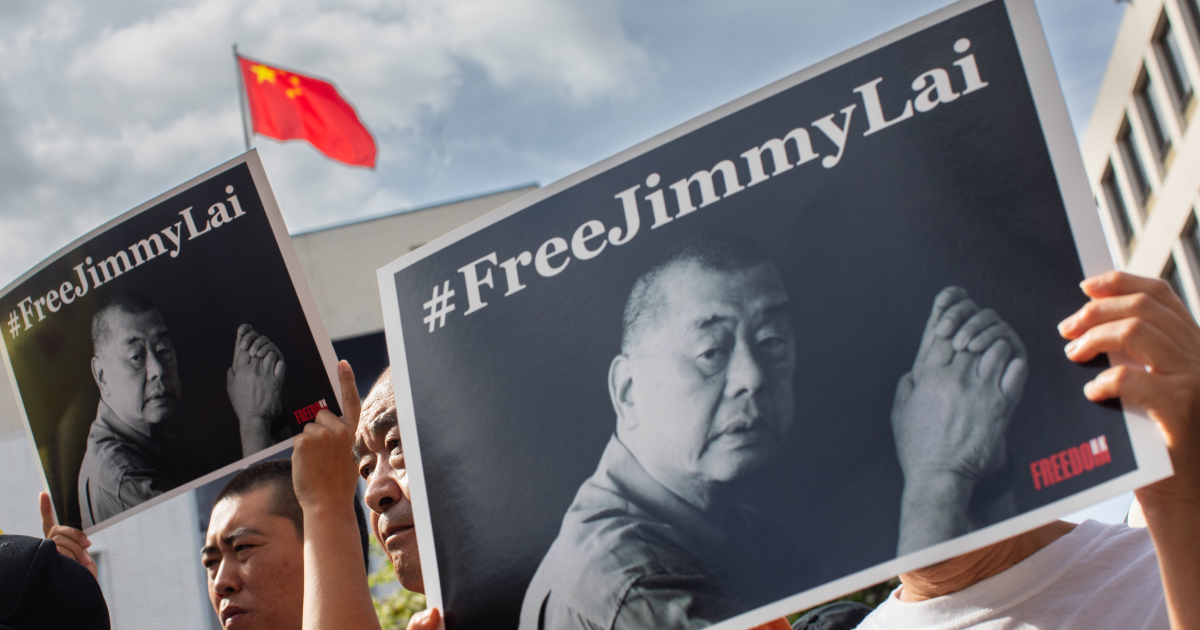
Jimmy Lai, founder of the now-defunct pro-democracy newspaper Apple Daily, was sentenced to 20 years in prison in February 2026 under Hong Kong’s national security law. A prominent convert to Catholicism, he has spent more than five years in detention, much of it in solitary confinement. His daughter, Claire Lai, has repeatedly thanked the Trump administration for its efforts while warning that her father’s health is deteriorating rapidly.
The case has become a focal point for Catholics and human rights advocates worldwide. Lai’s steadfast defence of press freedom and his public Catholic faith have made him a symbol of resistance against Beijing’s tightening control over Hong Kong. He faces charges related to his support for the 2019 pro-democracy protests, which Beijing views as foreign-backed subversion.
US efforts on Lai’s behalf have been sustained and high-profile. President Trump pledged during his campaign and early second term to press for Lai’s release. Senior administration figures, including Secretary of State Marco Rubio, have continued to raise the issue. Bipartisan lawmakers and groups such as CatholicVote have urged stronger action, with some calling for the Department of Justice to investigate related matters.
Despite these efforts, Beijing has treated Lai’s imprisonment as a core issue of sovereignty, refusing any concession that might be seen as weakening its authority over Hong Kong.
The inflexibility on Lai stands in contrast to limited movement on other cases. Trump expressed optimism over the case of Ezra Jin Mingri, an imprisoned pastor of the Zion Church, one of the largest non-governmental Protestant bodies in the country. This selective approach underscores Beijing’s strategy: offering symbolic humanitarian gestures on less politically sensitive files while holding firm on high-profile critics such as Lai, who is seen as a direct challenge to the national security law imposed after the 2019 protests.
Lai’s imprisonment has inspired sympathy from Catholics worldwide. A daily communicant who has credited his faith with sustaining him in prison, he represents the suffering Church in China and Hong Kong. Pope Leo XIV and his predecessors have consistently called for greater religious freedom in China and the release of prisoners of conscience. Lai’s case is often cited alongside the broader persecution of underground Catholics loyal to the Holy See.
As diplomatic and trade relations between Washington and Beijing continue under a transactional framework – with the recent summit yielding more than $100 billion in commercial deals – the fate of Jimmy Lai remains a political stalemate. Claire Lai and international advocates continue to press Western governments not to allow economic interests to overshadow the plight of political and religious prisoners.