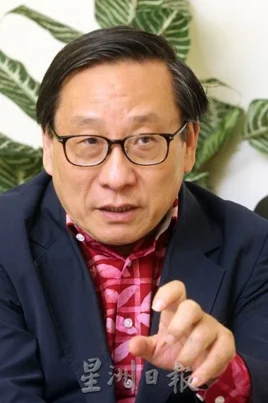

KUALA LUMPUR: The United States and China are moving toward an “inevitable peace,” according to Victor Gao Zhikai, Director of the China Institute for Energy Security and Vice President of the Centre for China and Globalization (CCG).
Gao, who served as an English translator for Chinese leader Deng Xiaoping during historic meetings with prominent US statesmen such as Richard Nixon, George H.W. Bush, and Henry Kissinger in the 1980s, dismissed speculations regarding the potential outbreak of war between the two superpowers.
Addressing the “Thucydides Trap” theory popularised by Harvard University Professor Graham Allison in his book Destined for War—which posits that a rising power and an established hegemon are often bound for conflict—Gao argued that applying this historical framework to the modern US-China dynamic reveals a critical logical blind spot.
“The historical wartime case studies analyzed by Allison were essentially contests of conventional weaponry,” Gao noted. “Today, however, the US and China are not just conventional military heavyweights—they are nuclear superpowers.”
“A direct conflict between nuclear powers implies Mutually Assured Destruction (MAD). The United States absolutely lacks the audacity to choose self-destruction just to eliminate China.”
Based on this core logic, Gao presented a fresh paradigm: rather than being “destined for war,” Washington and Beijing are instead navigating toward an unavoidable peaceful co-existence.
This perspective appeared to be validated on the global stage when US President Donald Trump led a high-powered, elite delegation to China for a three-day state visit.
International observers generally concur that while Trump’s visit did not fully resolve the deep-seated structural differences between the two economies, it sent a highly positive signal to the global community regarding the rational management of disputes and a shared commitment to avoiding confrontational conflict.
US remains wary of China
Gao further analysed that even if the US adopts a dismissive or aggressive stance toward many countries on the surface, it remains inherently wary of China, deeply fearing that bilateral relations could spiral out of control.
“Today’s China possesses ample strength and confidence. Whether it is conventional warfare, nuclear war, energy wars, chip wars, or any other form of confrontation, the US cannot truly defeat China. This reality is precisely what will compel the US to cherish peace even more,” he said.
Gao said this in an exclusive interview with Sin Chew Daily during his visit to the headquarters of the newspaper.

Establishing regional platforms and databases: ASEAN must embrace Open-Source AI
With the rapid rise of Chinese artificial intelligence technology, Gao urged ASEAN nations to cooperate with China’s AI ecosystem—which emphasises an “open-source” approach—and independently build their own AI platforms and databases.
“Every country must roll out its own artificial intelligence development strategy and cannot rely entirely on the United States. Otherwise, if the US system suddenly paralyzes, everyone will be dragged down with it. The best approach is to develop open-source AI,’’ he said.
“At last year’s World Artificial Intelligence Conference, all participating nations agreed to cooperate on AI, with the sole exceptions of the United States and the United Kingdom.”
“Why? Because they want to monopolise artificial intelligence and erect high entry barriers with massive capital requirements, which effectively blocks nations with smaller economies from participating,” he said.
Gao criticised the US not for rejecting AI cooperation but also militarising and weaponising the technology. In contrast, China emphasises international cooperation and equitable participation.
In February 2025, the US and UK declined to sign an international declaration on artificial intelligence at a global summit in Paris. The declaration, co-signed by dozens of nations including France, China, and India, advocated for developing AI technology in an “open,” “inclusive,” and “ethical” manner. The US and UK refused to sign, citing concerns over national security, global governance, and regulatory frameworks.
Another dimension of geopolitical risk: An AI bubble burst could trigger a financial crisis
Gao also discussed an overlooked risk inherent in the US-China AI race: the bursting of the artificial intelligence bubble.
He asserted that China’s current capability to independently manufacture chips, coupled with its abundant power resources and massive Chinese-language databases, gives it a distinct advantage in AI development. He went as far as to say: “The US wants to block China from developing AI, but it cannot defeat China. China will undoubtedly perform exceptionally well and may even surpass the US.”
He pointed out that the advancements and breakthroughs achieved by China in AI will accelerate the puncturing of the US artificial intelligence bubble, thereby triggering a new round of global financial crisis.
Looking at the broader picture, Gao described the current global climate as a turbulent period of compounding conflicts that are setting off a chain reaction of three major crises:
Economic crisis predicted in 12 to 18 months
He boldly predicted that this economic crisis could manifest as early as the next 12 to 18 months.
“The financial crisis will sweep the globe. It will manifest because the massive AI investments made by the US in recent years have created a gigantic bubble, and China’s continuous AI advancements will ultimately puncture it.”
Gao said that if this AI bubble bursts, its scale could be at least 10 times larger than the dot-com crash around the year 2000.
He warned that due to the lagging nature of economic data, the warning signs of a financial crisis have not yet fully materialised. However, stakeholders in Southeast Asia must remain highly vigilant and strictly audit their domestic financial risk exposures to avoid being sucked into the vortex when the storm hits.
Joint defence by multiple nations: “Keep hands off the Strait of Malacca”
Additionally, the United States and Indonesia signed a defense agreement in April, seeking expanded access to Indonesian airspace to strengthen the US military presence in the Strait of Malacca.
This has raised external concerns that the US is extending its reach to the Strait of Malacca while tensions simmer in the Strait of Hormuz.
To this, Gao asserted definitively: “Anyone attempting to meddle with the Strait of Malacca is bound to fail.”
He noted that the freedom of navigation and security of the Strait of Malacca are jointly defended by its littoral states—Malaysia, Indonesia, and Singapore—and the wider ASEAN bloc.
No country would agree to let the US “act as a pirate and collect protection fees” there.
Previously, military analysts pointed out that if a conflict were to erupt in the Asia-Pacific region, the US might leverage its powerful naval fleet and its base in Singapore to swiftly enforce a military blockade on the Strait of Malacca, thereby cutting off China’s wartime energy corridors and supply chains.
China possesses the world’s largest coal reserves
Gao countered that even under the most extreme scenario—where overseas crude oil and natural gas supplies to China are completely severed—China is fully capable of weathering the storm safely.
Gao estimated that China’s domestic crude oil production consistently maintains a baseline of 200 million tonnes annually, which under extreme pressure could be rapidly scaled up to 300 million or even 400 million tonness. Furthermore, China holds the world’s largest coal reserves.
“If pushed to the absolute limit, China can simply revert to mining coal. But if it comes to that, who suffers? It will be all of humanity.”
He stated that the US is well aware that such blockades cannot destabilise China; therefore, they have absolutely no justification or reason to manufacture or involve the Strait of Malacca in any conflict.
Profile: Victor Gao served as English translator for Deng Xiaoping
Born in Taicang, Jiangsu Province, China in 1962, Victor Gao graduated from the English Department of Suzhou University and the UN Interpreters and Translators Training Course at Beijing Foreign Studies University. He later pursued further studies in the United States, earning a master’s degree in political science and a Juris Doctor (J.D.) degree from Yale University.
In 1983, Gao joined the Department of Translation and Interpretation of the Ministry of Foreign Affairs of China. Between 1985 and 1987, he served as an English translator for Deng Xiaoping, translating for his meetings with US leaders such as Richard Nixon, Henry Kissinger, and George H.W. Bush. Additionally, he accompanied Chinese leaders including Hu Yaobang and Li Xiannian on state visits to numerous countries.