Last weekend, as the UK sweltered in a rare May heatwave, I was desperate for an escape from the city.
A trip to the beach seemed like the perfect idea, so I began my usual preparations: a towel, hat and sunglasses, lots of water and snacks and an ungodly amount of sun cream.
However, there was one big thing I forgot to consider… my folding phone. Nearly a week later, I’m still feeling the effects of that huge mistake.
Foldables’ glaring vulnerability
Having been lucky enough to use flagship smartphones for the last few years, I’d taken their dust resistance ratings for granted.
With an IP68 rating, I can be sure that a phone is fully dustproof. Sure, pesky sand can (and does) get all over your phone, but it won’t penetrate the internals or impair functionality in any way.
I foolishly thought that by keeping it closed, it’d be just fine.
Jon Mundy / Foundry
Previous beach trips verified this: I’d get home, wipe down the phone with a damp microfibre cloth, and it’d be back to normal.
With my Galaxy Z Fold 7, things didn’t quite pan out like that. While its IP48 rating means it can survive a dunk in freshwater (but definitely not the sea!), it’s only protected against solid objects that are 1mm or larger in diameter. Sand, as you probably guessed, is much smaller than that.
Unfortunately, that didn’t occur to me before or during my beach trip. I used my Z Fold 7 like I would any other phone, paying little attention to how much sand was on it.
I foolishly thought that by keeping it closed, it’d be just fine.
Dominik Tomaszewski / Foundry
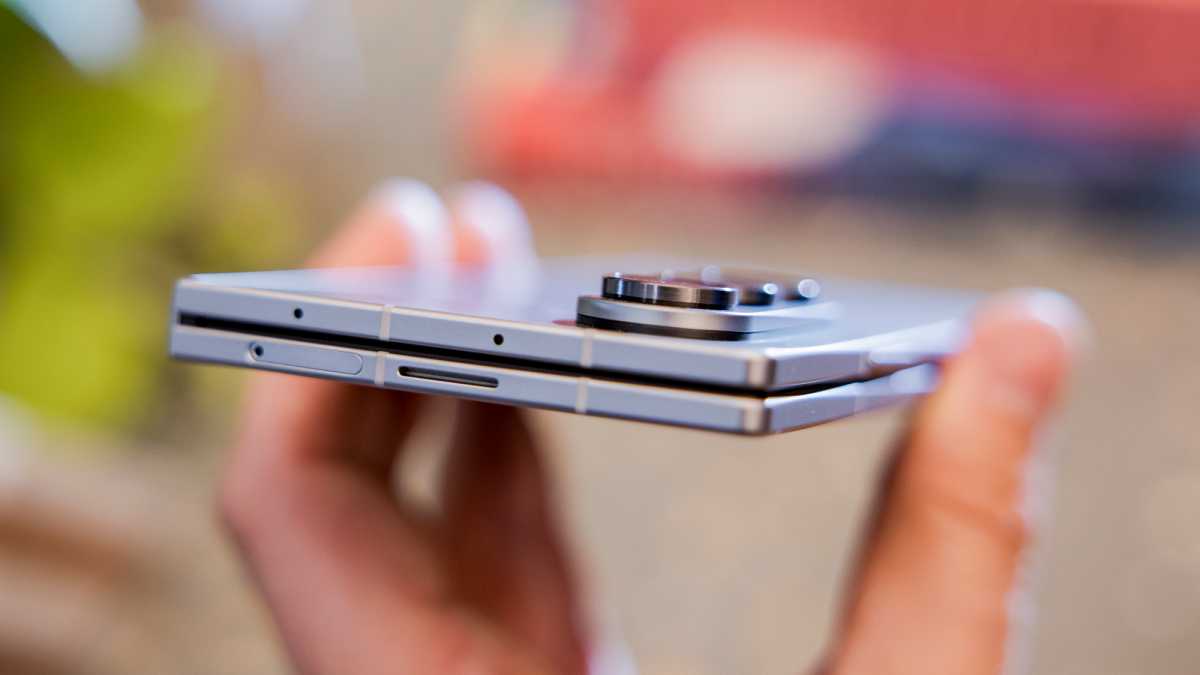
How wrong I was. After getting home, I opened the Z Fold 7 for the first time all day, only to hear a horrible crunching sound. The all-important hinge was now covered in grains of sand, and it’d take a lot more than a quick wipe down to fix it.
Later, I discovered another issue. The USB-C port was also full of sand, meaning I had to use more force than I’d like to get the cable all the way in. It still charged ok, but for how much longer?
An expensive mistake (but a relatively cheap solution)
While the Z Fold 7 showed no signs of impaired performance, I knew I needed to act fast. The longer those grains of sand were in there, the more chance they had to cause long-term damage.
I opened the Z Fold 7 for the first time all day, only to hear a horrible crunching sound
I turned to my (usually) reliable friend Google Gemini, focusing on cleaning it most effectively first. It suggested following a four-step process: turning it off, dry wiping with a microfibre cloth, disinfecting with 70% isopropyl alcohol and clearing the ports with a toothbrush. It looked much better than before, but had no effect on the crackling.
I knew I needed to specifically clean the hinge. But how could I reach something that was permanently obscured and offers only a tiny access point?
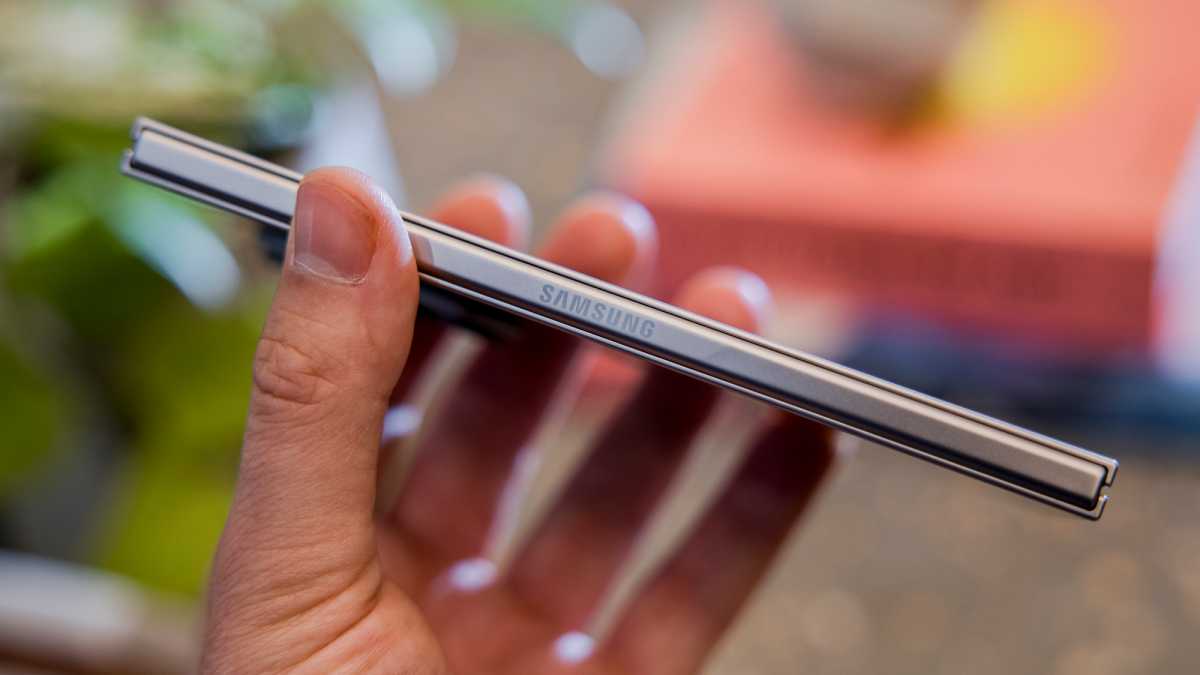
Dominik Tomaszewski / Foundry
Back to Gemini, which suggested vacuuming the gaps and then using compressed air. The former helped a bit, but I still didn’t feel confident regularly opening and closing it, so I had to track down some compressed air.
Two hardware shop visits and £12.99 later, I finally tracked down a can. It was exactly what I needed to clear the remaining debris and get the phone back to tip-top condition.
I love going to the beach, but I’d never take the Z Fold 7 with me ever again
But I could’ve really done without all the time, stress and extra expense required to correct my mistake. I love going to the beach, but I’d never take the Z Fold 7 with me ever again.
The Pixel 10 Pro Fold is your only option (for now)
The Galaxy Z Fold 7’s IP48 rating makes it particularly vulnerable to sand, but most book-style foldables still don’t go beyond IP58. In other words, sand might cause less damage to the internals than Samsung’s, but it can still penetrate the surface and get stuck in the hinge.
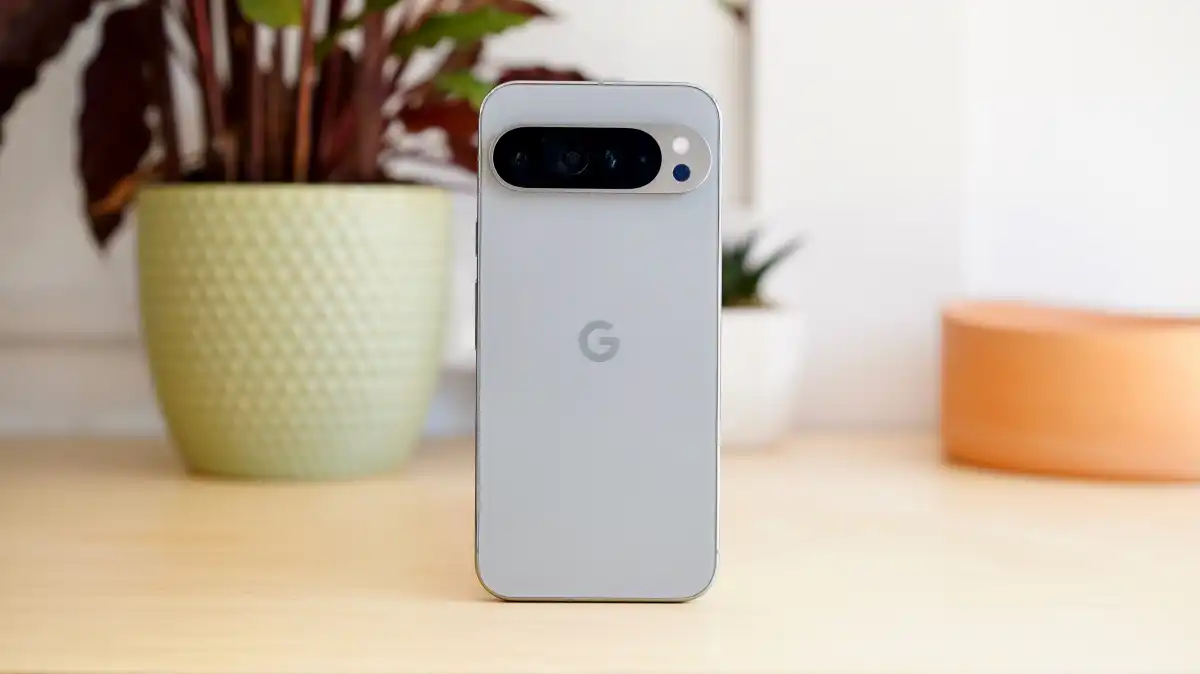
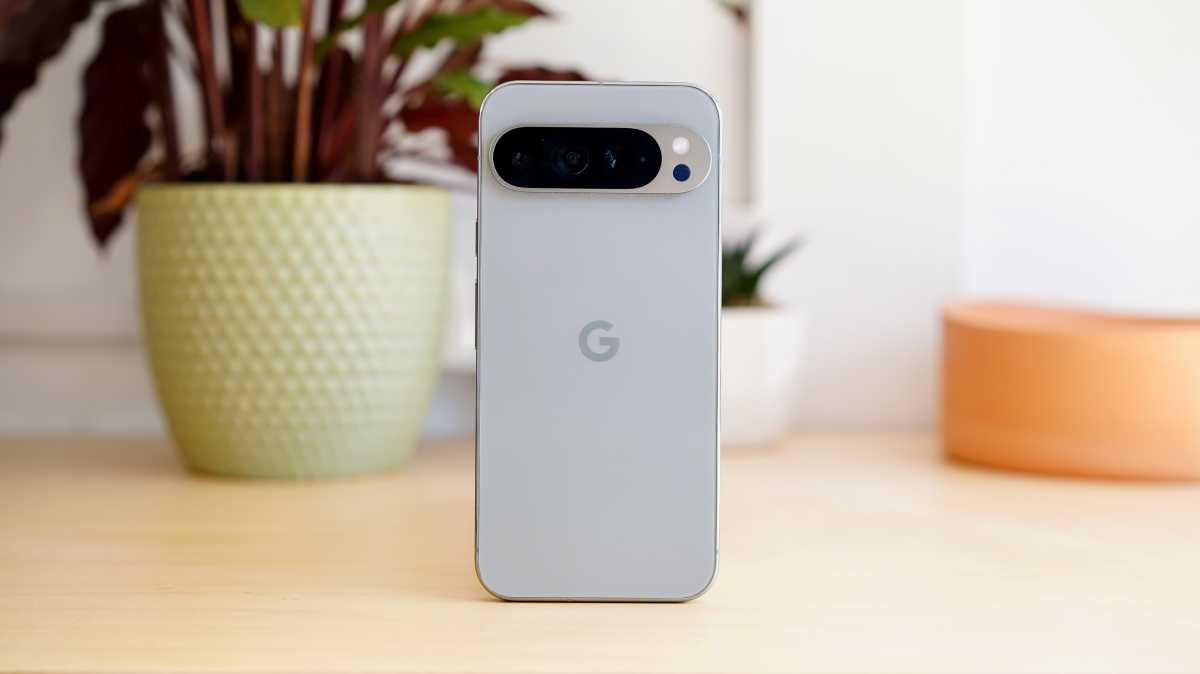
However, there’s currently one exception: the Pixel 10 Pro Fold. Google has equipped its latest foldable with an IP68 rating, matching what you’ll get on non-folding flagships.
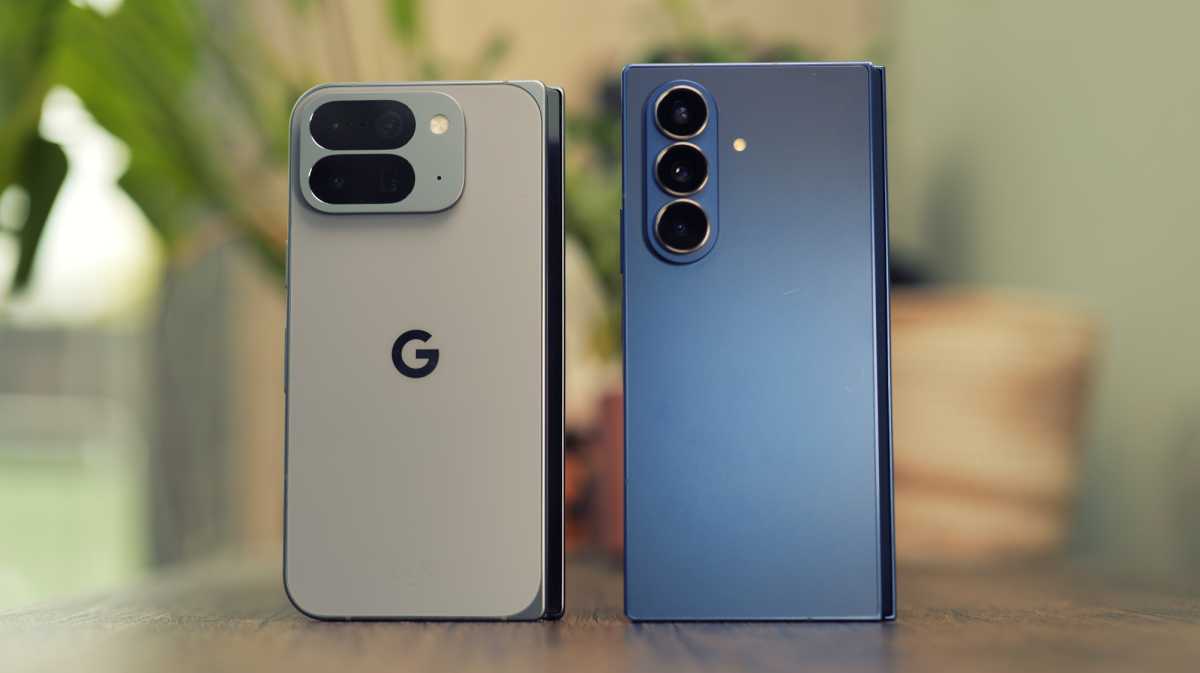
Luke Baker
That should mean it’s fully dust-proof, which is a huge step forward. While the hinge mechanism is still potentially vulnerable, I’d be much more confident taking it to the beach and not worrying about any long-term effects. I’ve got my can of compressed air to deal with any rogue grains in the hinge, anyway.
When you’re buying a folding phone, which remains a very expensive purchase, you need to be confident that everyday activities won’t damage it
When you’re buying a folding phone, which remains a very expensive purchase, you need to be confident that everyday activities won’t damage it. For me, that means only taking one to the beach if it’s specifically rated as dust-proof. And right now, the Pixel 10 Pro Fold is your only option.
With a bit of luck, the upcoming Galaxy Z Fold 8 and brand-new Z Fold Wide will introduce IP68 certification, but this hasn’t cropped up in the mountain of leaks so far, so I’m not holding out too much hope.