
If Thomas Friedman has learned one thing from three decades of watching globalisation, it is this: the most powerful forces in the world today are not governments, but people moving, meeting, and changing one another’s minds one conversation at a time.
That is why Beijing’s next smart move is staring it right in the face: announce a unilateral visa-free policy for ordinary American passport holders.
Not as a favour to Washington. Not as a bargaining chip. Simply as a declaration that China is confident enough in its story to let Americans come see it for themselves.
Over the past two years, China has quietly done something remarkable. It has thrown open its borders on a one-way basis to citizens of 47 countries — Britain, France, Germany, Canada, Australia, Japan, South Korea, and a long list of others across the Middle East and Latin America.
The result? Suitcases zip open, tourists pour in, stereotypes quietly crumble.
Yet the United States remains the conspicuous exception.
In a world where most developed-nation travellers can simply book a flight and go, the average American still has to fill out forms, wait for approval, and jump through bureaucratic hoops.
It is the diplomatic equivalent of leaving one seat empty at the global dinner table.
The consequences are more than symbolic. Most Americans still form their mental picture of China through the cracked lens of cable news and social media — a place that is either a marvel of infrastructure or a source of menace, rarely both.
They rarely get to ride the world’s largest high-speed rail network, cross its unmatched web of highways, bridges, and tunnels, or experience a society where 1.4 billion people can walk city streets at midnight without fear.
The emotional gulf widens, fed by media filters and political posturing, until ordinary citizens on both sides begin to see each other less as people and more as abstractions.
For years Beijing played by the old rules of reciprocity — you tighten, we tighten; you loosen, we loosen. It felt disciplined. It was also self-defeating.
The real breakthrough came when China decided to stop mirroring Washington’s mood swings and started acting like the confident great power it has become.
The European visa-free experiment proved the point: once the barriers dropped, the human traffic flowed. Tourists discovered real neighborhoods instead of headlines. Students swapped ideas instead of slogans. Business travellers turned into accidental ambassadors.
The change was not measured in press releases but in millions of quiet, personal recalibrations of what China actually is.
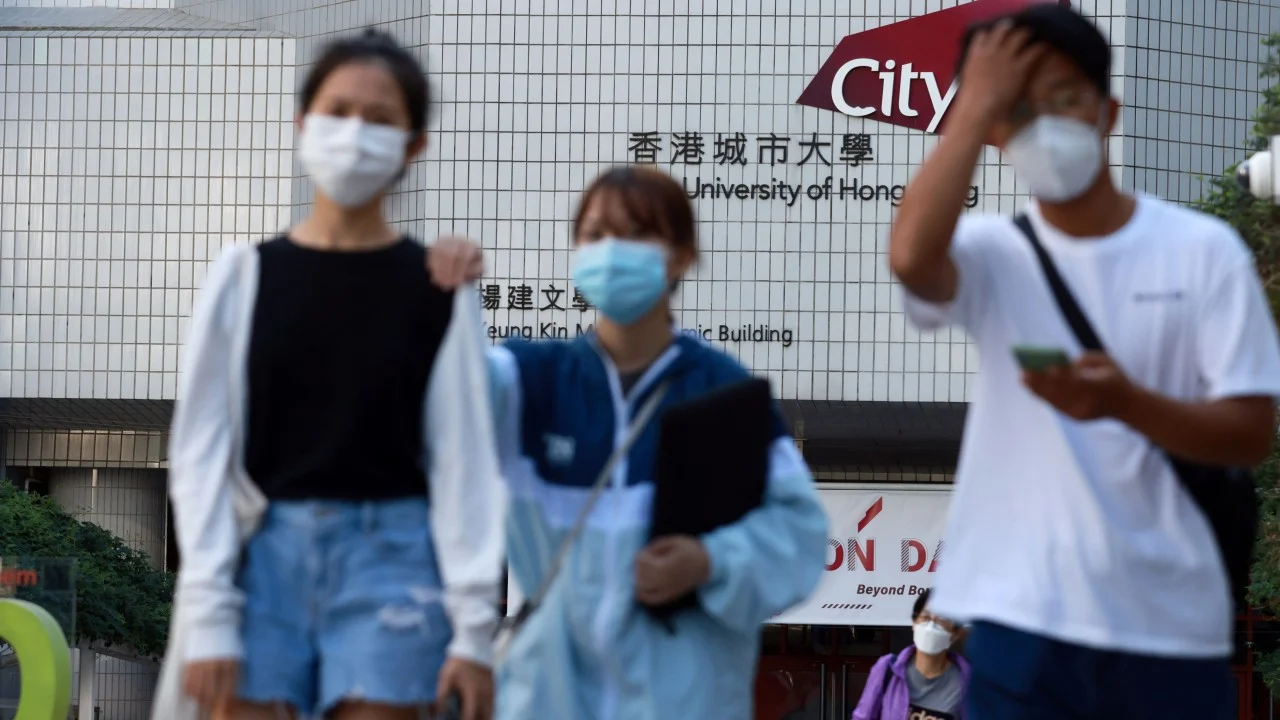
Contrast that with the Sino-American human exchange, which has been shrinking. Pre-pandemic, tens of thousands of American students studied in China every year.
Today that number is under a thousand — while more than 200,000 Chinese students still study in the United States. American tourism to China remains stuck in low gear.
The reason is no mystery. The Trump administration had talked cooperation while quietly tightening the screws on Chinese visas, especially for scientists and students.
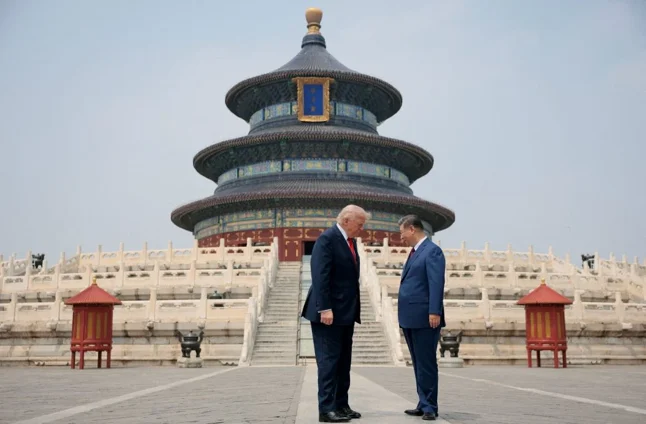
Even when Donald Trump stood in the Great Hall of the People, reminiscing about a century of shared history and grassroots ties, his own government kept tightening those same screws.
Words and policy were traveling in opposite directions.
Here is the strategic opportunity. People-to-people diplomacy is the master key that no government lock can fully resist.
Following Trump’s recent visit to Beijing, China should seize the moment and finish what it started with the rest of the world: offer American citizens 30 days of visa-free entry for tourism, business, and family visits. No reciprocity required. No negotiations necessary. Just a simple, generous policy that says: come see us.
The timing could not be more elegant. This July 4 marks the 250th anniversary of American independence — a moment when the United States reflects on its own founding promise of openness and confidence.
What better occasion for China to demonstrate the same qualities? Imagine the contrast that would hit Americans squarely between the eyes: one country throwing its doors wide open, the other still guarding its gates with layers of paperwork and suspicion.
In the short run, the policy would trigger an immediate surge in American travel. Millions would see China’s progress with their own eyes, ride its trains, taste its street food, and discover that safety and modernity are not mutually exclusive.
In the long run, those travellers would return home as the most effective public diplomats China could ever hire — not because they were paid, but because they had lived the reality.
Their stories, told around dinner tables and office water coolers, would slowly, steadily shift grassroots opinion in the one place that ultimately matters most in American politics: the ballot box.
Because here is the deeper truth about the United States: its foreign policy is not made in Washington alone.
It is ultimately shaped by the accumulated feelings of ordinary voters.
When enough Americans come back from China saying, “I saw it myself,” the political space for cartoonish demonisation shrinks.
Midterm elections this November will once again test how far anti-China rhetoric can carry politicians who have run out of fresh ideas. The best answer China can give is not another white paper or press conference. It is the simplest one possible: let them come.
In the end, unilateral visa-free entry may look like a concession on paper.
In the real world of globalisation, it is something far more powerful — a strategic bet on human curiosity over bureaucratic caution, on lived experience over filtered narrative.
It is China saying, in effect: we are not afraid of what you will find when you walk our streets. And that confidence, more than any treaty or tariff, is what plants the seeds for a relationship that can outlast any single administration.
The world has flattened before. Borders that once seemed permanent have melted under the pressure of people simply wanting to see and understand.
China now has a chance to accelerate that process with the one country that matters most.
All it has to do is open the gate — and trust that the rest of the story will write itself.