The word “unprecedented” has been used a lot to describe the conduct of the current administration. The word has been used almost daily to chronicle the service of US President Donald Trump.
A few of those epithets described the situations correctly. Many were horribly mistaken due to the authors’ dislike of Trump, pure political bias, or, most commonly, because of ignorance of historical precedents, of which the storied past of the United States contains plenty.
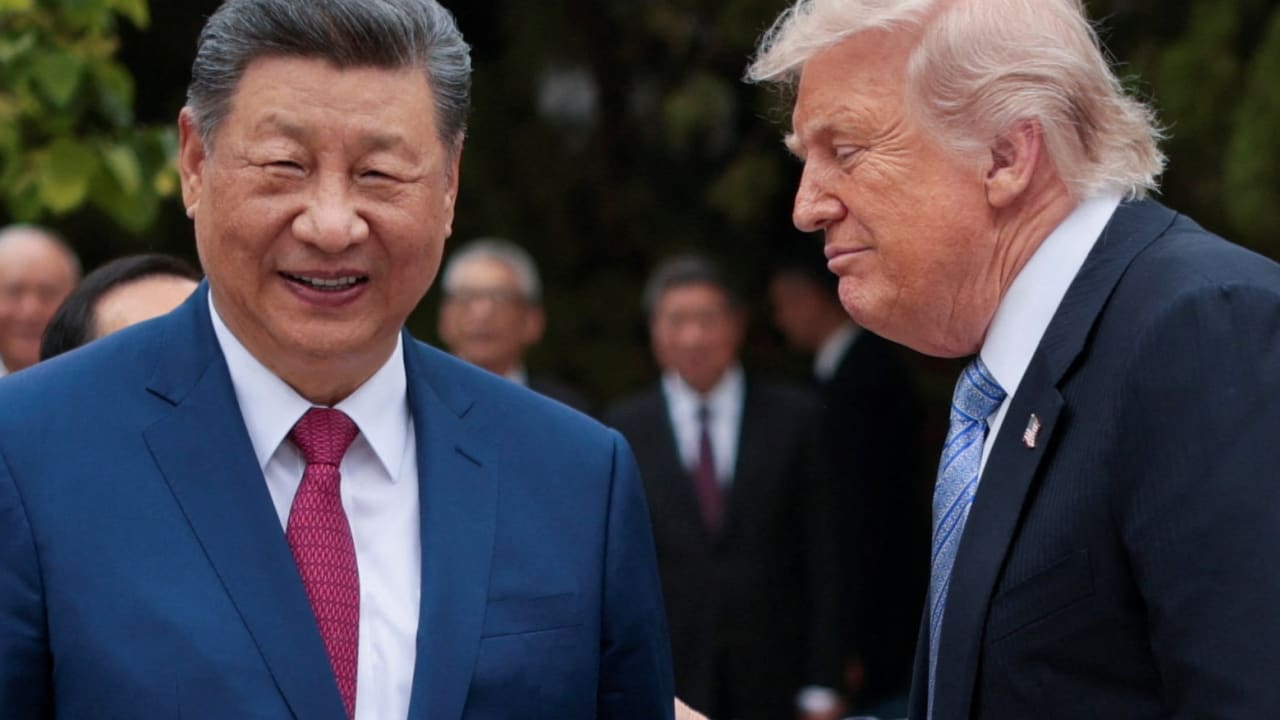
Yet, the latest summit in Beijing did provide a rare opportunity to appropriately use the word.
Summits occur for a variety of reasons. They may try to achieve peace, end wars, clinch agreements, show openness for goodwill, or establish a framework for future negotiations. In other words, summits happen to achieve certain well-articulated results.
Preparations for the summits are the most difficult and painstaking tasks, though rarely recognized by the onlookers. And even with that prior hard work, they may still fail, as happened with Reagan and Gorbachev in Reykjavik in 1986.

Summits have goals by which their successes or failures are defined and often written in history. Until the latest sojourn of Trump and President Xi Jinping in Beijing.
Trump really wanted to have the summit; he never hid that desire and indicated many times that he viewed the summit as a major achievement of his foreign policy.
He never clearly articulated what he was trying to achieve besides reaffirming his “friendship” with the Chinese president.
Trump has never been a big fan of doing homework. This time, he went a bit further. He decided not to even inquire about the subject being tested.
It is hard to judge the latest summit in Beijing based on the actual concrete outcomes. It had no goals, and thus it did not fail when it delivered none. Its results must be measured by propaganda, public relations points only. And if that metric is employed to measure the summit’s success, then Trump suffered a rout.
Xi puts on a performance
Xi – true to his Marxist roots – put out a magnificent theatrical performance. “Bolshoi” did not dance, but the rest was on par.
As part of that well-choreographed performance, Xi performed the role of Trump himself: Xi was welcoming, blunt to the point of being rude, always smiling, and forcing the guest to be uncomfortable and apologetic.
First, Xi presented his guest and the rest of the world with his vision of the present and the future. Not that the audience was oblivious to that point of view, but it was the first time it was presented in the context of a high-level summit specifically designed for Americans and Europeans to be heard.
During Xi’s opening remarks on the first day of the summit, sitting across from President Trump, Xi mused about “great changes unseen in a century accelerating across the globe.”
Then he painted China as a rising challenger to Pax Americana and asked: “Can China and the United States overcome the “Thucydides Trap” and create a new paradigm of major-country relations?”
In that question, he referred to “Thucydides Trap,” an international relations term describing a situation, likely leading to war, when a rising power threatens to displace a ruling power.
Xi did not explicitly use the phrase “declining nation,” but it was an English translation of his “East is rising, West is declining” doctrine. No longer is China willing to hide its intentions behind Chinese language rhetoric.
Now the West is getting the same message. This was the bluntness Donald Trump delivered to the Europeans just a few months prior.
On May 15, 2026, in a more pointed and personal pass at President Trump, the Chinese Foreign Ministry released a formal memorandum related to Iran that contained the following rebuke: “There is no point in continuing this conflict, which should not have happened in the first place. To find an early way to resolve the situation is in the interest of not only the US and Iran, but also the regional countries.”
That sounded like a Truth Social post Trump wrote himself about Ukraine. And at some point, he did.
More importantly, when it came to the question of Taiwan, it was China that drew “red lines”, not the United States.
Xi, looking directly at Trump, stated that the Taiwan question is the question of China’s sovereignty and territorial integrity and “the first red line in China-US relations that must not be crossed”. If that was not a threat, it was an ultimatum and the most direct language a Chinese leader ever used.
Behind closed doors, Xi warned Trump directly that Taiwan is at the center of the relationship: “If it is handled properly, the bilateral relationship will enjoy overall stability. Otherwise, the two countries will have clashes and even conflicts, putting the entire relationship in great jeopardy.”
There was also a question of the $14 billion arms package currently awaiting approval by President Trump. Again, to paraphrase, Xi played his card masterfully. First, it was communicated to the American side that going ahead with the deal before the summit would be counterproductive.
Now, with Taiwan being the “red line,” President Trump publicly confirmed that his decision regarding the package is on hold. The United States compromised and got nothing in return. Taiwan is very nervous, but so are Japan and South Korea.
One may claim all of that was damaging, yet inconsequential rhetoric. But did the president return with any achievements? There was a sizable group of leading American businesspeople accompanying the president. Were any important deals signed? Not really. And they could not be.
The United States is not going to invest directly in China. And China is not going to be allowed by the current, or any, administration to devour American industries using the power of its state capitalism.
To paraphrase the president yet again, there was no deal to be made. Ironically, Chinese willingness to buy American soybeans was touted as a major achievement.
But it is hard not to suspect those were the same soybeans China promised to buy the last time the presidents met. It was a summit without a peak.
The author lives and works in Silicon Valley, California. He is a founding member of San Francisco Voice for Israel.