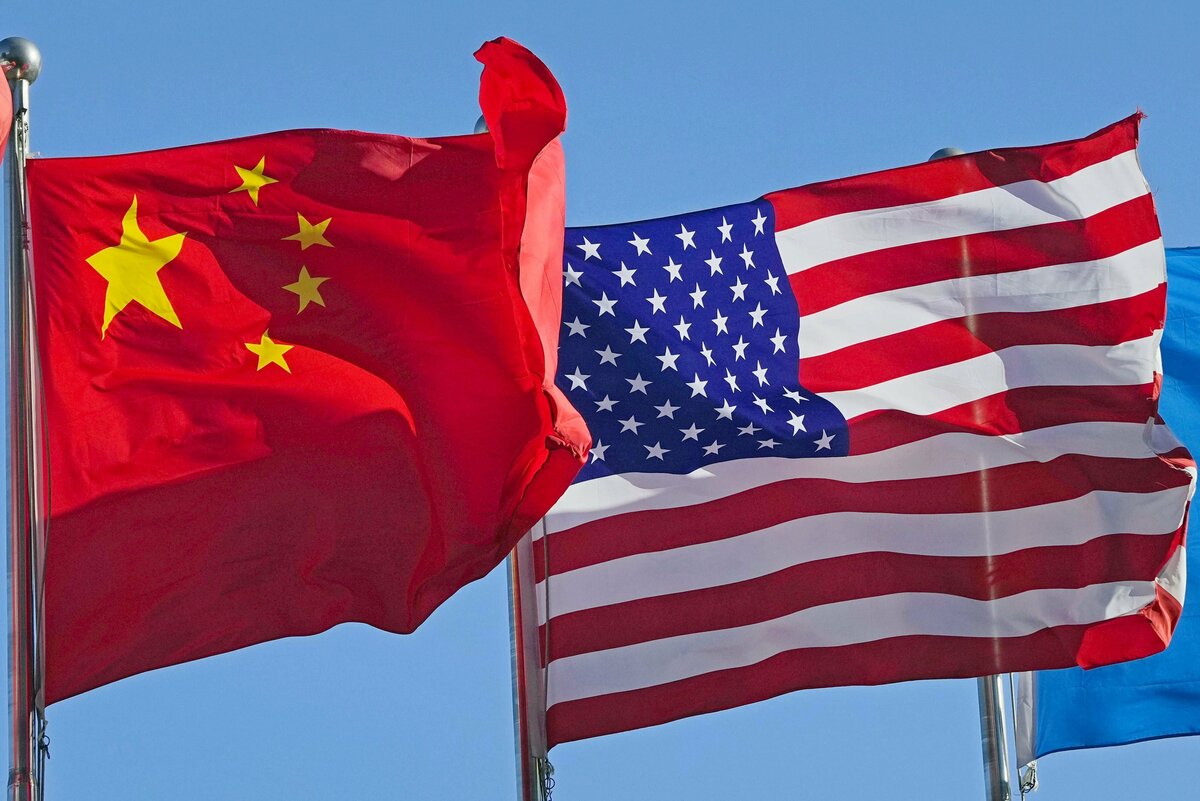
TOKYO – U.S. President Donald Trump and Chinese President Xi Jinping met in Beijing in mid-May. China wants the bilateral relationship to be stable before President Xi secures a fourth term as Communist Party leader and president in the fall of 2027 and hoped to hold the summit as early as possible.
The meeting came about a month and a half later than originally planned due to U.S. strikes on Iran, but it largely achieved Beijing’s immediate aims. By holding his own against Trump and projecting an image as a major-power leader contributing to global stability, President Xi can be seen as having consolidated his critical foreign policy footing to focus on domestic priorities.
The talks’ agenda included China’s purchases of Boeing aircraft and U.S. agricultural products such as soybeans and beef, a framework for dialogue on artificial intelligence and the creation of a bilateral “Board of Trade.”
The Board of Trade, reflecting Trump’s focus on the large U.S. trade deficit with China, is a special arrangement designed to constrain Chinese exports in a more orderly fashion. So, for China to be part of this, the precondition was that it would not hurt its economy.
After negotiations, the two sides agreed to divide Chinese exports into sensitive and nonsensitive areas — the former covering advanced technologies and the latter daily necessities — raising the prospect that the new mechanism will begin operating soon.
With trade and business dealings taking center stage, Taiwan was not part of the core discussions this time.
U.S. attacks on Venezuela and Iran have had a huge impact on China’s strategic thinking by demonstrating U.S. military power, serving as a wake-up call for Chinese war hawks who had been saying, “the East (China) is rising, the West (the United States) is declining,” and prompting them to adopt a more muted tone.
Even so, Taiwan is a red-line issue for China. I don’t think Beijing will ever use Taiwan as a bargaining chip, while the United States is leveraging arms sales and military support to Taiwan.
Identification with China among Taiwan’s people is low, with polls showing more than 80 percent of younger adults identifying themselves as primarily Taiwanese rather than Chinese. So the longer China drags on the issue of unification, the harder it will become.
According to China’s unification path designed by President Xi, Taiwan is part of its revitalization agenda by 2049 — the 100th anniversary of the founding of the People’s Republic of China. The president wants to have this as his legacy, and the earlier the better.
It seems the only hope for a relatively long-lasting peace is that Taiwan’s Nationalist Party — the pro-China main opposition known as the Kuomintang — wins the 2028 election. If it loses, there is a real risk of some kind of military escalation from China.
Beijing’s warm reception for Kuomintang Chairperson Cheng Li-wun during her visit to China in April can be seen as a gesture aimed at promoting peaceful reunification. It suggested efforts on both sides to avoid the worst-case scenario.
But taking back Taiwan is one thing, governing it is another. It would require a comprehensive solution to ensure domestic laws are in place for the Communist Party and the military to justify ruling the island. I do not think China is ready on that front. So it is more cautious about anything that can be interpreted as confrontational or provocative toward the United States or the regional order.
I do not believe the status quo will last. We do not know when, but the question is really just when, not whether or how.
I think the best timing is still when Trump is in office, so the year 2028 will be a better time to do it, or toward the end of 2027 when China will have its military leadership in place after recent purges and its military further modernized.
The Taiwan issue could become a focal point in the latter half of Trump’s second term, after the U.S. midterm elections in November 2026.

(Dan Wang is director for China at Eurasia Group, a U.S.-based political risk consultancy. Hailing from China’s Shanxi Province, she holds a doctorate in economics from the University of Washington. Specializing in China’s economy and geopolitics, she previously served as chief economist at Hang Seng Bank China in Shanghai and as an analyst at The Economist Intelligence Unit in Beijing.)