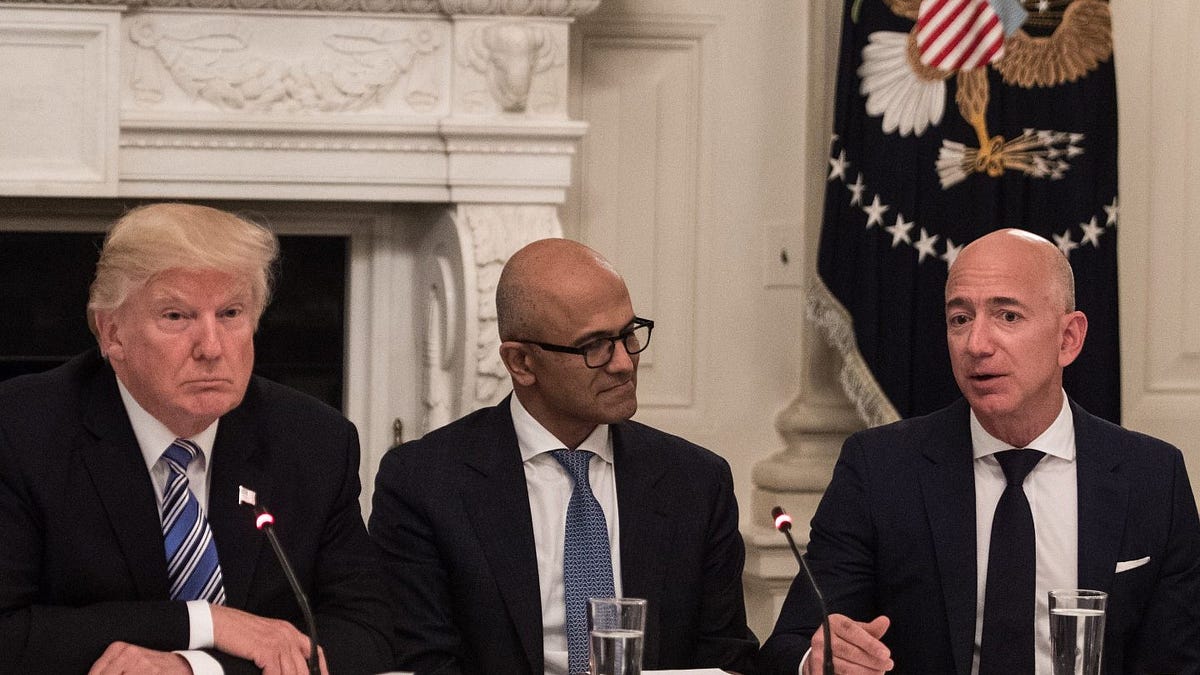
Jeff Bezos went on CNBC earlier this week to opine about taxes and economic inequality. What he had to say wasn’t a shock: America’s 4th richest man praised billionaires and declared that he opposes taxes on the wealthy.
More surprising, perhaps, was how unprepared he was. Most of us, if we planned to spend almost an hour on national TV making pronouncements about taxes, would make at least some effort to get our facts right. Bezos didn’t.
But Bezos obviously suffers from billionaire brain, which I defined last year as
that special blend of ignorance and arrogance that occurs all too frequently in men who believe that their success in accumulating personal wealth means that they understand everything, no need to do any homework.
What was more interesting than the content of Bezos’s remarks was the fact that he chose to give the interview at all. Andrew Ross Sorkin, the interviewer, opened the discussion by saying
In these days, it feels almost impossible to pick up a newspaper without reading a headline about wealth in America, about the billionaire class, about wealth inequality and policy and everything else. And it’s taken a uniquely critical turn, I think.
Indeed. The critical turn has been especially severe for tech oligarchs like Bezos. And Bezos is obviously feeling the heat, sufficiently so that he’s trying — incompetently — to improve his image by “informing” the rest of us about how taxes and all that really work.
I’ll get to Bezos’s likely motivations shortly. First, however, let’s talk about the substance of his remarks.
Public discourse about taxes and inequality is, even more than discussion of other economic topics, infested with zombies — ideas that should be dead, having been proved wrong again and again, but that keep shambling along, eating people’s brains. What sustains the zombies is, of course, billionaire money, which keeps false claims in circulation as long as they seem to justify low taxes on the superrich.
Sure enough, it took Bezos only a couple of minutes to peddle a classic zombie lie about who pays taxes:
We already have the most progressive tax system in the world. The top 1 percent of taxpayers pay 40 percent of all the tax revenue. The bottom half pay only 3 percent.
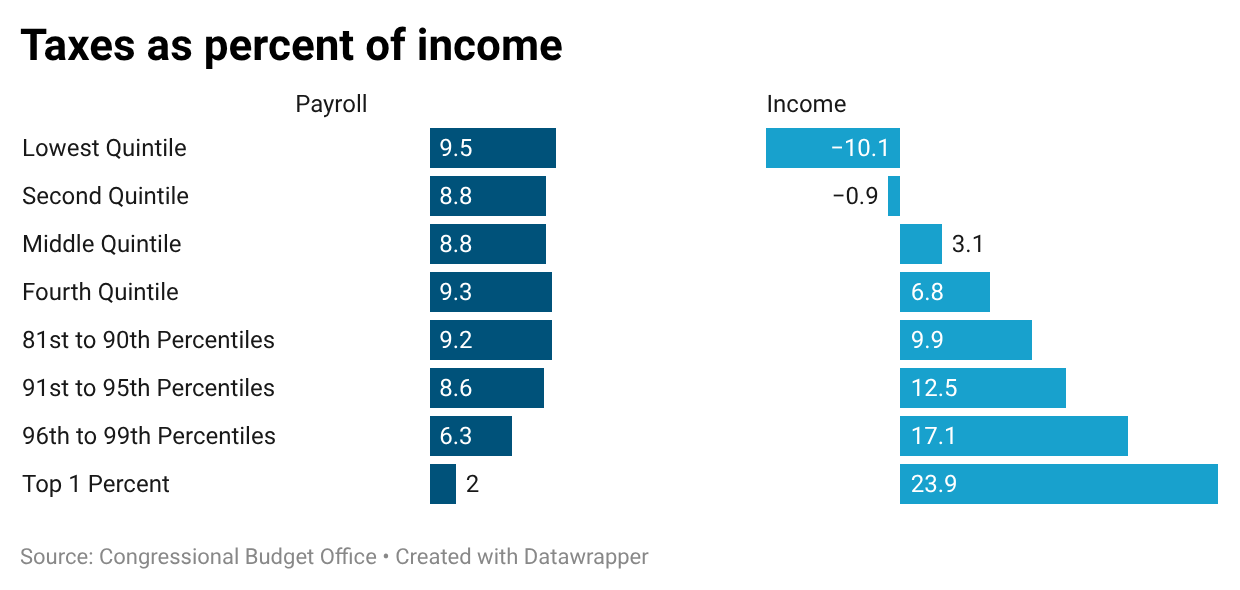
These numbers aren’t remotely right unless Bezos is referring solely to federal income taxes — which are only part of the overall tax system. About 80 percent of Americans pay more in payroll taxes — FICA on your paycheck — than in income taxes:
Furthermore, state and local taxes generally fall more heavily on the working and middle classes than on the elite. As a result, the Institute for Taxation and Economic Policy has showed that the overall burden of taxes is only slightly higher for the affluent than it is for the working and middle classes:
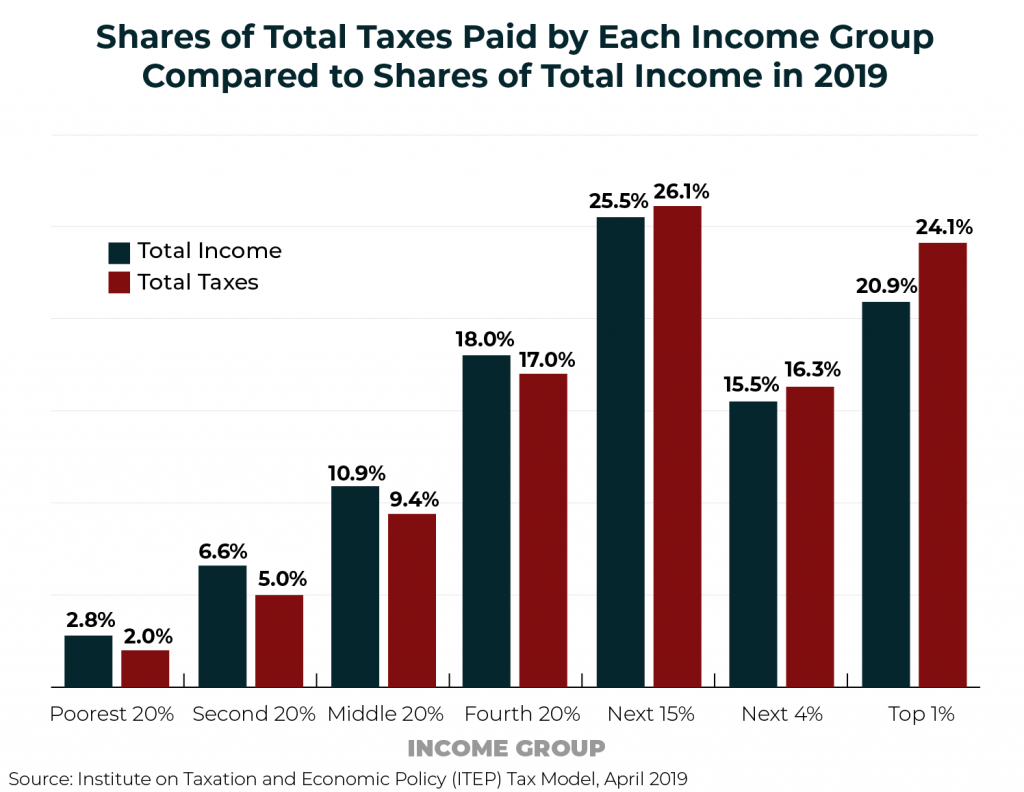
These numbers are for 2019. Since then, the tax system has become even less progressive as a result of Donald Trump’s tariffs, which fall most heavily on lower incomes, and his tax cuts for the rich.
So Bezos doesn’t understand the most basic facts about taxes, nor did he make any effort to inform himself. He went instead with some numbers he thinks he heard somewhere — numbers that tell a story he wants to hear. As I said, billionaire brain.
Bezos also made some assertions about his own taxes:
These people sometimes say that, that, you know, I don’t pay taxes. That’s not true. I pay billions of dollars in taxes.
Seriously, does he want to go there? Yes, Bezos pays taxes. But ProPublica found that between 2014 and 2018 these taxes were less than 1 percent of his true income.
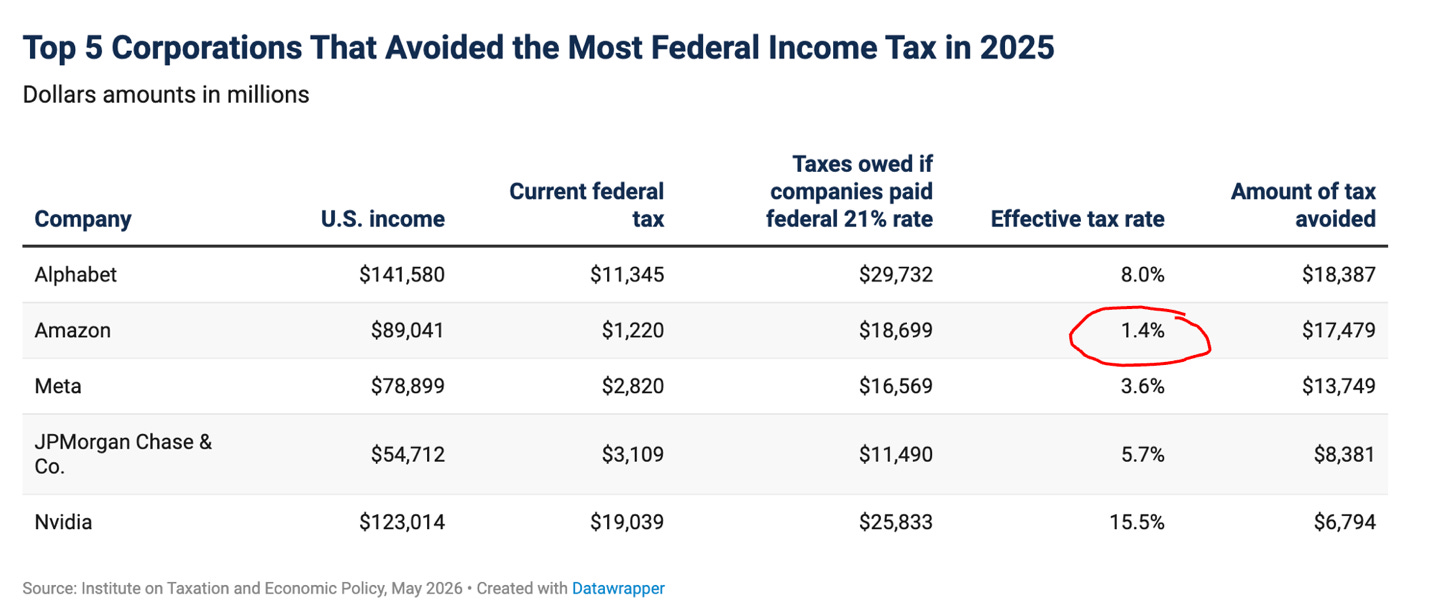
Bezos also decried corporate welfare. Again, does he want to go there? Amazon, like the oligarch who runs it, pays remarkably little in taxes as a share of its income:
I could go on: there was a lot of arrogant ignorance in that interview. But in a way the most interesting question is why Bezos gave it at all.
The answer, almost surely, is that Bezos is feeling the heat. There is a broad political backlash brewing against the excessive power of billionaires and the corrupting effect of their money on our democracy. This backlash is especially severe for tech oligarchs. A decade ago, Bezos and other tech billionaires were popular, almost folk heroes. No longer:
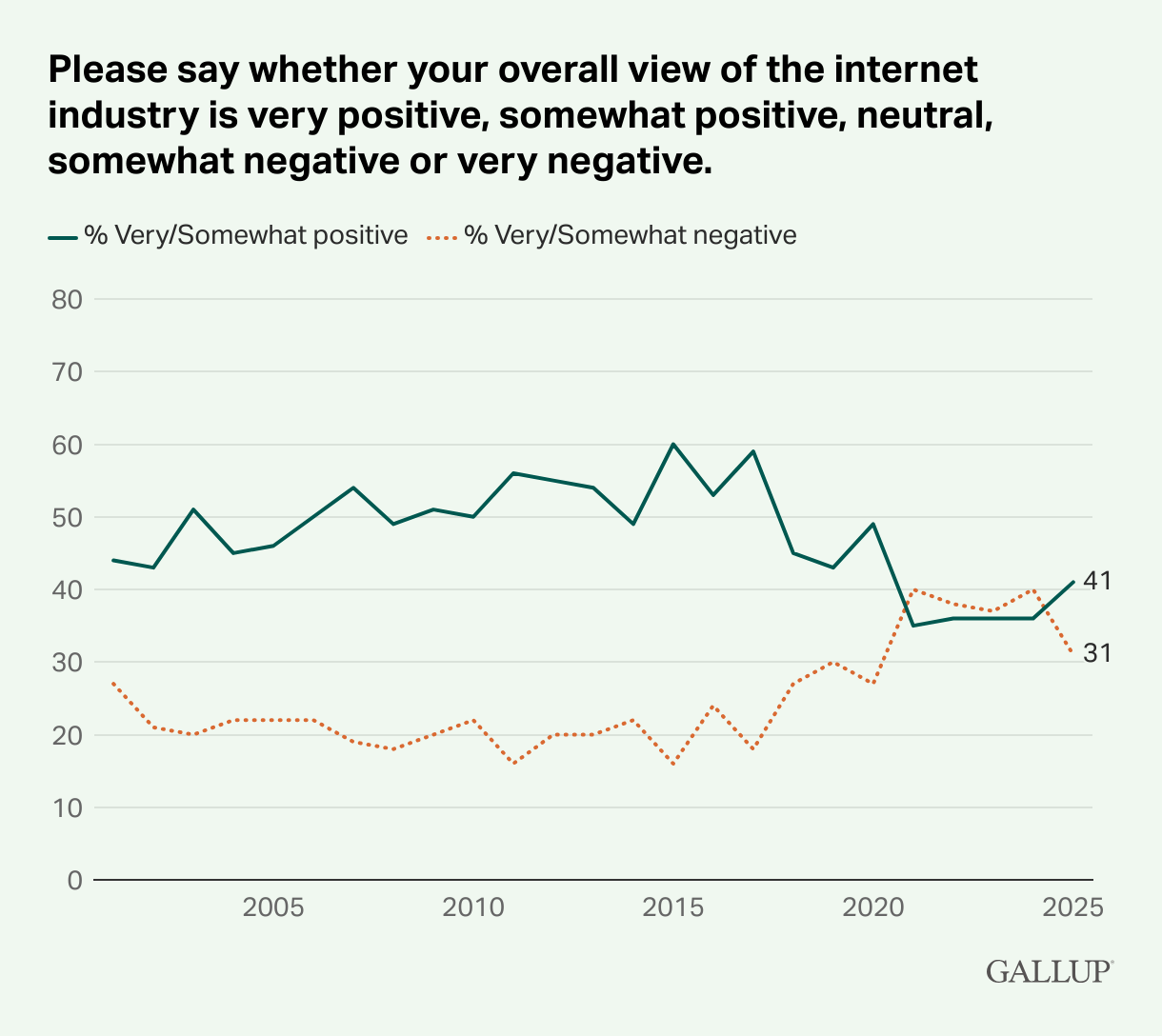
That slight uptick in 2025 is probably just a statistical blip — and there’s now a huge backlash brewing against AI. Here’s Eric Schmidt, the former CEO of Google, trying to hype AI in a college commencement address:
Last year Bezos and other tech billionaires evidently believed that they could insulate themselves from criticism — and secure their wealth against both taxation and regulation — by allying themselves tightly with Donald Trump. Notably, Amazon, along with Apple, Google, Meta, and Microsoft is one of the companies paying for Trump’s grotesque ballroom.
But Trump is now exploring new frontiers in presidential unpopularity, and Republicans are facing a wave of public revulsion so strong that it will probably overwhelm even their strenuous efforts to rig the midterm elections.
So paying court to the mad king isn’t looking like the smart political move Bezos and his ilk thought it was. How, then, can they defend themselves against the threat of taxes and regulations that might make them slightly less rich?
Well, Bezos evidently thought that the threat to his billions was sufficiently important to justify going on CNBC to lecture the rest of us about the evils of taxation — but not sufficiently important for him to learn a few facts first.
Somehow, I don’t think this new political strategy will work.
MUSICAL CODA