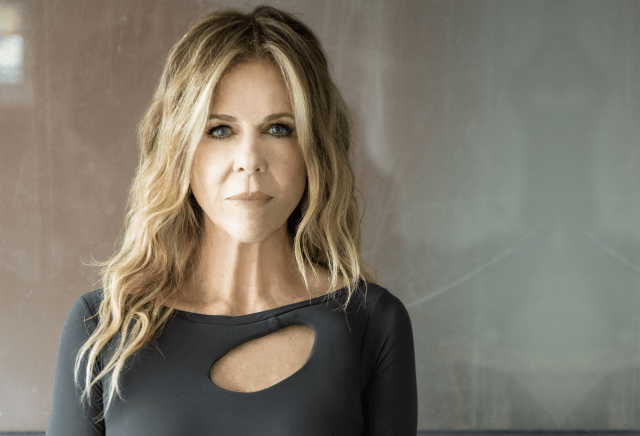
Rita Wilson has found success on television, in film, and on Broadway (Fish in the Dark and Chicago) for more than 50 years, and become a popular recording artist who has played everywhere from the Café Carlyle in New York to Nashville’s giant Nissan Stadium.
But rather than resting on her considerable laurels, Wilson, who married Tom Hanks in 1988, is heading back to Broadway this month as both producer and occasional star of Celebrity Autobiography, a hilarious compendium of readings that feature dozens of actors during its limited run at the Shubert Theatre.
In addition, she recently released her newest album, Sound of a Woman, and will do a tour in June.
TheaterMania caught up with Wilson recently to discuss these two projects, America’s fascination with the private life of celebrities, and her own obsession with other people’s autobiographies.
(handout image)
This interview has been condensed and edited for clarity.
What made you want to both produce and be in Celebrity Autobiography on Broadway?
I’ve performed in it before, and I’ve been in the audience, and either way it is one of the most hilarious shows I’ve encountered. It’s such a simple concept, just reading from these books, but Eugene Pack (the show’s co-creator) made it seem that whatever celebrities had to stay was important—and then made it deeper than the sum of its parts, especially by putting these “mash-ups” together from different people’s books. I also love that the readings are not strictly gender-related; men can read women’s books and vice versa. Not only is the show all about the humor, but you don’t have to question if it’s funny. The humor is in the truth of what’s on the page. I think it’s just so accessible to any theatergoer.
Are the books you’re reading from your personal choices?
No, Eugene assigns the choices. It’s a Rubik cuke of putting each selection together with the right person and the right cast. And, by the way, as an actor, I love the idea of this show because you get to work with different people, you don’t have to memorize any lines, and you get to have a fabulous time being on Broadway.
Why do you think Americans are so enamored with the lives of celebrities?
It’s not new. It goes back to beginning of the Hollywood studio system, which was designed to protect the image of stars by creating magazines that were supposedly about their private lives. With social media, there’s now a new comfort level of celebrities exposing their lives, whether it’s political figures, athletes, musicians, or actors. We’re all curious—and even accomplished actors can get starstruck, believe me!
You’re a very accomplished magazine writer. Would you ever write your own autobiography?
I am a very private person, but if I had something valuable to say about a larger issue, I would consider it. I just would never write solely about myself. However, I am voracious reader of autobiographies; Demi Moore’s Inside Out is beautifully written and very poignant as it shows the growth of someone who learned from her mistakes; Linda Rondstadt’s Simple Dreams is incredible, letting us know how her music played such a large part in her life during the 1970s. And I just finished Lena Durham’s new book, Famesick, and it’s fascinating. I could go on and on about the books I admire.
Well, I think we’ve all learned something about you from your music, including your new album Sound of a Woman. What was the biggest inspiration for those songs?
It’s about how we see what’s happening to ourselves and other women right now. Plus, there was no template of starting a career of being a singer-songwriter as a woman in her 50s. Music is the primary way I tell my stories and the women I know. In fact, it’s always easier for me to champion other women, including producing the films My Big Fat Wedding and Mamma Mia!, which are about female friendships and the choices women have to make every day in their lives.
In June, you’re doing a multicity tour to promote Sound of a Woman at various City Winery spaces around the country. Do you prefer small stages like those or bigger ones like the Shubert?
I still believe all kinds of stages are valuable, because whether it’s a small venue, a Broadway house, or a stadium, you are always really performing to one person and trying to connect with them.