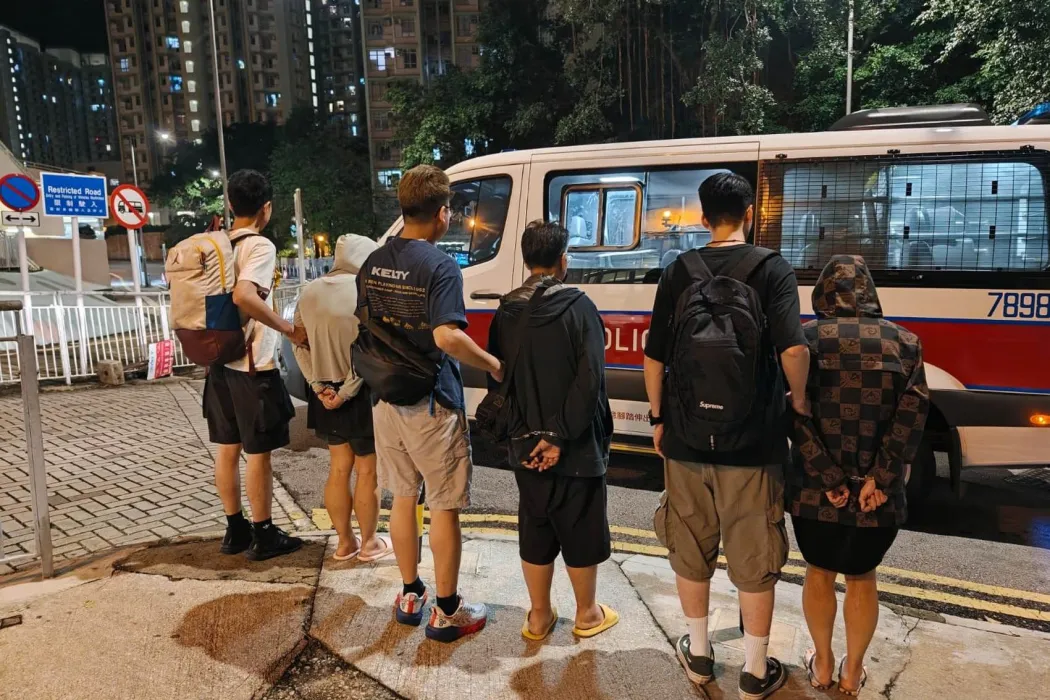
Hong Kong police have dismantled an alleged drug manufacturing laboratory inside a public housing flat in Tsuen Wan, seizing HK$2.5 million worth of etomidate – also known as space oil – and arresting three women.

Police said on Wednesday they received a tip-off that a flat in Tsuen Wan’s Lei Muk Shue Estate was suspected of being used as a drug manufacturing and storing facility.
Officers of the Kowloon City district special team conducted an anti-drug operation on Tuesday and raided the flat, the force said.
Police deployed to the estate stopped a 39-year-old woman after she stepped out of her flat. She was found with six e-cigarette capsules containing suspected etomidate and was arrested, police said.
Two more women, aged 29 and 35, were arrested inside the flat, where “a large amount” of capsules containing suspected etomidate was discovered, police said.
Officers also found 28 bottles of suspected etomidate liquid, about 300 grams of powdered etomidate, and drug-making tools such as pots and electronic scale.

The three women were charged with one count each of manufacturing and trafficking a dangerous drug, while the 39-year-old faces another count of possession of a dangerous drug.
The trio will be brought to the West Kowloon Magistrates’ Courts on Thursday, police said.
Police warned manufacturing drugs is a serious offence with a maximum penalty of a HK$5 million fine and life behind bars.
Etomidate, previously called “space oil,” is a drug that has gained popularity among teenagers in recent years. Authorities said in March that, since the first quarter of 2025, etomidate has overtaken cannabis and cocaine as the most common type of substance abused by young people under the age of 21.
The government began referring to space oil as etomidate last July, saying that the renaming would reduce its appeal.
Authorities added etomidate to the Dangerous Drug Ordinance last year, putting it in the same ranks as ketamine and cocaine.