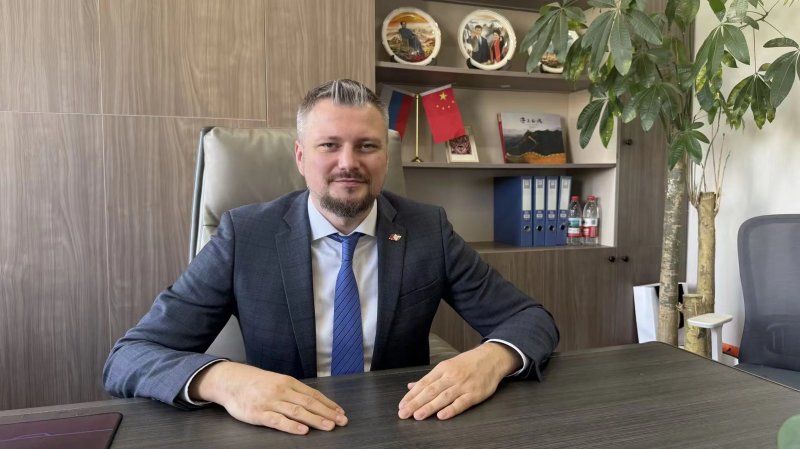
Pavel Kiparisov, Chairman of the Russian-Chinese Guild of Commerce
As Russian President Vladimir Putin begins his state visit to China from 19 to 20 May, attention is once again focusing on the strength and resilience of China–Russia relations amid profound global economic and geopolitical changes.
Ahead of the visit, Putin addressed the Chinese public, expressing hope that the peoples of the two countries would grow closer and deepen mutual understanding. Highlighting the steady expansion of bilateral ties, he noted that China–Russia trade has remained above $200 billion for three consecutive years, while the visa-free regime between the two countries has further boosted tourism, business exchanges and people-to-people contacts.
– The long-term political foundation between China and Russia has created a strong sense of stability and mutual trust for businesses on both sides. This stability allows companies to confidently invest their money, resources and efforts into long-term cooperation with Chinese partners and the Chinese market.
A recent example is the opening of an official representative office of Russia’s Ryazan regional government in Beijing. This sends a positive signal to businesses, demonstrating that Russian regions are ready to deepen engagement with China and actively encourage local enterprises, technology companies and investors to explore opportunities with Chinese partners. At the same time, it shows that both Chinese and Russian businesses are prepared to offer favourable conditions for investment and joint projects.
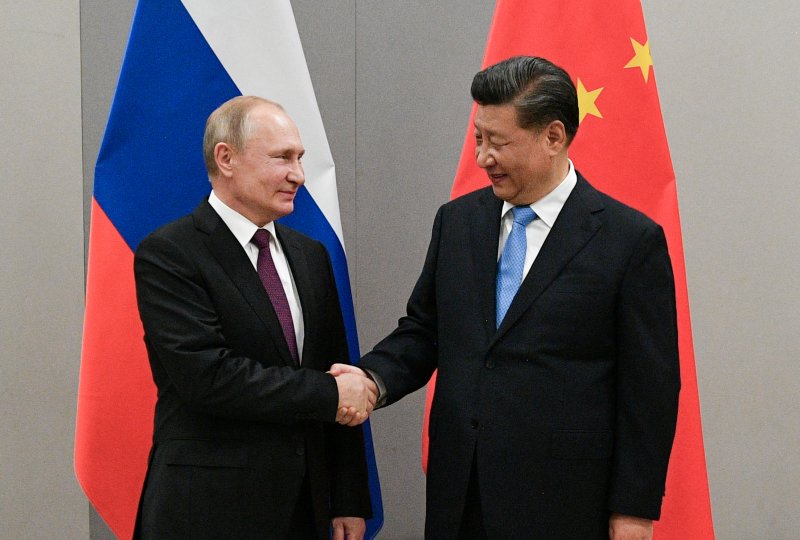 Source: Reuters
– What signals or outcomes will you be watching most closely during President Putin’s visit?
– We are looking primarily at the strategic decisions of our leaders. China’s economy is transforming from the “world’s factory” into a major global centre for research and innovation, creating new opportunities for deeper China–Russia cooperation.
To sustain momentum in bilateral trade, it is important to improve coordination between the two countries’ industries and technical standards.
For example, foreign medical companies entering the Russian market must undergo a formal certification and legalisation process, which can often be complex and time-consuming.
To address this, the Russian-Chinese Guild of Commerce, together with China’s Tsinghua University, is working on a major project to support the localisation and certification of medical equipment in China and Russia. The initiative aims to streamline procedures and make it easier for Chinese companies to obtain the necessary approvals to enter the Russian market legally and efficiently.
– What have been the biggest attractions of the Chinese market for Russian businesses?
– Russian businesses are particularly attracted to the Chinese market because of opportunities in technology and industrial cooperation.
The automotive sector is a key example, with Russian factories increasingly adopting Chinese technologies to modernise domestic production. More broadly, Chinese involvement in areas such as logistics and investment is helping support Russia’s industrial and economic development.
– Cross-border travel between China and Russia has increased sharply since the visa-free policy took effect. How could this growing people-to-people exchange support bilateral trade and investment?
– The visa-free policy has significantly strengthened people-to-people exchanges between China and Russia by making travel easier and more efficient for business communities. Removing visa barriers reduces both time and administrative costs, directly facilitating closer business and diplomatic contacts.
In addition, deeper cooperation in education, science and engineering is an important foundation for long-term bilateral relations. In particular, expanding opportunities for Russian and Chinese engineers and researchers to cooperate in high technology and scientific innovation is crucial.
Ongoing investment in research and development in China, along with planned bilateral “Years of Education”, will further strengthen talent exchange and practical cooperation between the two countries.
As President Putin’s visit to China unfolds, the interview highlights a shared emphasis on strengthening practical cooperation, particularly in trade, technology, education and regulatory alignment. In a changing global economic environment, both sides continue to explore new ways to deepen business ties and expand long-term people-to-people and institutional cooperation.
By Chen Ziqi (a reporter from CGTN)