When Donald Trump arrived in Beijing last week for his first state visit to China since 2017, he was joined by the CEOs of Tesla, Apple, Nvidia, Micron, Qualcomm, and others. Their presence went against the rhetoric coming out of Washington and Silicon Valley of deteriorating U.S.-China relations. Instead, these CEOs appeared to convey that the version of U.S.-China relations being sold to investors, founders, and the general public is not the one their own companies are operating with.
China is a competitor, and should be treated as one. But there’s a difference between competitor-as-adversary and competitor-as-peer. The U.S. tech community — startup founders and venture investors alike — has drifted toward the former, and it’s going to cost them.
Reality vs rhetoric
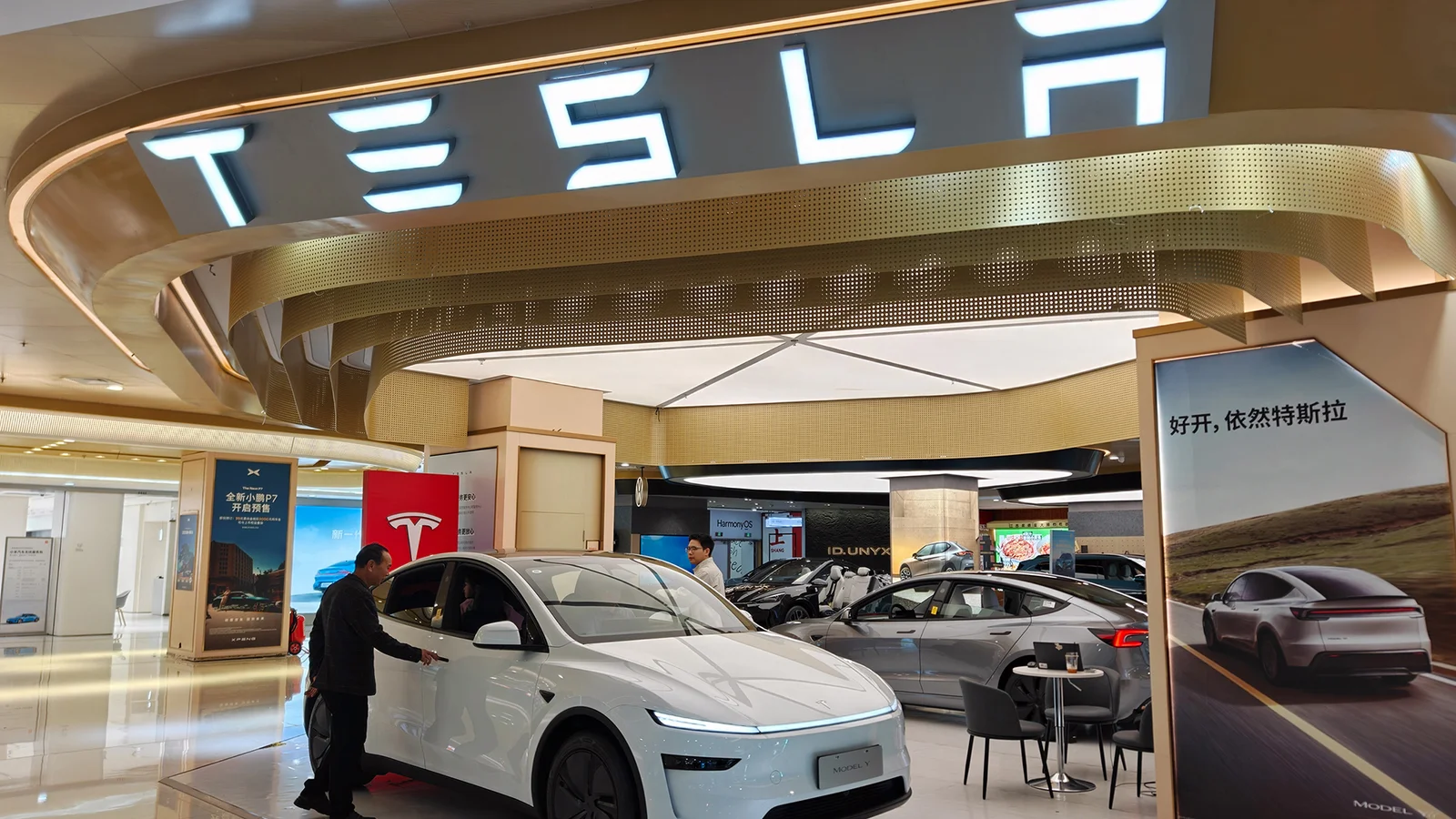
Apple still manufactures an overwhelming majority of its iPhones in China. In 2024, Tesla delivered more than a third of its global vehicles to Chinese customers. Tesla’s Shanghai Gigafactory, built in 2019, has produced more than 4 million vehicles. Nvidia’s chips are routinely smuggled into China to get around export bans, which have been loosened after Xi and Trump met last week.
The public narrative is about China being a foe. In reality, every major U.S. tech company is deeply entangled with China.”
Then there are the U.S. companies people think aren’t in China. Google’s Android operating system runs on nearly 80% of smartphones in China. Meta’s social platforms are blocked to Chinese users — yet Chinese advertisers, including Temu and Shein, generated more than $18 billion for Meta in 2024, more than 11% of its global ad revenue. Zoom, used by just about every American boardroom, has historically run its product development out of China; engineers there made up roughly 70% of its non-U.S. workforce at the time of its IPO.
Even Microsoft used China-based engineers for nearly a decade to maintain Pentagon cloud systems through a “digital escort” workaround — which ProPublica exposed last summer, after which the company quickly pulled out. The fact that one of the most security-sensitive customers in the world had been served by Chinese engineers for that long tells you just how disconnected the rhetoric is from the reality.
The public narrative is about China being a foe. In reality, every major U.S. tech company is deeply entangled with China, be it for manufacturing, for engineering talent, for advertising revenue, for end markets, or all four.
What Tesla, Apple and Nvidia got right
Tesla, Apple, and Nvidia aren’t unique in being in China. But they are unique in the way they’re present in China. First, they engaged on China’s terms. In 2018, Tesla became the first foreign automaker allowed to set up a wholly owned subsidiary in China. Apple has spent more than two decades co-developing its supply chain with Chinese manufacturers. Prior to restrictions put in place in late 2022, Nvidia had a near monopoly on China’s high-end GPU and AI chip market.
Second, they treated the relationship as a long game, dealing with friction along the way. When Chinese officials restricted Tesla from accessing sensitive government sites over data concerns, Tesla absorbed the hit and kept building. It now looks likely to secure approval to roll out full self-driving in China.

CFOTO/Getty Images
Apple has weathered repeated regulatory and competitive pressure from local companies like Huawei. Jensen Huang has been an advocate of continued Nvidia sales to China despite pressure from the U.S. government, arguing that it’s better to have Chinese AI built on an American tech stack rather than allowing a total ban to nurture homegrown Chinese competitors.
Third, they have diversified without disengaging. Tesla now manufactures in California, Texas, Berlin, and Shanghai. Most U.S.-bound Apple devices are now made in India and Vietnam. Nvidia works with TSMC to produce chips in the U.S., while also going ahead with a new R&D center in Shanghai.
None of these companies left China, because doing so would mean abandoning a market, a manufacturing ecosystem, and an engineering talent base that no other country yet has. The engagement of Tesla, Apple, and Nvidia with China is the opposite of binary thinking. And it’s what American startups should be doing.
Why this matters for the next wave
China is the only country that comes close to competing with the U.S. on AI — and it may be close to outcompeting the U.S. on open-source models. Plus, the AI race is going to be won on physical AI — robotics, autonomous systems, embodied intelligence — which requires hardware. Hardware needs supply chains. Supply chains, today, run through China.
Don’t write off China as a market. Don’t write off Chinese talent.”
China controls roughly 60% of global rare-earth mining and 90% of refining, 98% of the lithium battery supply chain, and about 94% of the world’s high-performance permanent magnets used in motors and drones. When Beijing tightened rare-earth export controls in 2025, U.S. carmakers and defense contractors winced.
Perhaps this can be solved by reshoring, as some expect. But for the next decade or so, any company building hardware-intensive AI products that pretends China isn’t part of the equation is going to lose to a competitor that embraces China.
When it comes to talent, it’s the same story. In recent years, anti-China sentiment has pushed top Chinese-born researchers — including Song-Chun Zhu, one of the most cited AI scientists of his generation — out of the American system. After the Department of Justice’s 2018 “China Initiative,” departures to China by China-born scientists rose by 75%, a Stanford study found.
What it means for founders
A few things I’d tell any founder building today: Don’t write off China as a market. Don’t write off Chinese talent. Look at what the most successful American companies are actually doing. Apple’s CEO was on a plane to Beijing last week, and that tells you more than any earnings-call comment about decoupling.
Build geographic optionality the way Apple and Tesla did by ensuring you’re not single-threaded through any one country, including your own.
And finally, distrust anyone selling a black-and-white narrative. There are companies that benefit from the “China is the enemy” narrative — defense contractors, certain AI labs raising funding on a national-security pitch, social platforms whose biggest competitive threat is Chinese. Their interests aren’t your interests.
A Pew Research Center survey published last month found that 27% of Americans now hold a favorable view of China, nearly double the 2023 low. More than a third of younger Americans view China favorably. That includes people who will buy your product, and work at your company.
Trump’s trip to Beijing is a reminder that the people making the deals are using a different playbook than the one most founders are reading. The rest of Silicon Valley should take note.