
Apple has added a new setting on iOS 26.5 that lets Brazilian users select their preferred app marketplace other than the App Store. Here are the details.
Apple to allow alternative iOS app stores in Brazil
Earlier this month, iHelpBR noted that iOS 26.5 RC set up support for app sideloading in Brazil, following a settlement with CADE, the country’s competition watchdog, over the App Store’s rules in the country.
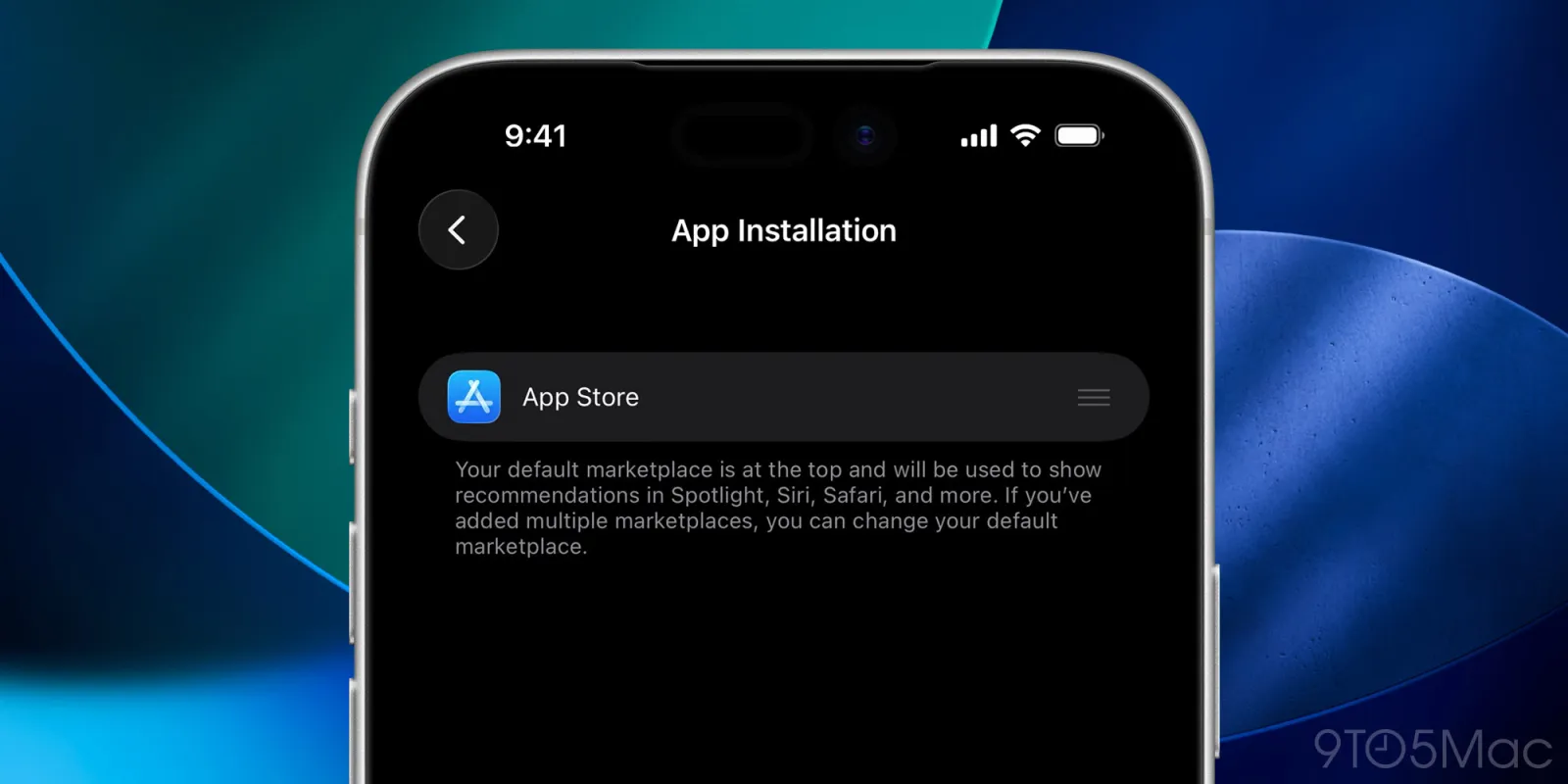
Now, as spotted by Sorcererhat Tech, Brazilian users can see a new “App Installation” option under Settings > Apps, a section that lets users “manage (their) default apps for iPhone, including choosing the apps (they) prefer to use for opening links on the web, sending emails, making contactless payments, and more.”
Right now, the App Installation setting shows only the App Store, while Apple’s description of the setting says the following:
“Your default marketplace is at the top and will be used to show recommendations in Spotlight, Siri, Safari, and more. If you’ve added multiple marketplaces, you can change your default marketplace.”
While it remains unclear exactly when Apple will enable alternative app distribution in Brazil, the new setting offers a hint at what the implementation may look like.
CADE’s terms specifically require Apple “to allow app distribution through alternative stores,” and the new App Installation menu now describes the implications of choosing a default marketplace other than the App Store.
That wording points to a pure marketplace-based model, rather than Web Distribution, a separate EU option that lets authorized developers distribute iOS apps directly from their own websites under Apple’s DMA changes.
Apple’s alternative app store terms in Brazil include new fees
Under the deal between Apple and CADE, Apple will be able to charge new fees for alternative payments and app distribution in Brazil.
The terms include a 25% App Store commission, or 10% for developers in special programs, plus an additional 5% fee when developers use Apple’s in-app purchase system.
Apps distributed through the App Store can also direct users to outside payment options, with no fee for static text, but a 15% commission when developers use an active link or button. For apps distributed through alternative app stores, Apple will be able to charge a 5% Core Technology Commission.
Apple has yet to officially confirm these terms, but with the underlying support now showing up in iOS 26.5, the rollout appears to be moving closer.
Worth checking out on Amazon


FTC: We use income earning auto affiliate links. More.