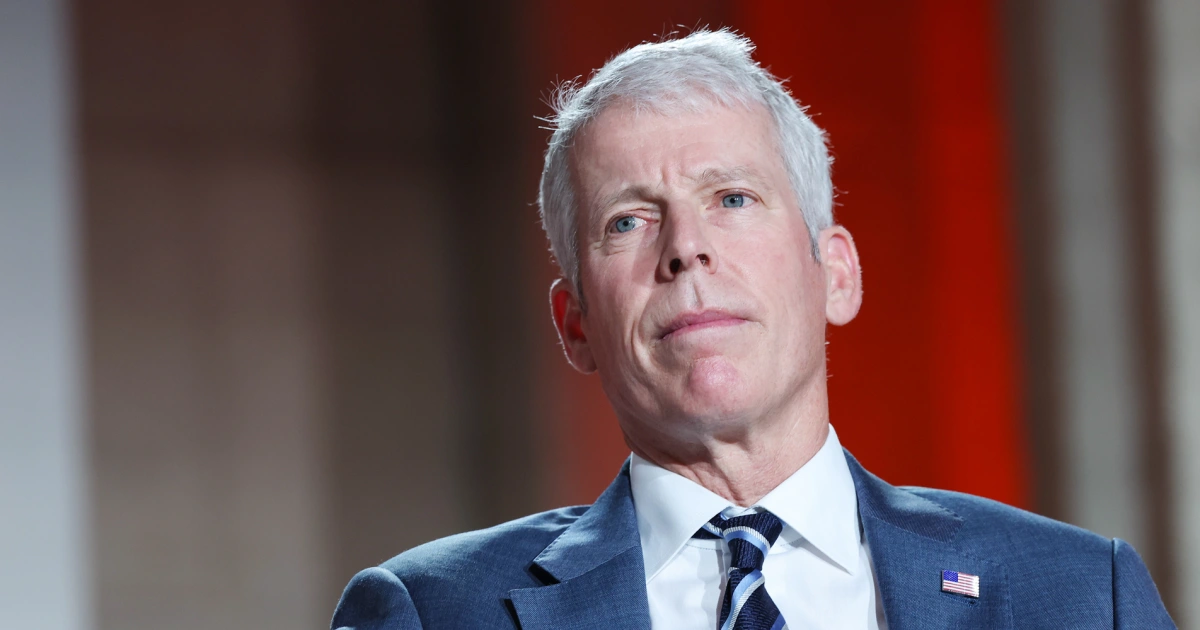
Energy Secretary Chris Wright told NBC News’ “Meet the Press” on Sunday that the Trump administration is “open to all ideas” to lower the cost of gas, including suspending the federal gas tax.
Subscribe to read this story ad-free
Get unlimited access to ad-free articles and exclusive content.

Gas prices have been soaring, hitting a national average of $4.52 per gallon on Sunday, according to data from motor club AAA — an increase of more than 50% since the start of the Iran war.
Asked by moderator Kristen Welker whether he would support suspending the federal gas tax, Wright said that “all measures that can be taken to lower the price at the pump and lower the prices for Americans, this administration is in support of.”
Asked to clarify whether President Donald Trump is open to suspending the federal gas tax, which stands at about 18 cents a gallon, Wright said, “We’re open to all ideas.”
“Everything has trade-offs,” he added.
Democrats in Congress introduced a bill in March to temporarily suspend the federal gas tax until October.
Wright declined to speculate when asked whether average gas prices, which remain a potent political issue during a midterm election year, could reach $5 per gallon.
“I can’t predict the price of energy in the short term or even the medium term, but what we’re doing is ending a 47-year conflict Iran has fought,” he said. “Death to the United States for 47 years, death to Israel.”
Pressed again on the possibility of gas prices hitting the $5 milestone, Wright said he was “just avoiding price predictions.”
“But I will say, the United States is in a tremendous position,” he added, pointing to U.S. production of oil and natural gas.
Wright previously told “Meet the Press” in March that there was a “very good chance” gas prices could drop below $3 per gallon by the summer. At the time, Wright predicted that “Americans will feel it for a few more weeks.” Eight weeks later, gas prices have continued to climb and shown no immediate sign of returning to prewar prices amid Iran’s continued blockade of the Strait of Hormuz.
Experts say that while the United States’ own blockade of Iranian ports would ultimately deprive Iran of necessary oil revenue, the country could likely withstand that pressure for months.