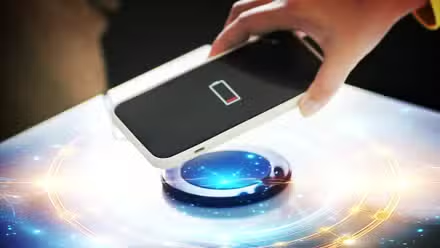
Wireless charging is a standard feature on many mobile devices, but the most popular Qi specification went unchanged for more than a decade. The baseline Qi wireless charging spec supports 5W maximum charging speeds, which isn’t enough for fast charging smartphones. New revisions of the Qi 1.0 standard introduced the “Extended Power Profile” with support for up to 15W wireless charging. Wireless charging felt like a nuisance for a while due to slow speeds, overheating, and low power efficiency.
There’s a new wireless charging standard that aims to fix some of those woes, and it’s finally starting to become mainstream on iOS and Android devices. It’s called Qi2, but I wish the spec was that simple. Instead, there are multiple variants of the Qi2 wireless charging standard that offer different features, so simply spotting the Qi2 logo isn’t enough. If you want faster and more efficient wireless charging, these are the Qi2 features to look out for.
Qi2 Ready vs. Qi2 certified: The truth about your phone’s wireless charging
It’s not as clear cut as you’d expect.
Qi2 and Qi2 Ready are very different
A phone might advertise Qi2 speeds, but lack Qi2 magnets
The Qi2 wireless charging standard’s flagship feature is magnetic connectivity. Apple popularized MagSafe for perfect alignment of wireless chargers, power banks, and accessories — and it generously gave that technology to the Wireless Power Consortium (WPC) for use in the Qi2 spec. Initially, we thought that Qi2 required supported devices to include internal magnets, but that didn’t turn out to be the case. The WPC decided to split ofd Qi2-certified devices into two distinct categories: Qi2 and Qi2 Ready.
Qi2 phones include hardware magnets to achieve perfect alignment with wireless chargers and accessories, improving the power efficiency of wireless charging. When a wireless charger isn’t aligned properly, more energy is lost in the transfer process, which leads to devices overheating and slower charging. A device with Qi2, MagSafe, or Pixelsnap support avoids this common wireless charging drawback by taking the guesswork out of alignment thanks to magnets. However, only some devices branded as “Qi2” actually have magnets inside.
That’s because the Qi2 Ready standard is available for devices that meet the technical requirements of the standard, but lack the hardware magnets. For example, the base Qi2 spec requires 15W charging support. A phone branded as Qi2 Ready supports the 15W wireless charging speeds of the Qi2 standard without the magnets needed for precise alignment. These devices need a compatible case or MagSafe sticker ring to add the magnets the manufacturer neglected to include.
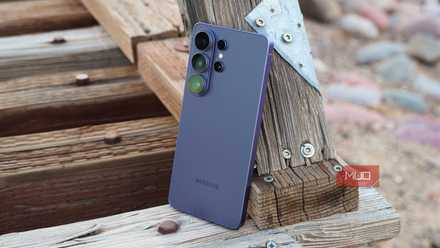
The Samsung Galaxy S26 series is a prime example of Qi2 Ready phones, as they support Qi2 wireless charging but do not have magnets. Conversely, starting with the iPhone 13 series and Google Pixel 10 series (excluding Pixel 10a), Apple and Google flagships fully support Qi2 with the necessary magnets.

I left Samsung for a Pixel — and this feature makes me glad I did
The new Samsung Galaxy S26 series still doesn’t support Qi2, and it makes the Google Pixel 10 Pro so much better.
Qi2 is fine, but Qi2 25W is better
If you want fast wireless charging, look for the Qi2.2 version
Qi2 and Qi2 Ready aren’t the only differences to know. The WPC followed up the release of Qi2 with the debut of Qi2.2 last year, and the newer variant is branded as Qi2 25W. As the brand name suggests, Qi2.2 adds support for up to 25W fast wireless charging. This is 10W faster than the base Qi2 specification. Both your phone and wireless charger need to support Qi2 25W in order to achieve the faster speeds. The spec update also added new power modes and control, including gain measurement and gain linearization, to optimize wireless power transfer.
Qi2 25W phones are somewhat few and far between, but the benefits are real. A Belkin Qi2 25W wireless charger, for example, can charge a phone up to 50% in 30 minutes using wireless charging. The older Qi or Qi2 specifications are considerably slower, lengthening wireless charging times. Now, you can use wireless charging without missing out on faster speeds if you have the right combination of Qi2 25W devices and chargers.
iPhones have the best Qi2 25W support, with the iPhone 17 series supporting the spec out of the box. You can update the iPhone 16 series to iOS 26 and get Qi2 25W speeds with a simple software update. Only the Samsung Galaxy S26 Ultra and Google Pixel 10 Pro XL support Qi2 25W of the new Samsung and Google flagships. Some chargers split the middle between Qi2 and Qi2 25W, with the iPhone Air and Galaxy S26 Plus charging at up to 20W wirelessly.
The Galaxy S26 Ultra is almost perfect, and that almost is what bothers me
The Galaxy S26 Ultra is once again the best Android phone money can buy, but there’s one thing I need Samsung to address.
Why Qi2 25W isn’t always necessary
Without active cooling, your devices won’t charge at 25W for long

There’s no harm in upgrading to a Qi2 25W wireless charger or battery bank early. These charging accessories are backwards-compatible with older Qi versions, so you can use them to charge devices that don’t support Qi2 25W. It’s a way to future-proof your charging ecosystem by upgrading early. When you buy a phone with Qi2 25W support, your wireless charger will be ready. That said, a Qi2 25W charger may not be necessary.
This is because the Qi2.2 spec offers 25W wireless charging as the maximum speed a device or charger may support. Typically, devices only charge at the full 25W wireless speeds at the very start of the charging cycle. When a phone starts to heat up or its battery starts to fill up during the wireless charging process, speeds will slow. It might not be worth it to pay for an expensive Qi2 25W charger when your phone may only charge at 25W speeds for minutes during a charging cycle.
The base magnetic Qi2 specification is the sweet spot. It upgrades the minimum charging speed requirement to 15W and adds inbuilt Qi2 magnets. If you buy an Android phone with Qi2 support, you’ll be able to enjoy faster speeds, more efficient charging, and the robust MagSafe accessory ecosystem.

- Brand
-
UGREEN
- Output
-
25W/30W
- Input
-
30W
- Battery Capacity
-
10,000mAh
- Charging Ports
-
USB-C
- Weight
-
254g
A compact 10,000 mAh power bank supporting Qi2 25W magnetic wireless charging and 30 W USB-C wired output. Snap your phone securely via built-in magnets, charge multiple devices simultaneously, and rely on 13-layer protection. Ideal for travel or daily use, it balances portability and power without cargo bulk.