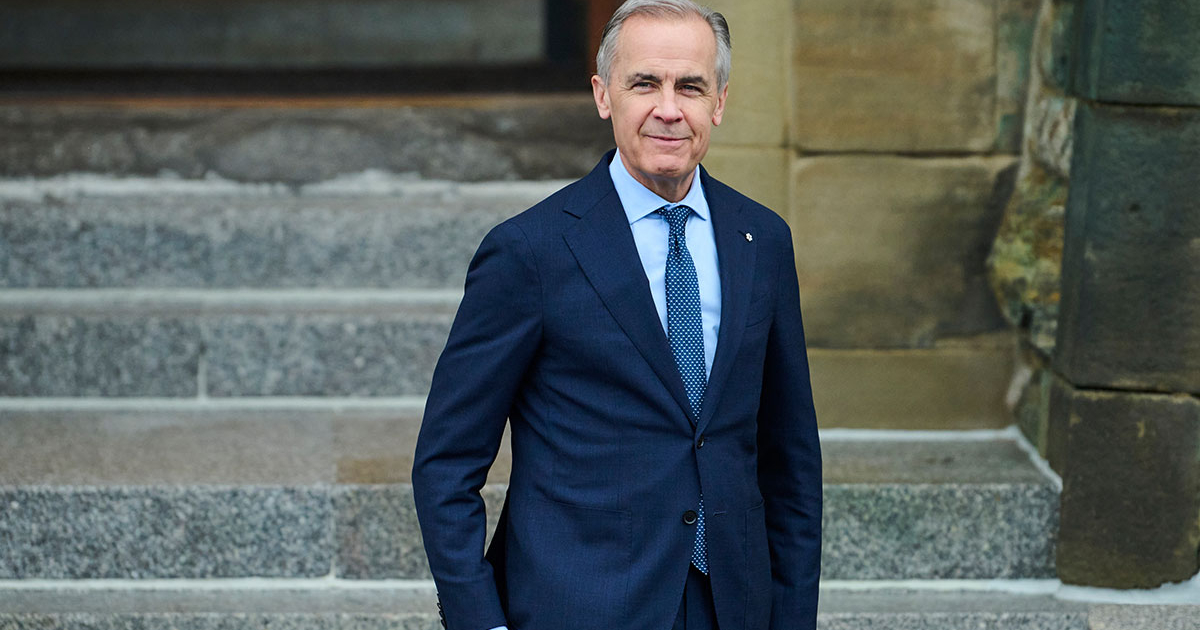
Canadian Prime Minister Mark Carney is pushing to expand the nation’s hydrocarbon exports beyond the traditional U.S. market. (Kamara Morozuk/Bloomberg)
Shell’s acquisition of Canada’s Arc Resources marks a vote of confidence in Prime Minister Mark Carney’s push to expand the nation’s hydrocarbon exports beyond the traditional U.S. market, analysts say.
One year into his premiership, the Canadian leader’s list of projects eligible for fast-track approval includes expansion of the Shell-led LNG Canada gas export facility. Carney also has pledged to support a new oil-export pipeline from Alberta to the Pacific Coast, and to relax some environmental regulations.
Carney’s approach marks a major departure from predecessor Justin Trudeau, who sought to toughen regulations and impose caps on oil and gas emissions that were panned by Western Canada’s energy sector as anti-development. Carney’s approach grew out of President Donald Trump’s trade war that pushed relations between the countries to the lowest point in decades.
The Shell deal “just shows that the liberal government is serious about making Canada an energy superpower,” BMO Capital Markets analyst Jeremy McCrea said. “Here we’re seeing regulations be more amenable to oil and gas development and, as a result, given the resource that we have here, you’re seeing international names take quite a bit more interest, and I think a big part of that is because we still really haven’t developed our resource nearly as aggressively as other countries or especially the U.S.”
Shell announced plans April 27 to purchase Arc for $13.6 billion, the biggest deal in the Canadian energy patch in more than a decade. The transaction marks a reversal of a decades-long trend of international supermajors including BP and Chevron Corp. shedding Western Canadian assets, especially those in the oil sands, to focus on U.S. shale and other investment opportunities.
(Krisztian Bocsi/Bloomberg)
Shell itself sold most of its oil sands assets to Canadian Natural Resources in 2017 to concentrate on natural gas.
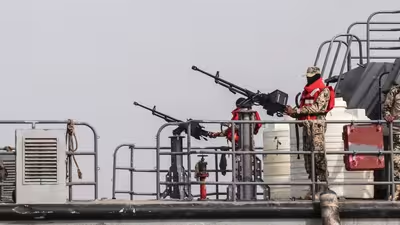
Shell is taking over Arc amid a Middle East war that has disrupted global energy flows, including liquefied natural gas and gas-to-liquids investments by the company in Qatar. Canada is an increasingly safe operating environment in a dangerous world, according to Aaron Bilkoski, oil and gas equity researcher at TD Cowen.
“This is clearly a strong endorsement of Canada being a stable provider for the global energy markets,” he said, adding that Carney’s shift from the policies of Trudeau may also have played a role in the deal.
“We have a night and day change in federal leadership,” he added.
Arc is one of the biggest drillers in the tight siltstone that makes up the gas- and condensate-rich Montney formation that covers about 50,000 square miles along the Alberta-British Columbia border.
“The fact that a major global LNG player is pursuing a transaction of this scale in the Montney reinforces our view that global capital is increasingly seeking exposure to high-quality resource in low-risk jurisdictions such as Canada,” Christopher True, managing director at Roth Canada, wrote in a report. “We believe this transaction could drive incremental foreign investor interest in the space.”

Ralph Dimenna of Aperia Technologies breaks down the latest advances in tire management technology. Tune in above or by going to RoadSigns.ttnews.com.
To be sure, many energy producers say that Carney hasn’t gone far enough in supporting policies that will allow the industry to grow. The prime minister continues to back an industrial carbon tax that should be reformed or scrapped, Jon McKenzie, Cenovus Energy chief executive, said in an interview this month in Toronto.
Also, the timeline for project permits should be cut to no longer than six months from two years to keep investments from flowing to the U.S., TC Energy Corp. CEO François Poirier said.
The Montney region provides a rich source of gas for the LNG Canada project that started last year as well as multiple other liquefied gas export projects in various stages of development along the BC coast. The Montney is also the source of condensate that’s blended with bitumen produced in the Alberta oil sands.