NEW YORK, April 20 (Reuters) – SpaceX plans to cement founder Elon Musk’s control after its IPO, granting him and a small group of insiders super-voting shares that will outweigh other investors, according to excerpts of the company’s IPO filing reviewed by Reuters.
The prospectus, which was confidentially filed this month, provides fresh details of the company’s financials and corporate governance.
Upon completion of the offering, Musk will stay on as chief executive officer, chief technical officer, and will serve as chairman of SpaceX’s nine-member board of directors.
Though Musk was paid $54,080 last year, according to the excerpts, he stands to gain billions in equity after the company’s stock market debut.
SpaceX is targeting a listing valuation of roughly $1.75 trillion with a $75 billion raise, which would make it the largest initial public offering in history.
President and Chief Operating Officer Gwynne Shotwell received $85.8 million in total compensation last year, Reuters previously reported, while Chief Financial Officer Bret Johnsen was paid $9.8 million.
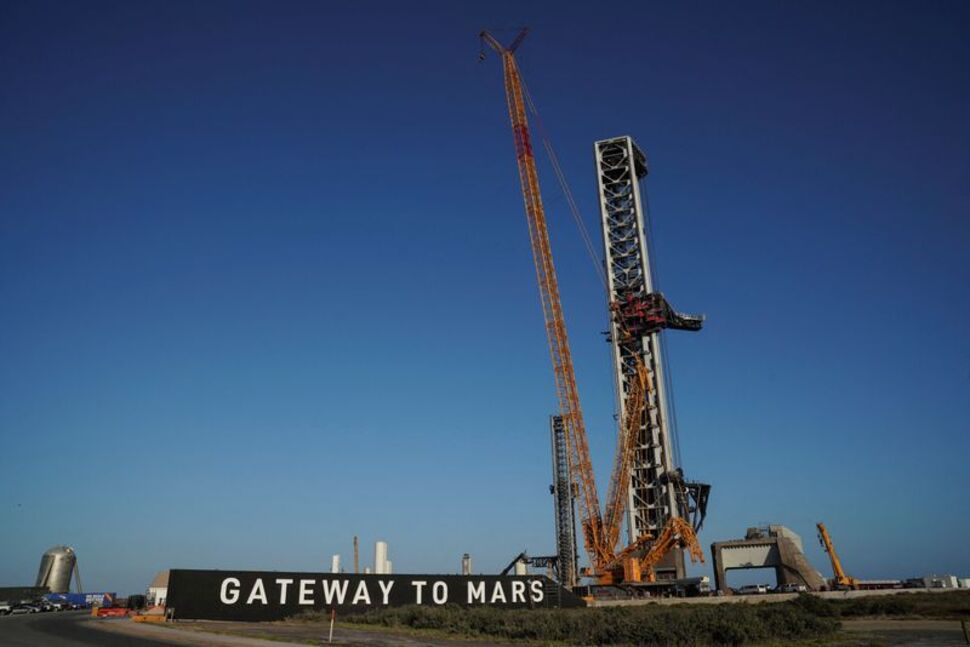
Some of the executives are driving Musk’s IPO ambitions with three days of meetings planned this week for Wall Street analysts, starting with a tour and briefings at SpaceX’s Starbase launch facility in Boca Chica, Texas.
The filing excerpts show SpaceX will use a dual-class equity structure that gives Class B shareholders 10 votes each, concentrating power with Musk and a handful of other insiders, while Class A shares sold to public investors will carry one vote each.
They also outline provisions that could limit shareholders’ ability to influence board elections or pursue certain legal claims, forcing disputes into arbitration instead and restricting where they can be brought.
While such structures are common among founder-led technology companies, they limit public shareholders’ ability to influence strategy or challenge management.
The filing gives investors the first look at SpaceX’s financial health, especially after Musk combined the rocket maker with his social media and AI company xAI this year.
The combined company ended 2025 with about $24.8 billion in cash on hand, and had total assets of $92 billion against total liabilities of $50.8 billion.
Its satellite internet business Starlink generated billions in profit last year, helping to offset heavy losses inherited when it bought founder Elon Musk’s social media and artificial intelligence company xAI this year, the excerpts show.
SpaceX swung to a $4.94 billion consolidated loss in 2025 on revenue of $18.67 billion as it invested heavily in xAI’s artificial intelligence infrastructure, from a $791 million profit and $14.02 billion in revenue the year before.
It lost $4.63 billion on $10.4 billion in revenue in 2023.
Its losses stem from an almost fivefold increase in capital spending over two years to $20.74 billion last year, more than half of that on AI spending.
The company’s successful Starlink satellite internet service is subsidizing much of that spending, generating $4.42 billion in operating profit but accounting for less than a quarter of its total capital expenditures.
Capital expenditure at the AI segment surged to $12.7 billion from $5.6 billion the prior year, pushing SpaceX’s total capex above $20.7 billion, more than double the prior year.
That remains a fraction of spending by the largest technology companies on AI infrastructure: Meta, with a comparable market capitalization of about $1.7 trillion, had capital expenditure of $72 billion in 2025.
The Information previously reported some aspects of the financials.
SpaceX did not immediately respond to a request for comment.
(Reporting by Echo Wang; Writing by Dawn Kopecki; Editing by Clarence Fernandez)
Copyright 2026 Thomson Reuters.