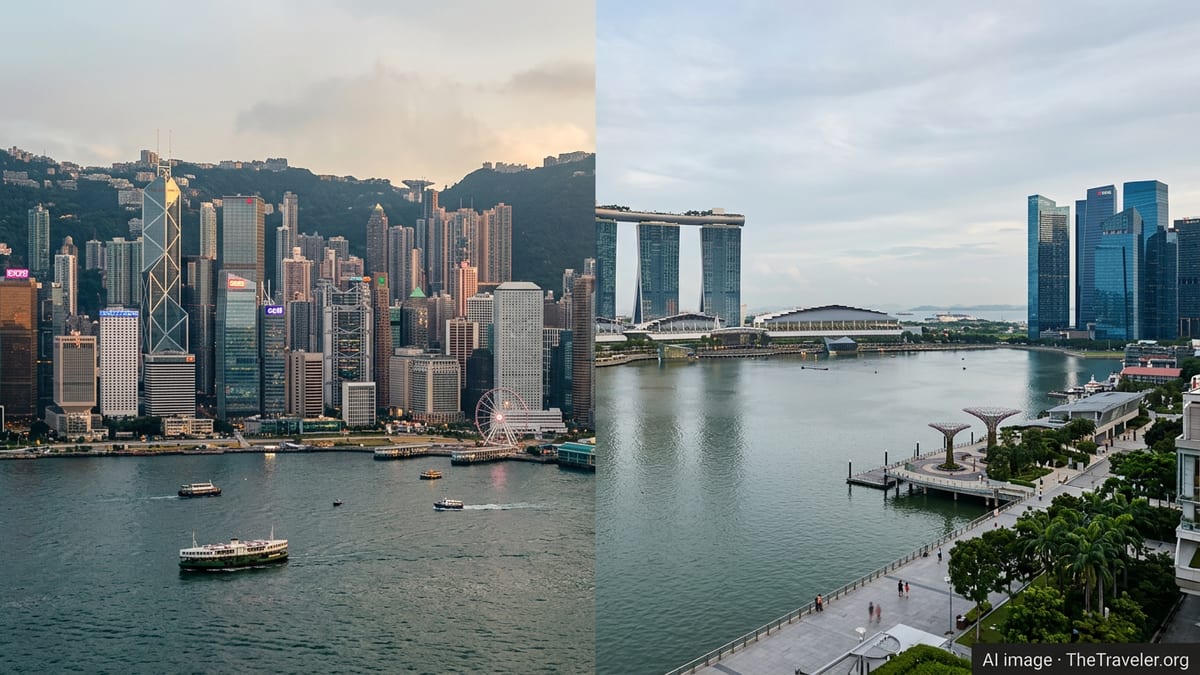
Few city breaks pack as much punch as a long weekend in Hong Kong or Singapore. Both are compact, hyper-efficient Asian hubs with great flight connections from around the world. Each promises polished transport, legendary food, glossy skylines and enough diversions to fill several days. Yet the feel of the two cities is very different. If you have just one long weekend to spare, the choice between Hong Kong and Singapore comes down to what kind of urban escape you want most.
First Impressions: Energy vs Ease
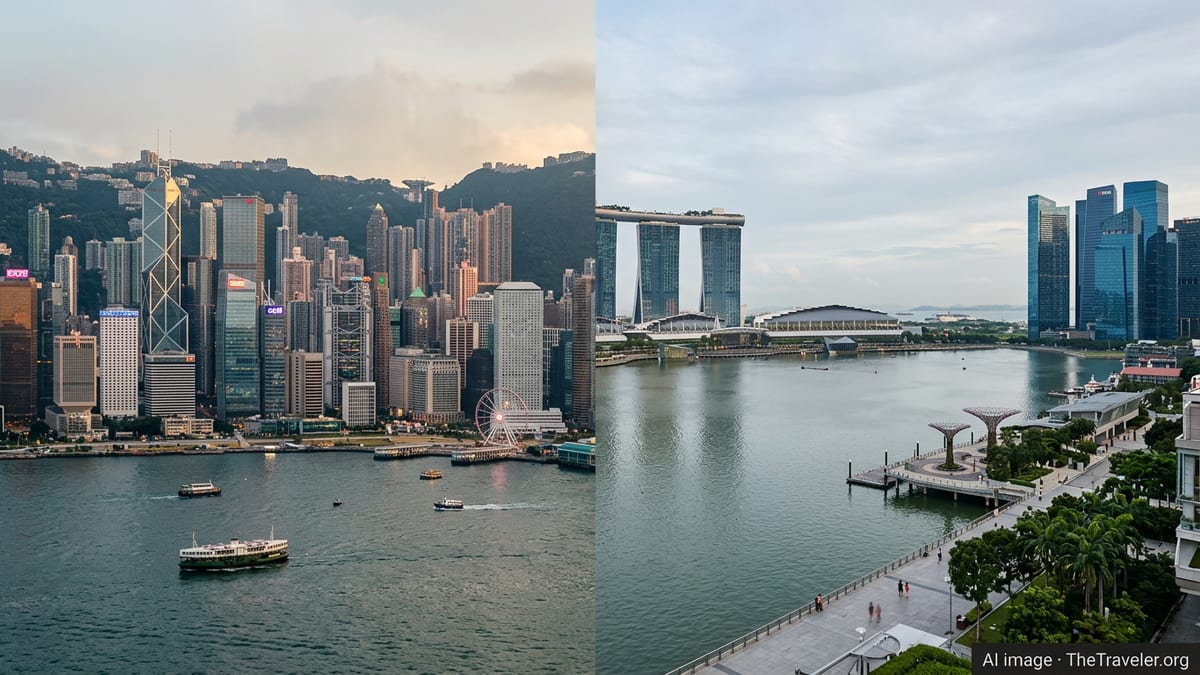
Landing in Hong Kong, most visitors feel the city’s intensity almost immediately. Skyscrapers crowd dramatic mountains, neon reflections ripple across Victoria Harbour and streets hum late into the night. It is dense, vertical and slightly chaotic in a way that many travellers find thrilling. A long weekend here often feels fast, busy and packed with impressions, perfect for visitors who like to be dropped into the middle of things and do not mind some sensory overload.
Singapore, by contrast, welcomes you with calm order. The metro is spotless, streets are manicured and signage is clear in English almost everywhere. It is one of the easiest major cities in Asia to navigate on a short stay, especially for first-time visitors to the region. The atmosphere is more measured and controlled, but still cosmopolitan, with leafy boulevards, waterfront promenades and contemporary architecture that photograph beautifully without much effort.
For a three or four day trip, this first impression shapes the whole stay. Hong Kong feels like an older port city turned financial powerhouse, with layers of history sitting behind the glass towers. Singapore feels like a carefully curated modern metropolis, proud of its planning, cleanliness and safety. Deciding between the two starts with asking whether you want your long weekend to feel like an urban adventure or a smooth, highly organised city break.
Getting There and Getting Around
Both cities are major aviation hubs with frequent connections from Europe, North America and the rest of Asia. For a pure long weekend, flight schedules and arrival times can make as much difference as distance. Singapore’s Changi Airport frequently tops global rankings for comfort, efficiency and amenities, making late-night or early-morning arrivals easier on tired travellers. Hong Kong International Airport is also modern and efficient, with fast immigration and clear onward transport options.
On arrival, Hong Kong’s Airport Express train takes you to the city in around 25 minutes. Fares have risen in recent years, but discounts and promotions are common, and the ride remains one of the quickest ways into any global city. Dedicated counters and convenience stores at the airport sell stored-value Octopus cards and related visitor products, which can be used on most public transport and in many shops. Increasingly, contactless bank cards and phone wallets work directly on the main MTR network, though visitors still find Octopus convenient for buses and smaller purchases.
Singapore’s airport is directly linked to the city’s MRT system, making transfers straightforward and budget friendly. The MRT is air conditioned, punctual and intuitive for visitors. Singapore’s contactless system allows most international bank cards and mobile wallets to tap in and out on trains and buses, removing the need to buy a separate transit card for a short stay. For those who prefer fixed budgets, tourist passes with unlimited public transport for one to three days are often available and can be good value if you move around a lot.
Once in town, Hong Kong’s transport feels more varied and sometimes more characterful. Double-decker trams, ageing minibuses, Star Ferry crossings and steep hillside escalators all have a sense of place. It is easy to mix MTR trains with short walks and harbour crossings, although crowds and stairs can be tiring. Singapore’s system feels more uniform and climate controlled, with seamless links between MRT lines, buses and air conditioned malls. For a first-time visitor who values simplicity and comfort over character, Singapore’s networks are arguably easier to master in a single weekend.
Costs, Weather and Practicalities
Neither Hong Kong nor Singapore is a budget destination, but they play out differently over a long weekend. Accommodation in both cities commands premium prices in central locations, especially around major holidays and big events. In general, rooms in Hong Kong can feel smaller at the same price point, reflecting the city’s tighter space and older building stock, while Singapore often delivers slightly larger, newer rooms but at consistently high rates. Booking early and being flexible with districts can soften the impact in both places.
Daily spending also depends on how you travel. Affordable local food is widely available in both cities, while upscale restaurants can quickly inflate a three night bill. Public transport is reasonably priced in each city relative to local incomes. In Hong Kong, the stored-value card system makes small fares feel frictionless, while in Singapore the ability to tap in and out with a regular bank card simplifies planning. Alcohol and imported goods tend to be costly in Singapore due to taxes and regulations. Hong Kong can feel more flexible on drinking costs, particularly in casual neighbourhood bars and happy hour spots.
Weather matters a great deal for a short trip. Both cities are hot and humid for much of the year, with frequent rain. Singapore sits near the equator, so conditions are fairly consistent: warm, humid and punctuated by brief, heavy showers, with the possibility of occasional haze at certain times of year. Hong Kong’s climate varies more by season, with pleasantly cool, dry weather in many winter months and sticky heat plus typhoon risk in late summer. For long weekends focused on walking and views, timing a visit to Hong Kong’s cooler months can be rewarding, while Singapore requires more planning around air conditioned breaks and hydration year round.
Practicalities such as language and payments are straightforward in both cities. English is widely used in administration, hotels and tourism, with clear bilingual or trilingual signage. Cashless payments are increasingly standard, though holding some local currency remains useful for small stalls and older venues. Visas and entry rules evolve regularly, so travellers should check current requirements from official sources before booking. In terms of safety, both destinations rank among the safer big cities globally, with low levels of violent crime and visible policing in key tourist areas.
Iconic Sights in a Short Time
A long weekend does not leave time for everything, so the strength of each city’s headline attractions matters. Hong Kong’s classic image is the skyline viewed from Victoria Peak or across Victoria Harbour. A typical first visit itinerary might pair these views with neighbourhood wandering in Central and Sheung Wan, a ride on the Star Ferry, time in Kowloon’s markets and perhaps an excursion to outlying islands for temples, hiking or seaside villages. Compact geography means that many of these experiences can be woven together efficiently over three days, particularly if you stay on Hong Kong Island or in Tsim Sha Tsui.
Singapore’s headline sights concentrate around Marina Bay and the civic district. Gardens by the Bay, with its futuristic Supertree Grove and cooled conservatories, offers a sense of spectacle that fits neatly into a half or full day. Nearby, the waterfront promenade, Merlion Park, museums and shopping at Marina Bay Sands create a walkable circuit that photographs well and keeps first-time visitors oriented. Over a long weekend, you can add time in the heritage shophouse districts of Chinatown, Little India and Kampong Glam, plus an evening along the river or in a rooftop bar overlooking the skyline.
One difference lies in how easily you can add nature and quieter spaces. Hong Kong’s hiking trails, from the Dragon’s Back to sections of the MacLehose Trail, are surprisingly accessible from the urban core and can be fitted into a half day with modest planning. Beaches on the south side of Hong Kong Island or on nearby islands offer another contrast to downtown energy. Singapore offers green escapes such as the Botanic Gardens, Southern Ridges and nature reserves, but these tend to feel landscaped and curated compared with Hong Kong’s sometimes rugged hills.
Families and theme park fans will see the trade off differently. Hong Kong Disneyland has been expanding its attractions, supported by broader city-wide campaigns that bundle theme parks, harbour events and seasonal festivals into promotional periods. Singapore counters with its own theme park offerings on Sentosa Island, alongside aquariums, beaches and family friendly attractions. With only a few days, you are unlikely to visit multiple big parks in one city, so your choice of destination may hinge on which specific experience appeals more or fits current seasonal events.
Food, Nightlife and Local Character
Food alone tempts many travellers to both cities, and a long weekend is just enough time to understand their different personalities. Hong Kong excels in Cantonese cuisine, from dim sum brunches to roast meats and seafood, alongside a deep bench of regional Chinese cooking and international restaurants. Traditional tea houses, dai pai dong style street stalls and tight, noisy noodle shops offer a strong sense of place. In recent years, more contemporary bistros and cocktail bars have joined the mix in districts like Soho and Wan Chai, but classic flavours remain close at hand if you know where to look.
Singapore is renowned for its hawker centres, where dozens of stalls serve dishes from Chinese, Malay, Indian and Peranakan traditions at shared tables. Even as some centres close temporarily for upgrades, many others continue to operate island wide, providing affordable, flavourful meals from morning to late night. The city’s food culture rewards curiosity, with lines often forming at specific stalls that have built loyal followings over decades. Above the hawker level, Singapore has an extensive fine dining and cocktail scene, including globally recognised bars and restaurants, often clustered around the central business district, Keong Saik Road and Marina Bay.
Nightlife highlights also differ. Hong Kong’s bars spill out into stair-stepped streets in Lan Kwai Fong and into the alleys of Central, with happy hours drawing a mix of expatriates, business travellers and locals. Rooftop venues overlook Victoria Harbour and neighbourhood bars add character in areas like Tai Hang and Sai Ying Pun. Night markets, while not as extensive as in some neighbouring regions, still provide late-evening energy. Singapore’s nightlife is more controlled in terms of licensing and closing hours, but the city delivers polished rooftop bars, riverside drinking spots at Clarke Quay and Boat Quay, and speakeasy-style cocktail bars with a strong reputation among enthusiasts.
Where Hong Kong often feels gritty, layered and slightly improvised, Singapore comes across as carefully curated. Street-level Hong Kong still has old tenement buildings, traditional shops and incense-filled temples squeezed between new towers. Singapore retains heritage shophouses and temples but often within planned conservation areas. On a three or four day visit, this means Hong Kong may appeal more to those who enjoy wandering through uneven streets and discovering surprises, while Singapore suits travellers who prefer clear neighbourhood identities and well-signed heritage zones.
Culture, Festivals and Atmosphere
For travellers who enjoy arts, culture and festivals, timing can shift the balance between the two cities. Hong Kong’s calendar includes major film and arts festivals, seasonal campaigns such as summer promotions and a year-end countdown on the harbour. Light shows and harbourfront installations can lend extra drama to an evening stroll along the waterfront. However, large public celebrations and firework displays may change from year to year, sometimes affected by safety reviews or local events, so it is wise to check what is confirmed for your intended dates rather than assuming a particular show will occur.
Singapore’s event calendar leans on national holidays, arts festivals, Formula 1 race weekend activities and periodic food and design events. Many are centered around Marina Bay or major cultural institutions, making them easy to slot into a short itinerary. The city’s museums, including those focused on Asian civilizations and national history, are well interpreted and accessible for international visitors, making them good options if an afternoon thunderstorm rolls in or outdoor temperatures climb. Regular national campaigns encourage residents and visitors alike to explore heritage trails, green corridors and neighbourhood festivals.
Beneath the headline events, everyday cultural encounters differ in feel. Hong Kong’s atmosphere reflects its long role as a trading port and its current status as a special administrative region of China, with visible official messaging, ongoing political sensitivities and a complex media landscape. Visitors may notice security measures at some public events and a strong presence of rules in certain civic spaces. Singapore is also known for robust regulation, from littering fines to strict rules on protests, but this tends to manifest for tourists as a sense of order, clear signage and predictable behaviour in public areas.
For most weekend visitors, both cities feel safe and orderly on the ground, but the backdrop matters to some travellers. Those particularly interested in contemporary politics and free expression may perceive Hong Kong’s current climate differently from how it felt a decade ago and may wish to read up on recent developments. Others may see Singapore’s firm legal framework, including on topics such as public speech and personal conduct, as reassuring or restrictive depending on their perspective. In either case, it is sensible to be aware of local laws, avoid political demonstrations and respect guidelines at cultural and religious sites.
Which City Fits Your Long Weekend Style
The ideal choice between Hong Kong and Singapore for a long weekend depends on your travel style, priorities and tolerance for heat, crowds and chaos. If you are drawn to dramatic skylines backed by mountains, quick day hikes, layered old districts and a certain urban edge, Hong Kong may feel more rewarding. You can fill three or four days with harbour views, tram rides, island ferries and late-night noodles without ever leaving the city’s core. The city’s density and verticality mean that even simple walks can feel cinematic, especially in cooler seasons.
If you value ease, comfort and predictability above all, Singapore has the advantage. English friendly infrastructure, a logical metro system, broad pavements and integrated malls make it simple to move around even when jet lagged. The city’s central sights cluster conveniently, allowing you to see waterfront icons, major museums and distinctive ethnic neighbourhoods with minimal transit time. For travellers nervous about visiting Asia for the first time, Singapore often feels like a gentle introduction, combining Asian cultures with a highly structured urban environment.
Budget and interests can tip the scales as well. Food focused travellers who love grazing on inexpensive dishes in clean, communal settings may prefer Singapore’s hawker culture, either now or after ongoing renovations to certain centres are complete. Fans of Cantonese cuisine and neighbourhood dai pai dong style spots may find Hong Kong a better fit. Nightlife oriented visitors who enjoy slightly scruffy bar streets and a sense of spontaneity might lean towards Hong Kong, while those who like polished rooftop cocktails and high-end dining in integrated entertainment complexes may favour Singapore.
Ultimately, both cities reward repeat visits. A long weekend will only scratch the surface of either destination, but it is enough time to form a strong impression. You might decide that Hong Kong is where you go when you want intensity, hills and harbour views, and Singapore is where you choose order, gardens and seamless convenience. Knowing that each offers a distinct flavour can help you pick the one that matches your mood and travel companions for this particular short escape.
The Takeaway
Choosing between Hong Kong and Singapore for a long weekend is not about which city is objectively better, but about which one better matches the kind of short break you are imagining right now. Both are efficient, cosmopolitan and safe, with excellent transport, great food and enough headline sights to fill a packed three or four day itinerary. The key difference lies in atmosphere. Hong Kong brings compressed energy, steep streets and a sense of urban drama, while Singapore offers controlled calm, verdant spaces and one of the world’s smoothest visitor experiences.
If you crave a slightly gritty, high density city where ferries, trams and hillside walks punctuate your days and noodle shops keep you out late, Hong Kong is a strong choice. If you want to glide between an award winning airport, air conditioned trains, futuristic gardens and impeccably run hawker centres without thinking too hard about logistics, Singapore is hard to beat. Either way, you will leave with the feeling that your long weekend contained far more experiences than the calendar suggests.
For many travellers, the answer to Hong Kong versus Singapore becomes not one or the other, but which one first. Once you have tackled one city on a long weekend, planning a future trip to the other becomes an appealing way to compare them in person. Until then, weigh your priorities, check current events and seasonal weather, and choose the city whose strengths align most closely with the way you like to spend your precious days off.
FAQ
Q1. Is Hong Kong or Singapore better for a first-time visitor to Asia on a long weekend?
For a first-time visitor who is nervous about logistics, Singapore is usually easier. English is widely spoken, transport is extremely straightforward and the city is compact, making it simple to see major sights in three or four days.
Q2. Which city is more affordable for a short trip, Hong Kong or Singapore?
Both are expensive by regional standards, but how costly they feel depends on your choices. Accommodation and alcohol can be pricey in both cities, while everyday local food and public transport remain relatively good value.
Q3. Where is the public transport easier to use on a long weekend?
Public transport is efficient and extensive in both cities. Singapore’s system is slightly more straightforward for short stays because most visitors can simply tap in and out of trains and buses using regular contactless bank cards.
Q4. Which destination has better food for a short stay?
Both cities are outstanding food destinations. Singapore excels in diverse hawker centre offerings, while Hong Kong shines for Cantonese dim sum, roast meats and a wide range of regional Chinese dishes.
Q5. Is Hong Kong or Singapore better with children for a three or four day visit?
Families can enjoy either city. Singapore’s climate controlled attractions, family focused parks and straightforward public transport often make it slightly easier with younger children, especially in hot or rainy weather.
Q6. How do the climates of Hong Kong and Singapore affect a long weekend trip?
Singapore is hot and humid year round, with frequent showers, so you should plan indoor breaks. Hong Kong’s weather varies more by season, with cooler, drier months that can be very comfortable for sightseeing and hiking.
Q7. Which city offers better nightlife for a short break?
Hong Kong’s nightlife feels more improvised and dense, with busy bar streets and neighbourhood venues. Singapore’s nightlife is more polished and regulated, with stylish rooftop bars and riverside areas that are easy to navigate.
Q8. Can I manage without local cash in Hong Kong and Singapore on a weekend trip?
In both cities, cards and mobile payments are widely accepted, but carrying some local currency remains useful for small stalls, markets and older venues that may not take cards or specific apps.
Q9. Is it realistic to include hiking or nature in a long weekend in either city?
Yes. In Hong Kong, popular hikes and some beaches are a short ride from downtown and can fit into a half day. In Singapore, you can visit green spaces such as gardens, waterfront walks and nature reserves within the city limits.
Q10. How should I decide between Hong Kong and Singapore if I only have one long weekend?
Think about whether you prefer intense, layered urban energy and hills (Hong Kong) or calm, planned modernity with ultra smooth logistics (Singapore). Match the city to your current mood, interests and travel companions.