Hong Kong travel agencies have moved to suspend group tours and stopover packages to the Middle East, particularly the United Arab Emirates, as escalating Iranian drone and missile strikes across the Gulf trigger widespread flight disruptions and raise new safety concerns for global travellers.
Get the latest news straight to your inbox!
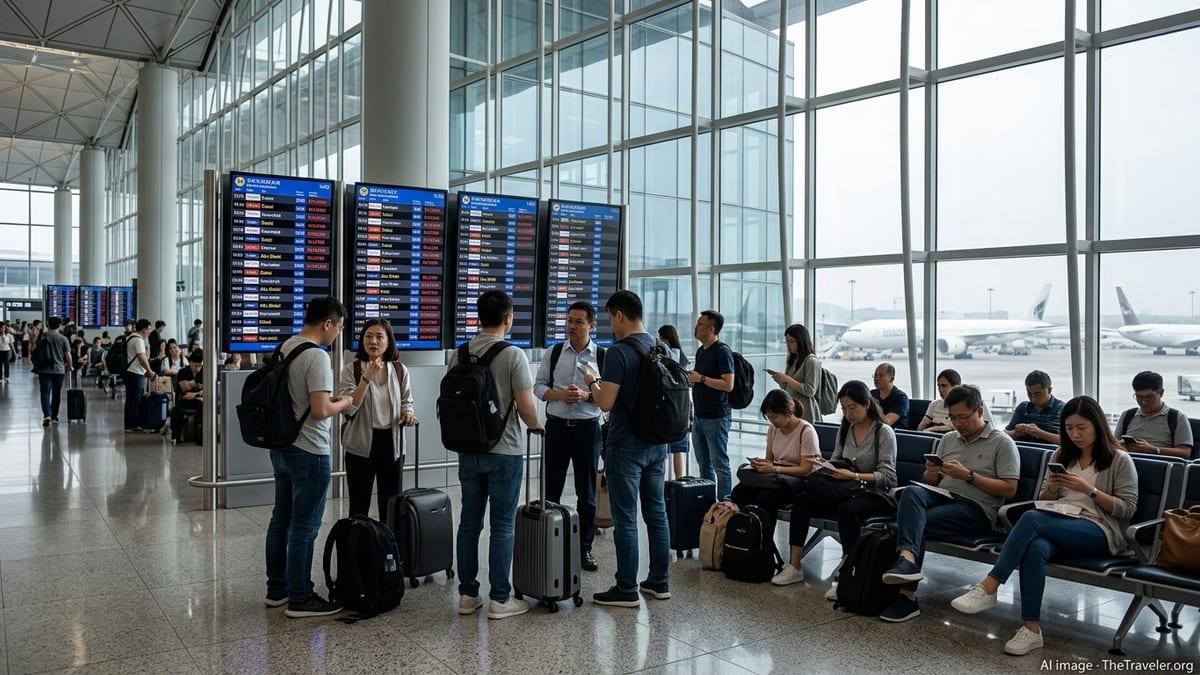
Escalating Strikes Push Hong Kong Agencies to Act
Published coverage of the 2026 Iran war shows Iran has launched hundreds of drones and missiles at Gulf states, including the United Arab Emirates, since late February, with several incidents affecting areas around Abu Dhabi and Dubai. While local air defences have intercepted most incoming projectiles, debris and isolated impacts have been reported in urban and transport hubs. These developments have quickly filtered through to the travel industry in Hong Kong, a major source of transit passengers and package tourists to the Middle East.
According to regional news reports and industry notices, major carriers serving Dubai and Abu Dhabi have faced repeated suspensions and partial resumptions of services as authorities temporarily close airspace or specific airports following individual strikes or security incidents. The resulting volatility has made it difficult for Hong Kong-based tour operators to guarantee safe, predictable itineraries that rely on Gulf transit hubs or include stopover sightseeing in the UAE and neighbouring states.
Travel trade information circulating in Hong Kong indicates that agencies are responding by halting new bookings for escorted tours, pilgrimage trips and multi-country Middle East packages that route through the UAE, Qatar and other Gulf destinations. Some operators are also advising independent travellers to avoid itineraries that involve transfers in the region, particularly via Dubai International Airport, until the security picture becomes clearer and flight schedules stabilise.
The decisions go beyond routine caution and reflect the scale of recent interruptions. Reports from Gulf-based media describe what some analysts characterize as the most widespread regional travel disruption since the pandemic years, with thousands of passengers stranded or rerouted and airlines forced into long detours to bypass contested airspace.
Impact on Hong Kong Travellers and Tour Bookings
For travellers in Hong Kong, the immediate effect is a wave of cancellations and itinerary changes, especially for those who had planned spring and early summer trips built around Dubai stopovers, desert excursions, or broader Middle East cultural tours. Publicly available advisories from foreign ministries and regional aviation authorities, combined with constant news of new strikes, are feeding a perception of heightened risk that extends well beyond the actual strike zones.
Many Hong Kong residents who had booked group tours or cruise extensions via Gulf gateways now face rebooking fees, partial refunds, or the option to switch to alternative destinations in Europe and Asia. Industry commentary suggests that agencies are prioritising passengers already abroad or in transit, working to route them home through non-Middle Eastern hubs such as Singapore, Bangkok and major European airports wherever capacity allows.
There is also a knock-on effect for long-haul journeys that use Dubai and Abu Dhabi as efficient bridges between Asia, Africa and Europe. With tour operators suspending packages and some airlines trimming schedules or shifting routings, Hong Kong travellers may confront longer flying times, fewer direct options and higher fares as demand concentrates on alternative corridors.
At the same time, publicly available booking data and anecdotal accounts indicate that some independent travellers are still pressing ahead with trips, particularly business travellers and those with family ties in the region. However, they are increasingly advised to monitor official travel alerts, maintain flexible plans and prepare for last-minute schedule changes if new incidents trigger further airspace closures or airport shutdowns.
UAE Tourism and Aviation Under Pressure
The UAE, and Dubai in particular, has spent years positioning itself as a safe, reliable mega-hub for global aviation and tourism. The current wave of Iranian drone and missile activity is testing that reputation. Reports from Gulf newspapers describe multiple days in early March when flight operations at Dubai International Airport were temporarily suspended after suspected drone-related incidents, leading to significant backlogs, diversions and delays.
According to regional media summaries, the UAE’s air defences have intercepted the majority of incoming threats, but even brief interruptions at the world’s busiest international airport ripple quickly through the global network. Airlines have been forced to cancel or consolidate flights, while airports implement heightened security and inspection regimes that can slow passenger processing and ground operations.
Tourism operators in Dubai and Abu Dhabi now face both immediate cancellations and a more subtle confidence problem. Potential visitors who once viewed the UAE as a dependable stopover or short-break destination are reassessing plans in light of dramatic images and detailed accounts of intercepted missiles, falling debris and emergency closures. For Hong Kong agencies that marketed Dubai as a convenient luxury getaway paired with European or African itineraries, the uncertainty around future strikes and the possibility of renewed airspace restrictions has become a central concern.
Yet industry observers also note the UAE’s track record of rapid recovery from crises, including past regional tensions and the COVID-19 pandemic. Hotel and aviation stakeholders are understood to be preparing recovery campaigns focused on safety measures, resilience and the swift resumption of normal operations once the security environment stabilises.
Regional Shockwaves for Middle East Tourism
The Iranian attacks have not been limited to the UAE. Published information on the conflict describes drone and missile strikes targeting or affecting several Gulf and Levant states, including Qatar, Bahrain and Oman, as well as Israel and other locations. Airspace closures or restrictions over Iran, Iraq, Israel, Kuwait and additional neighbours have created a patchwork of no-fly zones and narrow corridors that airlines must navigate on a near-daily basis.
This environment is particularly damaging for multi-destination tours that link the UAE with other Middle Eastern highlights, from cultural sites in Jordan and religious tourism in Saudi Arabia to city breaks in Doha or Manama. Hong Kong agencies have traditionally packaged such itineraries for niche segments, including history-focused tours and special-interest groups. With cross-border bus and flight schedules in flux and insurance policies under review, many of these products have now been paused.
The broader regional tourism brand is also under strain. Even destinations that have not been directly targeted are facing cancellations as prospective visitors associate the wider Middle East with instability. Travel and hospitality analysts point to patterns seen during earlier conflicts, when travellers tended to delay or divert trips away from the region entirely, even if their chosen destination remained open and relatively calm.
Some tourism boards and private operators are expected to respond with targeted marketing once conditions allow, highlighting areas that have remained largely unaffected and emphasising safety protocols. For now, however, the emphasis for many Hong Kong-based partners is on risk management, with a cautious stance on new sales until the trajectory of the Iran conflict becomes clearer.
Global Route Rethinks and Long-Term Outlook
The suspension of Middle East tours by Hong Kong agencies is part of a wider recalibration of global air routes and travel patterns triggered by the Iran conflict. Industry analysis notes that airlines in Asia, Europe and North America are exploring alternative paths that avoid congested or high-risk airspace, sometimes adding hours to traditional routes between East Asia and Europe or Africa.
For global travellers, this means more layovers in secondary hubs and fewer opportunities to take advantage of the dense connection networks that Gulf carriers built over the past two decades. Travel planners in Hong Kong are steering clients toward routings via cities such as Singapore, Kuala Lumpur, Istanbul, Doha’s competitors where feasible, and major European gateways, even when those options are less direct or more expensive than a Dubai transfer.
In the long term, the extent of structural change will likely depend on how long the current pattern of Iranian drone and missile activity continues, and whether it remains geographically focused on military and strategic targets or begins to impact civilian infrastructure more systematically. If the strikes subside and airspace fully reopens, the Middle East’s big hubs may regain much of their traffic, and Hong Kong agencies could gradually restore suspended tour products with revised safety assessments.
If, however, intermittent attacks and security scares become a recurring feature of regional skies, travel companies may accelerate diversification into non-Middle Eastern routings and reorient their marketing toward destinations perceived as more stable. For now, the halt in Middle East tours by Hong Kong agencies underscores how quickly geopolitical shocks in the Gulf can reshape travel decisions from East Asia to Europe, and how closely the fortunes of Hong Kong, the UAE and global travellers remain intertwined with the security of critical aviation corridors.