Artificial intelligence (AI)-powered tools developed by Israeli digital intelligence company Cellebrite will give police investigators the capability to interrogate call records, text messages, images and videos stored on mobile phones and other electronic devices at ultra-high speed.
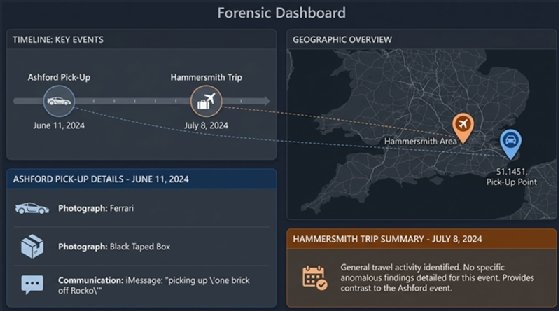
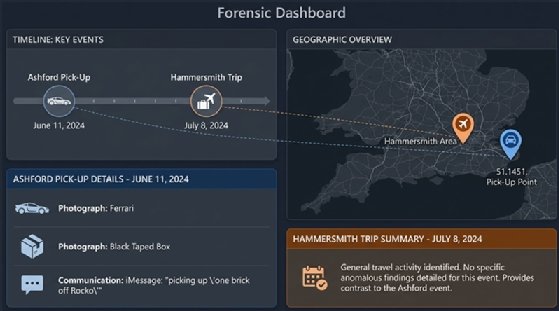
The company has developed AI tools that allow police investigators to interrogate data retrieved from multiple electronic devices, discover links between different data sets, map the location of phones over time and construct timelines of events.
Cellebrite’s Guardian Investigate platform aims to help law enforcement agencies investigate major incidents, such as shootings, terrorist attacks or large organised crime investigations, by gaining rapid insights from data as it is gathered.
The platform allows investigators from multiple departments and agencies to work on the same data – which is held on a central cloud platform – allocate tasks and identify further avenues of investigation.
The technology enables investigators to analyse data as soon as it is retrieved from a mobile phone and uploaded into Cellebrite’s Guardian cloud for decoding and analysis, without having to wait for forensic experts to submit reports on each mobile device.
Mapping people’s movements
The company demonstrated how its platform is able to take cell site data, which records the phone masts a mobile phone has connected to, along with data from Google Maps, to track the movements of an individual over time.
The platform acts as a replacement for whiteboards used by police during investigations to map locations, timelines and communications, including social media posts and video, with AI tools able to find relationships between them.
Guardian Investigate uses AI to spot anomalous behaviour – for example, it can identify when two people who are in regular phone contact suddenly stop communicating, or when someone suddenly puts their phone into airplane mode.
Cellebrite has incorporated technology from its 2021 acquisition of open source intelligence company Digital Clues to develop AI agents that can identify the owner of an email or a phone number from publicly available information on the internet.
AI is able to identify owners of mobile devices
Matt Goeckel, a former law enforcement official and now technical marketing director at Cellebrite, demonstrated how the tool is able to autonomously identify the owner of a mobile phone by analysing the emails used to log in to its apps and linking them to their owner through open source research on the internet.
“I can ask Investigate AI to go off and do an open source search, and see what’s available about this particular individual,” he told Computer Weekly. “We will find profile pictures, we will find additional names, we will find user names, phone numbers, addresses. This is all public information.”
Goeckel said that one of the platform’s most powerful capabilities is its ability to find inconsistencies in large volumes of evidence, such as when two witnesses give contradictory accounts in witness statements. An investigator would normally spot that, but “as the cases grow, the risk of missing something becomes greater”, he said.
Because the platform is able to hold all the data relating to a particular investigation, it is able to eliminate “swivel chairing”, where investigators have to look at one screen to view a surveillance video and another to view call records.
Rapid summaries of text messages
Brazoria County Sheriff’s Office in Texas, which carried out a pilot of Guardian Investigate, claims that Cellebrite’s AI technology was able to summarise the contents of a mobile device holding 200,000 text messages in a fraction of the time taken by human investigators.
The AI software “instantly” revealed connections that would have been “nearly impossible” to identify manually, allowing analysts to create operational intelligence packages in hours rather than in months, it said in a testimonial written for Cellebrite.
Another tool, Cellebrite Genesis, is a standalone AI analysis tool for organisations that want to keep their data in-house, with similar capabilities, operating through a ChatGPT-like interface.
Cellebrite claims that in one counter-terrorism case in Australia, Genesis was able to uncover evidence of a planned terrorism attack in three minutes, a task that would take a human analyst two to three weeks.
According to Cellebrite, digital evidence is now used in over 90% of criminal cases, including data from mobile phones, social media and, in recent years, drones.
In the past, investigators typically collected a phone from a crime scene and sent it to a lab for analysis, where an expert would pick out data based on a search warrant and send it back to the investigator.
Ashely Hernandez, a product management executive at Cellebrite, told Computer Weekly its AI technology will allow investigators to work directly with the data from seized devices without having to wait for experts to review the data and send in reports. “It is as close to real time as we can make it happen,” she said.
The human in the loop
Cellebrite says its AI tools allow analysts to check its decisions by reviewing the source evidence used by the AI, and has a “human in the loop” by design to guard against errors and the possibility of AI hallucinations.
Peter Sommer, a forensic expert familiar with Cellebrite’s technology, said that while AI is good at sorting through large quantities of data, its results have to be manually checked if the evidence is to stand up in court.
“In any situation where you use AI in a forensic science situation, you have to go back to the original data,” he added. “AI is fine at sorting through large quantities of data, but having pointed you in the right direction, you then have to go back manually and check it. There are just too many things that can go wrong with AI if people just take the immediate results.”