South China’s Guangdong-Hong Kong-Macao Greater Bay Area (GBA) recorded a total import and export value of 1.57 trillion yuan (about 227.65 billion U.S. dollars) in the first two months of this year, marking a year-on-year surge of 22.4 percent, according to the Guangdong branch of the General Administration of Customs of China (GACC).
The pace of increase is 4.1 percentage points faster than the national import and export growth rate, said the customs.
It added that the GBA’s import and export value accounts for 20.4 percent of the national total foreign trade value and contributes 24.1 percent to the national foreign trade growth.
The GBA brings the Hong Kong and Macao special administrative regions together with nine mainland cities in the economic powerhouse of Guangdong, including Guangzhou, Shenzhen and Dongguan.
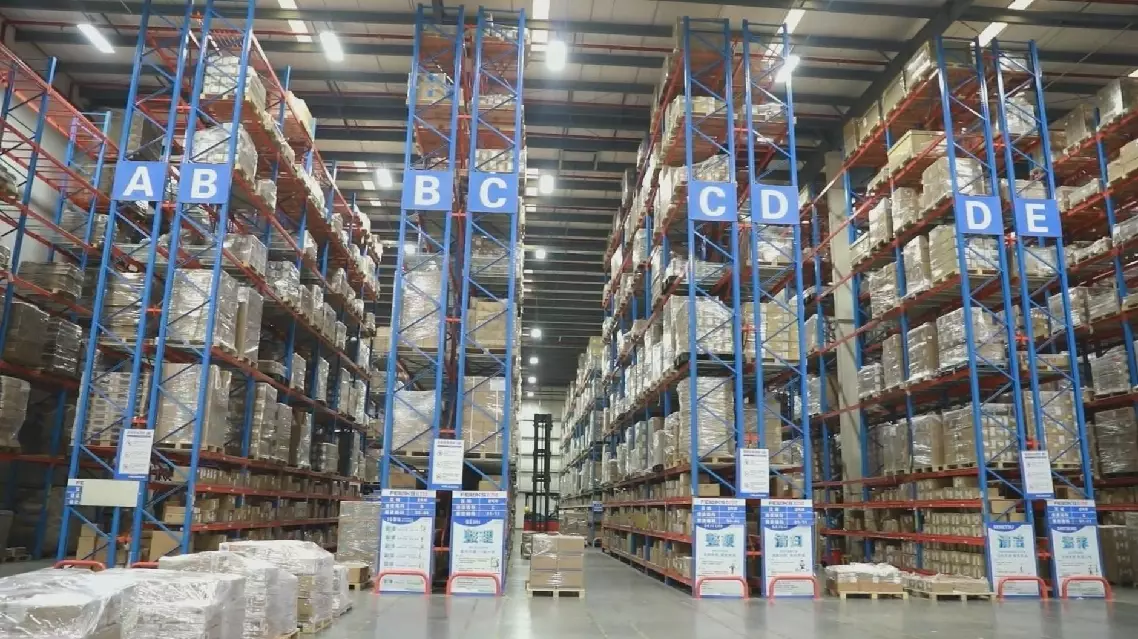
The area’s strong foreign trade is partly attributed to its efficient logistics network.
The Hong Kong International Airport (HKIA) Dongguan Logistics Park, as a major international air cargo gateway of the GBA, has been offering sea-air intermodal transshipment services.
“The HKIA Dongguan Logistics Park has connected with Hong Kong International Airport’s 220 global destinations. The time from export goods arriving at the park to being loaded onto a plane at the Hong Kong airport has been stably reduced to within 14 hours, which has greatly improved the efficiency of the goods made in the Greater Bay Area going global,” said Xue Zhenghao, operations manager of Dongguan Port International Air Freight.
The integration of the Greater Bay Area’s manufacturing sector with Hong Kong’s air logistics has brought tremendous momentum to the logistic park’s development.
Its import and export business has been growing rapidly, with structure constantly optimized and upgraded.
In the first two months of this year, it reported over 74 percent in the import and export share of high-end manufacturing products such as integrated circuits and displays.
“In the first two months of this year, the import and export value of the logistics park reached 6 billion yuan, a year-on-year increase of 2.2 times, getting off to a good start. This year, 329 enterprises have conducted import and export business at the park, doubling the number compared to last year. An increasing number of high-value-added products has been sent to the park for distribution,” said Yang Zhe, inspection section chief of the bonded logistics center of Shatian Customs under the Huangpu Customs in Guangdong.
China’s Greater Bay Area logs 22.4-pct increase in foreign trade in Jan-Feb
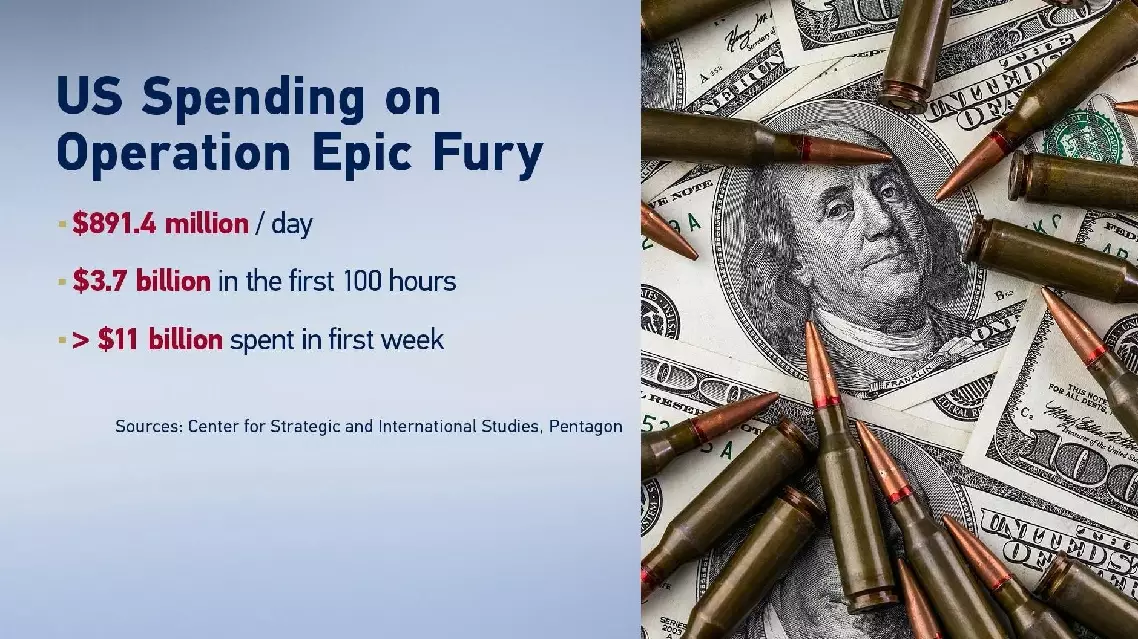
The first six days of the U.S. military campaign against Iran cost more than 11.3 billion U.S. dollars, the Washington-based Center for Strategic and International Studies reported on Friday.
The sheer scale of Operation Epic Fury, the U.S. military campaign against Iran, is making it one of the most expensive U.S. military campaigns in decades, according to a report by the center.
The report estimates the war is costing over 890 million U.S. dollars per day. The first 100 hours of the attacks which began Feb 28 were estimated at 3.7 billion dollars.
The Pentagon has informed Congress that week one alone cost American taxpayers more than 11 billion dollars.
The biggest expenses come from the deployment of air and naval forces. Air operations are estimated at around 30 million dollars a day, while naval operations add about 15 million dollars daily. Ground operations account for over a million and a half dollars per day.
By comparison, Operation Midnight Hammer, which targeted Iran’s nuclear facilities in June 2025, cost up to 2.26 billion dollars, according to media report. The strike lasted just about two and a half hours.
First 6 days of US strikes on Iran cost 11.3 bln USD: report