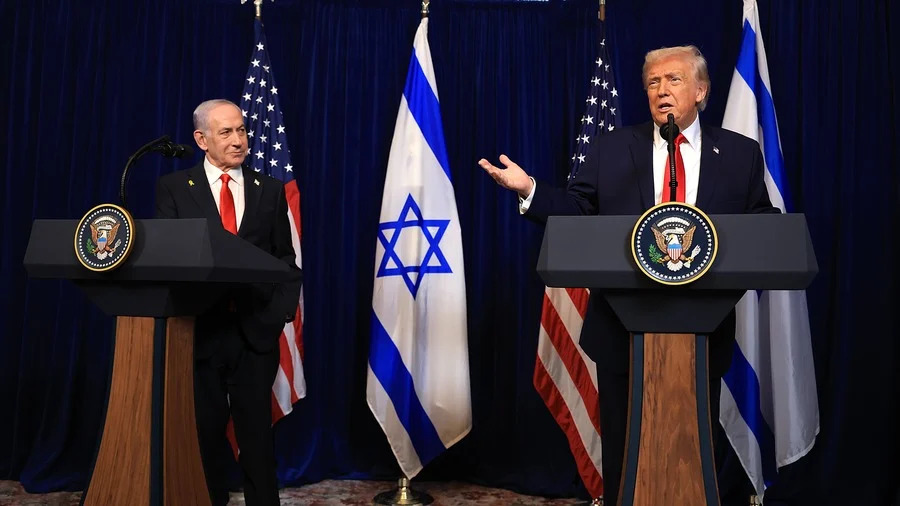
U.S. military strikes against Iran have placed Chinese Communist Party (CCP) leader Xi Jinping in a difficult position ahead of a possible meeting with U.S. President Donald Trump, according to analysis cited by Israel’s largest English-language newspaper, The Jerusalem Post.
The report noted that within roughly two months, Trump had authorized U.S. military action twice against governments regarded as close partners of Beijing.
It suggested that Xi now faces a sensitive decision: whether to host Trump with a full diplomatic ceremony or reconsider the meeting reportedly scheduled for March 31 to April 2. Beijing has not formally confirmed the summit dates.
The CCP openly stands opposite the United States and Israel
Over the weekend, the United States and Israel launched a joint military strike against Iran, referred to as “Operation Epic Fury.”
On March 1, Chinese Foreign Minister Wang Yi spoke by phone with Russian Foreign Minister Sergey Lavrov. According to Chinese state media reports, Wang said that the United States and Israel launching an attack on Iran during ongoing negotiations between Tehran and Washington was “unacceptable,” adding that killing the leader of a sovereign country and promoting regime change was also “unacceptable.”
Success
You are now signed up for our newsletter
Success
Check your email to complete sign up
These two statements drew attention from international observers.
On March 3, Wang Yi also spoke by phone with Israeli Foreign Minister Gideon Sa’ar. However, the report released by Xinhua News Agency largely quoted Wang’s remarks, while only two brief references were made to Sa’ar.
One stated that Sa’ar “introduced Israel’s position on the current situation,” while the other said that Israel “attaches great importance to and will ensure the safety of Chinese personnel and institutions.”
Observers noted that Chinese state media reports sometimes provide limited detail on the other side’s remarks in diplomatic conversations, reflecting the editorial practices of official outlets such as Xinhua.

Israel’s media highlights Xi Jinping
On March 3, The Jerusalem Post republished a Reuters analysis examining the geopolitical implications of the strike on Iran.
The report stated that the U.S. military action had placed Xi Jinping in a difficult position ahead of a potential meeting with Trump. It also pointed out that China’s oil supply could face risks and that Beijing’s response options appear limited.
The analysis emphasized that within two months, Washington had taken military action against two governments considered close partners of Beijing.
In January it was Venezuela under Nicolás Maduro, and in February it was Iran under Ayatollah Ali Khamenei. Both countries are important oil suppliers to China.
The report also described the strike as the largest U.S. military operation in the region since the Iraq War, noting that Beijing’s response had been relatively restrained.
According to analysts cited in the report, the cautious response suggests that Beijing has limited influence over U.S. military actions and that its diplomatic relationships in the region may be shaped largely by strategic interests.
Nicholas Burns, former U.S. ambassador to China, commented on social media platform X that Beijing appeared to be “proving to its authoritarian allies that it is a weak and powerless friend.”
The Reuters analysis quoted by The Jerusalem Post concluded that Xi Jinping may now face a choice: whether to host Trump with a full diplomatic ceremony or reconsider the planned meeting scheduled for March 31 to April 2.
Energy risks for Beijing
The report also highlighted potential energy risks for China.
China is the world’s largest buyer of Iranian oil. Last year, about 13.4 percent of China’s seaborne oil imports came from Iran.
Analysts said that if conflict in the region were to disrupt supplies, particularly through the Strait of Hormuz—one of the world’s most important oil export routes—China could face short-term supply pressures.
Although China could seek alternative suppliers, the loss of Iranian oil in the near term could drive up energy costs and affect profit margins in China’s manufacturing sector, which remains a central pillar of the country’s economy.
The report also noted that the U.S. strike served as a reminder that the U.S. military can conduct operations far beyond its immediate region.

Previous tensions between Israel and Beijing
Tensions between Israel and Beijing have also surfaced in other regional developments.
On Oct. 24, 2024, shortly after the BRICS summit concluded, China’s Xinhua News Agency reported that Xi Jinping told Iran’s president that China would “unswervingly develop friendly cooperation with Iran” regardless of changes in the international situation.
Two days later, Israel launched a large-scale air operation involving around 100 fighter jets targeting Iran’s missile production capabilities.
In July 2024, Beijing hosted representatives from fourteen Palestinian factions, who signed what Chinese officials described as a “Beijing Declaration,” which reportedly discussed the possibility of Hamas joining a future Gaza reconciliation government.
Days later, a major explosion in Tehran killed Hamas leader Ismail Haniyeh.
In 2025, Israeli Prime Minister Benjamin Netanyahu also publicly warned that certain countries were attempting to “encircle Israel,” naming the Chinese Communist Party as one of them.
Developments surrounding Iran continue to highlight the complex geopolitical dynamics involving China, the United States, and Israel.
By Jian Yi