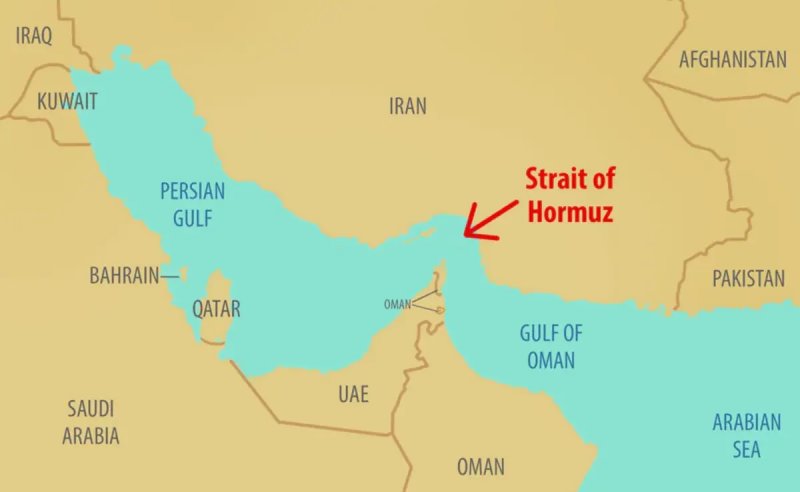

The Strait of Hormuz is a strategic route for global oil shipping.
If the Strait of Hormuz were to close amid escalating regional conflict, the consequences would reverberate far beyond the Middle East. For China, the world’s largest energy importer, such a scenario would represent a serious strategic shock — not catastrophic, but substantial enough to rattle Beijing’s energy calculus and broader economic planning.
That risk is clearly embedded in China’s carefully worded diplomatic statements. As tensions rise across the Gulf, Beijing has repeatedly expressed concern about escalation and the potential spread of hostilities across the region. Behind those calls for restraint lies a hard geopolitical reality: China cannot afford a prolonged disruption in the Strait of Hormuz.
Why Hormuz matters so much to China
Roughly one-fifth of China’s total energy consumption comes from oil. While Beijing does not publish precise figures in real time, it is widely understood that about 70 percent of the country’s oil is imported.
Of those imports, an estimated 40–50 percent originate from Gulf producers — including Saudi Arabia, Kuwait, Iraq, and Iran. Nearly all of these shipments transit through the Strait of Hormuz, the narrow maritime chokepoint that connects the Persian Gulf to global markets.
A closure of the strait would therefore place approximately 5–7 percent of China’s total energy supply at risk. While that share might not appear overwhelming at first glance, in absolute terms it would represent a massive volume of oil — enough to disrupt industrial output, strain supply chains, and trigger volatility in domestic fuel markets.
More broadly, it would expose a structural vulnerability in China’s energy architecture: heavy dependence on maritime supply routes vulnerable to geopolitical instability.
Not catastrophic — but beeply disruptive
Beijing would likely not face an immediate collapse of energy supply. China maintains diversified energy sources, including domestic coal production and growing renewable capacity. It also imports oil via overland pipelines from Russia and Central Asia.
Still, the disruption would be significant. Markets would react instantly. Oil prices would spike globally, increasing costs not only for China but for the entire global economy. For an export-driven powerhouse like China, higher input costs combined with external market uncertainty would create added pressure at a delicate economic moment.
Importantly, such a disruption would not come entirely as a surprise. Chinese policymakers have been closely monitoring developments in the Gulf in recent weeks. Strategic planners in Beijing are almost certainly reviewing contingency scenarios.
China’s Possible Countermeasures
If Hormuz were blocked, China would have several options — none ideal, but all viable in the short term.
First, Beijing could seek to increase imports from alternative partners, particularly Russia and Kazakhstan, whose oil exports can move via pipelines or routes not dependent on the strait.
Second, China could tap into its strategic petroleum reserves. Though exact volumes are state secrets, China is believed to hold one of the world’s largest emergency stockpiles. However, drawing heavily from reserves would likely be treated as a last resort, reserved for sustained disruption rather than short-term volatility.
Third, Beijing could intensify diplomatic engagement with Gulf states and external powers to ensure freedom of navigation and prevent escalation from spilling over into maritime blockades.
Diplomatic messaging reflects strategic anxiety
For now, China’s official line is consistent: calls for restraint, de-escalation, and a return to negotiations. These statements are not merely rhetorical positioning. They reflect a clear strategic interest in preserving stability in the Gulf.
If the conflict intensifies in the coming days, China is expected to increase pressure on all parties to avoid disrupting shipping lanes, particularly through the Strait of Hormuz. Freedom of navigation through this chokepoint is not just a regional issue — it is a pillar of China’s economic security.
Beijing’s approach will likely remain cautious and pragmatic. China has little appetite for direct military involvement, but it has every incentive to prevent a maritime crisis that could ripple across global energy markets.
In short, a closure of the Strait of Hormuz would not devastate China overnight. But it would deal a meaningful blow to its energy security, shake market confidence, and complicate its economic trajectory. That is precisely why Beijing is watching developments so closely — and why its diplomatic messaging has grown increasingly urgent as tensions rise in the Gulf.