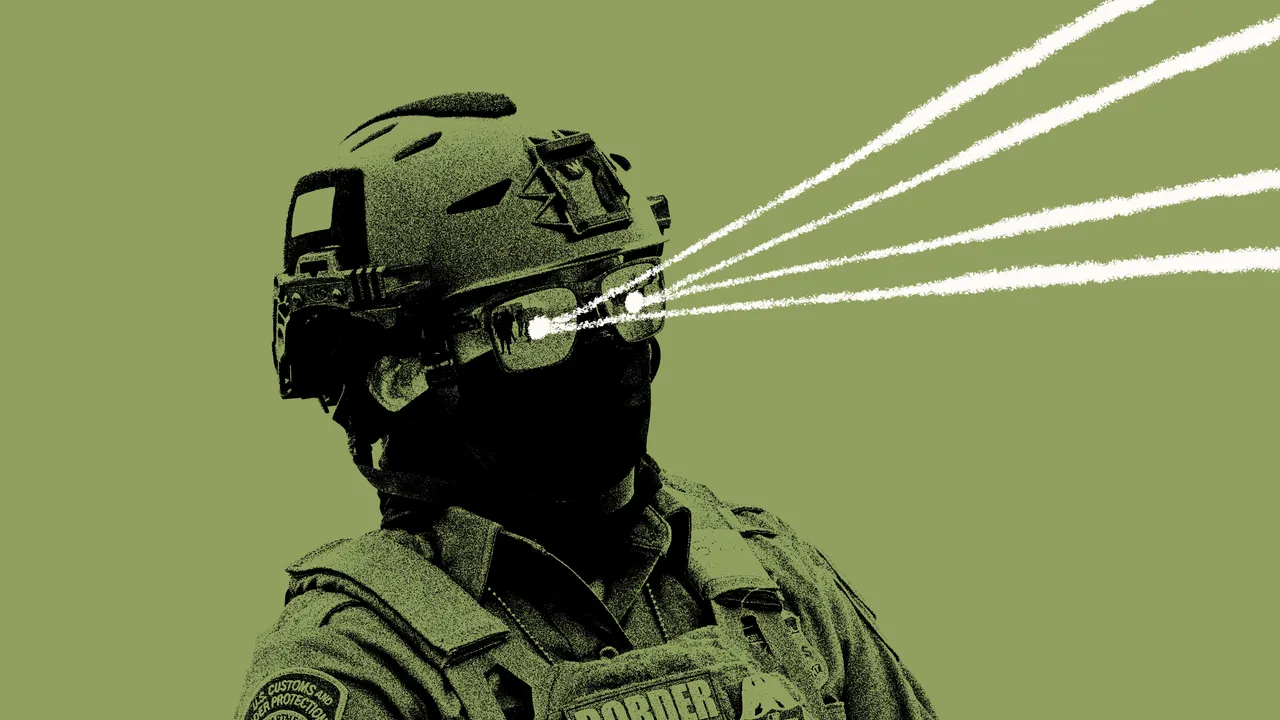
The numbers are staggering. Altogether, the so-called Procurement, Construction, and Improvements budget for C.B.P. totals some fifty-three billion dollars for the current fiscal year, with another twenty billion dollars available in its “operations and support” budget—a major increase from the roughly three billion dollars that the agency had been spending annually on construction in recent years. Indeed, that fifty-three-billion-dollar allotment is roughly equal to the entire 2024 defense expenditures of Hungary, Austria, the Czech Republic, Switzerland, Finland, Greece, Belgium, Romania, Denmark, and Norway combined.
In the wake of the killings of Renee Nicole Good and Alex Pretti, in Minneapolis, congressional Democrats refused to help fund D.H.S. unless Republicans agreed to reforms of the agency’s immigration-enforcement practices. The department’s funding ran out on February 14th, leading to a partial shutdown of the nation’s third-largest Cabinet department, and congressional negotiations appear to have made little progress in the days since—with Democrats demanding, among other things, that the department require agents to wear visible identification and body cameras, ban the use of masks, and end racial profiling. The irony is that, even as many parts of D.H.S. are shut down and staff at agencies like the Transportation Security Administration are working without pay, the immigration operations at the heart of the debate are funded separately and thus continuing undiminished. In fact, the border’s spending spree is only gathering steam.
According to the C.B.P., since Trump took office last year, the agency has issued about $11.4 billion in new border-wall contracts, part of a goal of hitting two hundred and fifty miles of additional barriers by September. Many of the largest new contracts, totalling just over three billion dollars, have gone to “smart wall” construction projects by a company known as BCCG A Joint Venture, an entity that shares an office-suite address in downtown Montgomery, Alabama, with a large-scale general contractor called Caddell Construction. Another six billion dollars in new border-security funding is set to flow to Fisher Sand & Gravel, a North Dakota company that helped Trump’s former campaign adviser Steve Bannon build a portion of supposedly privately funded border wall during the President’s first term; Bannon and three others were indicted, in 2020, by the Justice Department for defrauding hundreds of thousands of donors in connection with their “We Build the Wall” effort. (Bannon’s federal prosecution was preëmpted by a pardon from Trump in 2021; he pleaded guilty on state charges in New York in 2025, but received no jail time.)
Earlier attempts by D.H.S. and the Border Patrol to build “smart” border walls have ended poorly. An effort led by Boeing, launched in 2006 and known as the Secure Border Initiative (SBInet), ran months behind schedule and its tech was pooh-poohed by the Border Patrol agents who had to use it; by 2008, only twenty-eight miles of the prototype virtual fence had been erected, and cost estimates to secure the whole border had soared to thirty billion dollars. When the Obama Administration finally shut down the project, in 2011—with just over fifty miles operational—Representative Bennie Thompson, then the ranking member of the House Oversight Committee, called it a “grave and expensive disappointment.”
But to peruse the federal-contract database for C.B.P.’s flood of spending is to see just how profitable the border-industrial complex has become since the start of Trump’s second term. Three separate contracts, totalling as much as four hundred and forty million dollars, have been awarded to the Silicon Valley defense darling Anduril Industries, which provides D.H.S. with a network of some three hundred autonomous surveillance towers that it estimates cover about thirty per cent of the southern border. In February, Wired reported a new billion-dollar D.H.S. purchasing agreement for the Peter Thiel-founded software company Palantir, which will allow Palantir, a maker of cutting-edge data integration and analysis tools, to largely bypass competitive bidding for new government projects. (Some Palantir employees have begun to question how their work is being used by ICE.)
In some ways, the torrent of money is exactly as anticipated. In September, 2024, Tom Homan, who had previously been Trump’s acting head of ICE, allegedly accepted fifty thousand dollars in cash in an undercover F.B.I. sting operation, in which agents posed as businessmen seeking lucrative border-security contracts in a second Trump term. (For reasons that remain unclear, the case seems to have disappeared since Trump’s election, and Homan was promptly named the President’s new border czar. Homan denies any wrongdoing.)