New York
—
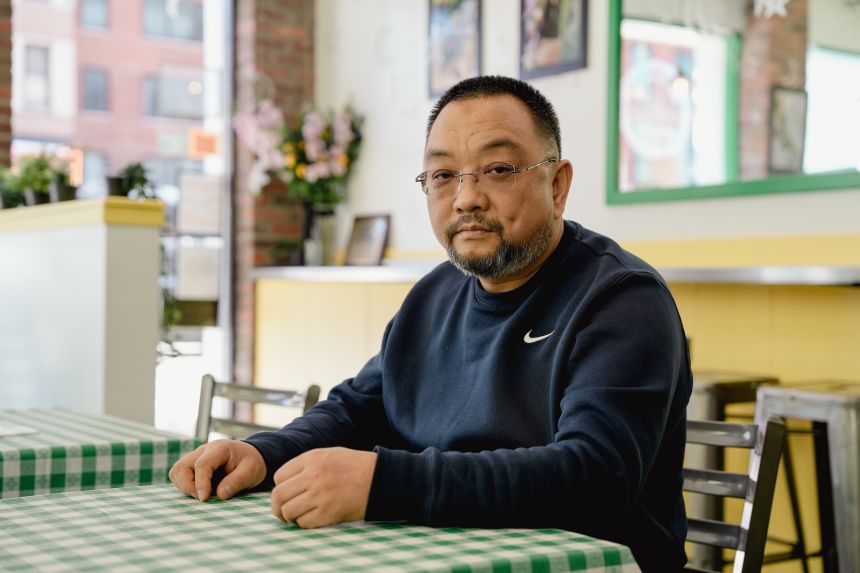
As steam rises from the stove, Ma Ruilin hand-pulls fresh noodles for the lunch service at the Chinese restaurant he runs in New York.
Most of his former cadres inside China’s ruling Communist Party wouldn’t understand why he left his comfortable life as a government official to work in a kitchen on the other side of the world, he says.
But after a creeping sense of disillusionment with Beijing’s policies, the 50-year-old made the choice to risk everything – including his own family – and flee to the United States. Now, he’s stepping forward to become a rare whistleblower on the Chinese system, exposing closely guarded secrets about how China spies on its citizens at home and abroad – including in the US.
“The system has always been evil,” he said. “If you don’t leave, you’ll keep doing evil there.”
In more than three hours of interviews with CNN, Ma revealed his role in designing and implementing programs that suppressed China’s religious minorities – and detailed the expansion in scope and scale of China’s United Front Work Department (UFWD), a shadowy branch of the Communist Party where he worked.
Created during the era of revolutionary leader Mao Zedong, the United Front has since morphed under present day leader Xi Jinping into a vast propaganda and influence machine designed to pressure citizens at home and overseas to support Chinese Communist Party (CCP) policies.

CNN has confirmed Ma’s identity as a former mid-ranking Chinese official after reviewing documents, photographs, and phone records – however, CNN cannot independently verify his claims.
Ma’s decision to speak out against the system he escaped provides important evidence from an insider during a broader crackdown by American law enforcement against “transnational repression” – the intimidation tactics Beijing is accused of deploying against its own diaspora.
“This is a campaign by the Chinese government to silence dissent on US soil,” Roman Rozhavsky, Assistant Director of the FBI’s Counterintelligence and Espionage Division told CNN. “It’s been very aggressive and widespread.”
Rozhavsky said “hundreds” of Chinese operatives are working inside the US – a “gross breach of US sovereignty” – and many more working are remotely from China.
 ” class=”image__dam-img image__dam-img–loading” onload=’this.classList.remove(‘image__dam-img–loading’)’ onerror=”imageLoadError(this)” height=”1080″ width=”1920″/>
FBI official on Chinese influence in the US
 ” class=”image__dam-img image__dam-img–loading” onload=’this.classList.remove(‘image__dam-img–loading’)’ onerror=”imageLoadError(this)” height=”1080″ width=”1920″ loading=’lazy’/>
Hundreds of FBI staff are focused on the issue – and multiple indictments have been brought against individuals linked to Beijing accused of espionage in the US – but investigators are “out-resourced by China in many areas,” he said.
CNN has sent a detailed request for response on the allegations from Ma and Rozhavsky to the Chinese Embassy in Washington DC. Previously, Beijing has strongly denied any accusations of carrying out espionage or illegal activities on foreign soil.
“America on the one hand repeatedly disseminates false information about so-called Chinese spies, and yet on the other hand openly declares it wants to launch large scale espionage activities against China,” Chinese Foreign Ministry spokesperson Mao Ning said in January 2024.
From his small hometown in Lintan county, tucked between the snow-covered mountains on the edge of the Tibetan Plateau, Ma Ruilin grew up dreaming of escaping the long, brutal winters.
He moved to Lanzhou – the capital of Gansu province in northwestern China – for his university studies, then spent 24 years rising through the ranks of the party system, finally becoming a deputy secretary of the Gansu Provincial Communist Party Committee of the United Front Work Department.
Since its inception, the “united front” has been both a political philosophy and a branch of the Communist Party – which Mao and Xi have described as one of China’s “magic weapons” to strengthen the CCP. The department is heavily entwined with the public and state security apparatus, creating “‘one chessboard,’ all together, one whole,” Ma said.
The party has expanded the strategy in recent years, with calls for “stronger measures to implement” United Front work to “enhance the capacity” of the operation, China’s state news agency Xinhua reports. Ma said staffing “basically doubled” since 2019.
“The United Front Work Department has been expanding continuously,” Ma said. “When these Party departments expand, it becomes a contracting, tightening society.”
“There is definitely (UFWD) work in the United States – this is beyond doubt,” Ma said, adding that he once saw an internal document showing that some UFWD informants were arrested in the US.
Experts say in recent years, the UFWD’s tactics have evolved to become increasingly aggressive.
“The United Front has been weaponized,” said Laura Harth, a director at human rights organization Safeguard Defenders, adding that suppression tactics are the “other side of the coin” to influence campaigns.
People connected to the UFWD have been accused of harassing and intimidating activists and critics, largely from groups China defines as the “Five Poisons” – advocates for independence or greater freedom for Taiwan, Hong Kong, Tibet, Xinjiang, and followers of the banned spiritual movement Falun Gong.
“Every provincial United Front Department has its informant network—targeting Taiwan, Hong Kong, Macao,” Ma said.
Lin Hai, a Chinese national who lives in New York and works as an Uber driver, said he was beaten and injured by pro-China protesters while attending a rally in 2019 to support a visit by Tsai Ing-wen, Taiwan’s President at the time.
“I was shocked,” Lin Hai said. “Because I never expected to be threatened or beaten on American soil.’
Anti-CCP protesters also had violent confrontations with pro-Beijing groups near the 2023 APEC summit in San Francisco, which was attended by Xi.
The UFWD has tentacles across some student organizations along with community groups in the US known as “hometown associations.” China says that these groups help people with everyday tasks like applying for drivers’ licences. But the FBI’s Rozhavsky says they are also being used as recruitment grounds for “people who are willing to engage in transnational repression.”
Ma said people are sometimes recruited with money or benefits, adding that “there are too many ways to win someone over and corrupt them.”
More than 2,000 organizations connected to the United Front system have been identified in four democratic countries – the US, Britain, Canada, and Germany – according to a recent report by The Jamestown Foundation, a DC-based think tank. Nearly half of those groups are based in the US.
The United Front is named on multiple indictments from the US Department of Justice in cases of transnational repression – including a 2023 case against two Chinese Americans accused of running a secret Chinese police facility in Manhattan’s Chinatown neighborhood.
One of the men – who has pleaded not guilty – was approached by a UFWD official to set up the police station, according to the indictment. His co-defendant has pleaded guilty to conspiring to act as an agent of the Chinese government.
The Manhattan outpost was one of at least 102 Chinese police stations operating worldwide, run by regional Chinese public security services with direct links to the United Front, according to a 2022 report by Safeguard Defenders.
“There are no so-called secret police stations,” Lin Jian, Chinese Foreign Ministry spokesperson said in December 2024. “(China) has always strictly abided by international law and respected the judicial sovereignty of all countries.”
Freedom House, a DC-based non-profit organization, has documented 1,219 incidents of transnational repression globally between 2014-2024 – “the tip of the iceberg,” according to Yana Gorokhovskaia, a research director at Freedom House, because they only record physical incidents, not online ones.
Nearly a quarter of the incidents they logged were allegedly carried out by China, “the world’s biggest perpetrator” with “the most sophisticated and comprehensive campaign globally,” Gorokhovskaia said.
The “array of tactics” from China includes “physical, digital, pressure on families, passport control” along with “detentions, renditions, credible threats, physical assault,” she added.
The FBI admits that the Chinese diaspora is vulnerable in the US.
“If you’re popular and vocal and have a very large following, you’ll be seen as a threat,” Rozhavsky said.
Tactics include threatening families, sending Chinese officials to the US to harass individuals, and hiring private investigators to surveil people or even commit violence, he said.
“They’re creating this Orwellian climate of fear where everyone is afraid to speak out, even though they’re on US soil, and it’s their right to do so,” he added. “This is being directed from the highest levels of the Chinese government.”
Beijing’s alleged tactics of surveillance and intimidation of its emigres in the US have been perfected from years of practice inside China, according to whistleblower Ma.
As a Hui Muslim, a mostly Chinese-speaking minority, he was tasked with surveilling religious groups for much of his career, including Christians and his fellow Muslims.
He said his department was involved in closing down mosques, removing domes, expelling imams, hiring informants, and installing surveillance cameras at mosques in Gansu – and the information they gathered led to innocent people being sent to prison camps or jail.
Ma said he started to pay more attention around 2014, when China began a brutal crackdown of ethnic Uyghurs and other Muslim minorities in the western Xinjiang region – a policy the US government has described as genocide. The US and the UN estimate that up to two million people were detained in a giant network of internment camps, which China described as voluntary “vocational training centers.”
CNN has reported extensively on China’s Xinjiang region in recent years, gathering testimonies from those who allege torture and rape inside the camp system, forced sterilisation, and parents forcibly separated from their children.
“I know all the details—everything that happened in the Xinjiang camps, the little things—how cruel it was, how they did things, how they ‘managed’ people,” Ma said.
In 2016, Ma became director of the Hajj office – part of the local Religious Affairs Bureau, which was later subsumed into the United Front Work Department, he said.
He personally escorted Chinese Muslims on their Hajj pilgrimages to Mecca in Saudi Arabia, and he developed a wristband equipped with radio-frequency technology to track the travelers. He said he thought the device would keep them safe, but he later realized it would be used for surveillance.
Ma also created a database of religious sites and staff in Gansu, which he said was intended to improve administrative efficiency. When this policy was later expanded across the country, he said he regretted ever starting the project – because it would become a “shackle” for religious groups.
“I realized I had done something terribly, hugely wrong,” he said.
Ma said cadres from Gansu and Ningxia provinces were sent to Xinjiang to learn how officials were treating the Muslim population there. The message was “look how Xinjiang manages it; you’re managing too loosely,” he said.

Chinese whistleblower on why he left China

When Ma last visited Xinjiang in 2023 as a tourist, he was shocked at the transformation of the Xinjiang capital Urumqi, which looked like any other city in China, compared to the culturally unique place he first visited in 1996. CNN has previously documented the removal of mosques, graveyards and other religious sites inside Xinjiang.
Starting in 2018, Ma said Xinjiang officials were also sent on visits to Rwanda to study “a real genocide,” referencing the 1994 massacres that killed hundreds of thousands. He said the trips were designed to reduce their guilt when they saw how “benevolent” the Party is in comparison – but also to give them new ideas.
“It teaches you how to use even more brutal methods to torment people,” he said.
Throughout these years, Ma began to feel an increasing sense of remorse at his complicity in this system, which sparked deeper soul-searching around his identity as a Muslim, and what that meant within Chinese society.
Rising Islamophobia in China added to his sense of “identity anxiety,” he said, as he increasingly felt like a second-class citizen.
“The CCP (has a) systematic plan of genocide against minorities – and step by step, they are implementing it – Uyghurs, Mongols, Tibetans, and Hui,” Ma said.
“As long as your appearance is not quite the same as the CCP’s mainstream, they will assimilate you.”
Beijing has repeatedly denied allegations of genocide and human rights violations against its religious minorities and says that these groups are protected under Chinese law.
“Xinjiang enjoys social stability, economic development, ethnic unity and religious harmony, and the rights and interests of the people of all ethnic groups in Xinjiang are effectively safeguarded,” a Chinese Foreign Ministry spokesperson said in February 2024.
Since coming to power, Xi has intensified efforts to assimilate ethnic minorities, and rolled out a nationwide campaign to “sinicize” religion – ensuring it aligns with Communist Party leadership and values.
“It’s never been as severe as it is under Xi: so systematic, so intense,” Ma said.
“Based on my understanding, privately no one likes him,” he said, referring to his former CCP colleagues in Gansu. “But on the surface, everyone has to praise him.”
After years of grappling with his identity, Ma eventually concluded that he couldn’t remain in China.
“The longer I stayed within that system, the more I felt a sense of guilt,” he said. “I always wanted to escape that kind of cage-like life.”
When he arrived in the US in February 2024 with his wife and two children, the next challenge was adjusting to a lower standard of living compared to the privileged existence they had left behind.
“My wife was a university professor, and I was within the CCP system and on an upward trajectory,” he said. “So, I lived a worry-free life.”
His first job in New York was delivering food for Uber Eats, and he moved into a shared house in Flushing, a neighborhood popular with Chinese immigrants.
Now, he is running two Lanzhou noodle restaurants – serving up the signature dish of his hometown, halal beef broth with hand-pulled noodles and radish.
He said the work is exhausting, but he is “very, very happy” in New York, and has no regrets.

Ma says his mother and sisters are still in China, despite their attempts to get US visas. He says his decision to speak out will “bring a lot of trouble for them,” but he feels he has no choice.
“If I still don’t step forward, truly, I feel no one will,” he said.
“China’s Muslim community is living in a very bleak world, a hopeless era,” he said. “I want to stand up in this era and give others some hope.”
Going public with this information could bring him “great disaster,” he said, but he also hopes it will bring some redemption.
“What I’m doing now is my repentance – my apology,” he said.
As for his family back in China, he is coming to terms with the fact that he may never see them again.
“I can only pray that they forgive me.”
Video credits: Exxon Ruebe, Neil Hallsworth, Bryan Kane, Chris Turner, and Andrew Christman.