Published on
February 27, 2026

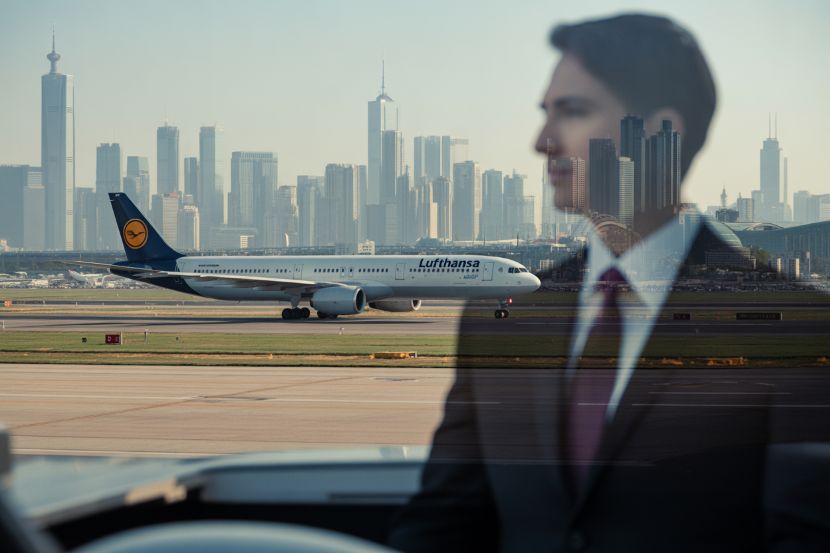
Image generated with Ai
Lufthansa Strengthens Shanghai And Hong Kong Strategy With New Greater China Chief As Frankfurt–Beijing Flights Pause And Air China Alliance Deepens — this decisive move marks a pivotal moment in the German aviation giant’s evolving approach to the Chinese market. The Lufthansa Group has appointed Bing Yan as its new General Manager for Greater China, effective March 1, positioning Shanghai at the center of its renewed commercial strategy. The leadership change comes at a time when Lufthansa is recalibrating operations between Germany and China, following capacity challenges, the suspension of its direct Frankfurt–Beijing service in late 2024, and intensifying competition from Chinese carriers across Europe-bound routes. By combining premium service ambitions, deeper integration with Air China, and a reinforced focus on Hong Kong as a gateway to the Greater Bay Area, Lufthansa is aiming to reassert its relevance in one of the world’s most strategically important travel corridors.
A Strategic Leadership Shift In Shanghai
The Lufthansa Group has entrusted Bing Yan, a two-decade veteran within the organization, with responsibility for all commercial operations across mainland China and Hong Kong. Based in Shanghai, she will oversee sales, marketing, distribution, and partnership development for Lufthansa, Swiss International Air Lines, and Austrian Airlines in the region.
Her role also includes managing Lufthansa’s globally significant joint venture cooperation with Air China, a partnership that coordinates schedules, pricing, and revenue-sharing on routes between China and Europe. This collaboration has long been central to Lufthansa’s strategy in Asia, allowing the group to maintain network depth despite geopolitical and operational pressures.
With academic credentials in finance and strategy from Oxford and professional certification as an ACCA, the appointment reflects Lufthansa’s emphasis on financial discipline and localized leadership at a time of cost pressures and revenue volatility.
Advertisement
Advertisement
Aviation Headwinds: Capacity Gaps And Competitive Pressures
Lufthansa’s repositioning comes against a backdrop of measurable strain in its China operations. During the post-pandemic recovery phase, restoration of flight capacity between China and Germany lagged behind broader market recovery trends.
By November 2024, Lufthansa’s weekly flight frequency to and from Greater China stood at roughly 50% of 2019 levels. In late October 2024, the airline suspended its direct Frankfurt–Beijing route — a symbolic and operational shift given the historic importance of that connection.
Advertisement
Advertisement
At the same time, Chinese carriers expanded aggressively across Europe-bound routes, leveraging more favorable routing and cost structures. Due to the continued avoidance of Russian airspace, European airlines including Lufthansa face longer flight paths between Europe and Asia, increasing fuel consumption and crew costs. As a result, Lufthansa reported that its Asia-Pacific passenger revenue declined 9.8% year-on-year in 2024, compared with a group-wide decline of 2.6%. China emerged as a key pressure point within the region.
For travelers, these shifts mean route adjustments, schedule changes, and evolving fare dynamics — particularly on nonstop services between major German and Chinese cities.
Advertisement
Advertisement
Premium Focus Meets Local Adaptation
Rather than retreating, Lufthansa is implementing a dual-track strategy: intensifying its premium service proposition while deepening local market integration.
The airline group continues investing in upgraded long-haul cabins under its broader fleet modernization program. Across intercontinental aircraft, Lufthansa has been introducing new-generation business and first-class products, enhanced inflight dining, and digital service improvements. For Chinese outbound and European leisure travelers alike, this focus on premium positioning is designed to differentiate the brand in a highly competitive corridor.
Simultaneously, Lufthansa is reinforcing localized decision-making. By placing a Greater China-based executive at the helm, the group signals that commercial agility and regional insight are essential for navigating shifting demand patterns in Beijing, Shanghai, and the Greater Bay Area.
Hong Kong: The Gateway Within The Strategy
One of the pillars of Lufthansa’s recalibration is its continued emphasis on Hong Kong as a strategic hub.
The airline has maintained a route history of more than six decades between Hong Kong and Frankfurt, making it one of the most enduring long-haul links between Europe and the city. As mainland capacity fluctuates, Hong Kong’s international connectivity and regulatory environment offer operational flexibility.
For travelers, this translates into:
- More reliable Europe connections via Hong Kong
- Seamless onward links into mainland China
- Access to Lufthansa’s intercontinental network through Frankfurt and beyond
With Hong Kong serving as a bridge to cities across the Greater Bay Area, Lufthansa can maintain reach into southern China even when direct mainland routes face adjustments.
Travel Insight: What This Means For Passengers Flying Between Europe And China
For business and leisure travelers planning trips between Germany and China, several practical implications emerge:
1. Expect Network Optimization
Routes may shift between direct mainland services and Hong Kong-based connections. Travelers should monitor updated schedules, particularly for Beijing-bound itineraries.
2. Joint Venture Benefits With Air China
The Lufthansa–Air China partnership enables coordinated schedules and smoother connections. Passengers may benefit from integrated ticketing, shared frequent flyer privileges, and improved transfer experiences.
3. Competitive Fare Environment
Increased capacity from Chinese carriers on China–Europe routes may create fare competition, particularly in economy class. However, premium cabins may remain strategically positioned.
4. Consider Alternative Gateways
Cities such as Shanghai and Hong Kong may offer more consistent long-haul options compared with temporarily suspended routes like Frankfurt–Beijing.
A Century-Long Relationship Enters A New Phase
Lufthansa’s ties with China date back to 1926, when a Berlin–Beijing service established early aviation links between Europe and Asia. Over decades, the airline expanded services to Beijing, Shanghai, and Hong Kong, becoming one of the first international carriers in the Chinese market.
Today, as global aviation navigates geopolitical complexities, fuel cost volatility, and shifting traveler demand, the Greater China market remains strategically vital. Outbound Chinese tourism continues to recover steadily, while European travelers are returning to major Chinese commercial and cultural centers.
With Bing Yan assuming leadership in Shanghai, Lufthansa aims to combine cost control, premium positioning, and localized responsiveness — an approach aligned with the group’s broader transformation agenda.
The Road Ahead For Europe–China Travel
The Europe–China aviation corridor remains one of the most strategically significant long-haul markets globally. Despite current challenges, underlying travel demand — spanning trade, education, tourism, and corporate mobility — remains structurally strong.
For travelers, the evolving Lufthansa strategy signals:
- Continued commitment to the China market
- Enhanced cooperation with Air China
- A strengthened Hong Kong gateway
- Ongoing premium cabin upgrades
As global aviation dynamics continue to shift, Lufthansa’s recalibration in Greater China reflects both caution and long-term ambition — a balancing act between financial discipline and network relevance in a highly competitive Asia-Pacific landscape.


naturally like your web site however you need to take a look at the spelling on several of your posts. A number of them are rife with spelling problems and I find it very bothersome to tell the truth on the other hand I will surely come again again.