![[News] China Launches First State-Level Auto Chip Testing Platform in Push for Tech Sovereignty](https://news.charm-retirement.com/wp-content/uploads/2025/10/China-chip-FREEPIK-20251030-624x416.jpg)
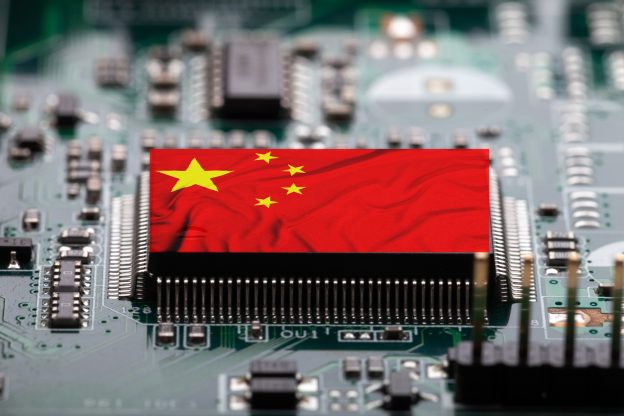
China’s chip equipment sector is accelerating its push for greater self-reliance. According to Newsswitch, the country has been a key driver of global semiconductor investment in recent years and is now moving to localize critical technologies long dependent on overseas suppliers, including lithography systems, EDA tools, and advanced materials.
The report notes that U.S. sanctions have become a key catalyst behind this shift. Facing repeated risks of supply chain disruptions stemming from Washington’s restrictions, China is stepping up efforts to achieve what it describes as “self-controlled” development of its semiconductor industry.
Against this backdrop, the push for self-reliance is being led by major industry players such as SMIC and HiSilicon, supported by strong government backing. As the report notes, China’s chipmakers expanding new production capacity are required to source more than 50% of their equipment domestically. By 2027, Beijing aims to raise the localization rate of equipment used in mature process technologies to 70%, underscoring its determination to reduce reliance on foreign suppliers.
Industry sources referenced in the report say the rise of domestic players in the cleaning equipment segment has become increasingly evident. At the same time, China’s ambitions extend further, with efforts focused on achieving breakthroughs in equipment capable of supporting the 14nm process.
The effort is already showing tangible results. In lithography, SMEE has moved its 28nm ArF immersion systems into the verification stage. In the etching segment, NAURA Technology Group has begun mass production of 28nm tools, while AMEC is reportedly conducting verification of its 14nm equipment at SMIC.
Notably, China is also making assertive moves in areas long regarded as among its most challenging technological gaps. According to Reuters, sources say the country has assembled a prototype EUV machine using components sourced from older ASML systems. Reuters adds that the Chinese government aims to produce functional chips with the prototype by 2028, although 2030 is considered a more realistic timeline. The existence of the prototype suggests China may be closer to semiconductor self-sufficiency than previously anticipated.
Newsswitch further suggests that validation cycles for Chinese-developed equipment are progressing more quickly than those for foreign-made tools, often being completed within about a year. Beyond manufacturing equipment, China is also working to reduce its dependence on overseas suppliers in areas such as EDA software.
Read more
(Photo credit: FREEPIK)
Please note that this article cites information from Newsswitch and Reuters.