By: Andy Wong Ming Jun
Although China can produce an entire host of manufactured metalwork goods from pots and pans to electric cars, it appears it is still having trouble meeting requirements for some of the most advanced articles produced by cutting-edge technology. That is showing up with the recent announcement by state-owned aerospace manufacturer COMAC that a US-Chinese joint-venture firm, Aviage Systems would develop the core avionics processing system, which serves as the central brain of the aircraft, for its C929 passenger jet airliner.
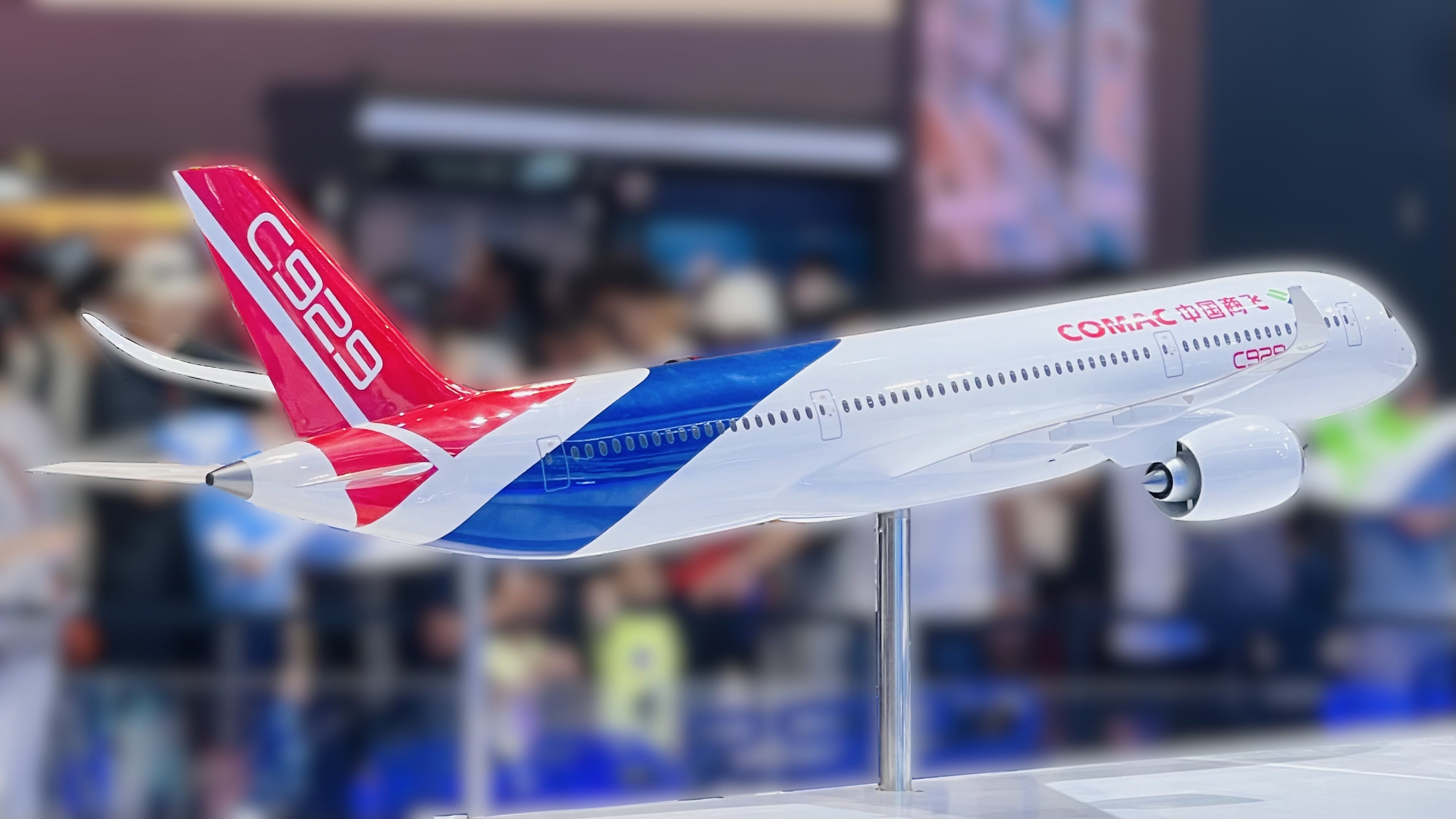
COMAC, or Commercial Aircraft Corporation of China, Ltd, showcased the C929, still in the detailed design phase, in a starring role at the Singapore Airshow late last month, presenting to the world a narrative image of China intensifying its development efforts in building a domestic commercial aircraft in the same class as contemporary Western equivalents such as the American Boeing 787 Dreamliner and European Airbus A350/330neo.
Industry attention is now returning to the as-yet undetermined future jet engine meant to power the C929, demonstrating longstanding technological obstacles in developing and building an indigenous turbofan jet engine. China continues to grapple with sufficient proficiency in metallurgical technology and mass-manufacturing high-quality large turbofan blades with extremely tight margins for imperfections. Matching Western production standards for the aerospace engines currently powering the vast majority of commercial airliners appears still out of reach.
The country’s strength in mass production is still coming at the cost of quality, according to internal evaluation reports dating back to 2017 that have also highlighted China’s strategy of overreliance on imitation and reverse-engineering, which has contributed to a persistent lag behind advanced Western technology. China’s lack of organically-developed technical know-how correlates with its continued reliance on machining tools imported from Western countries, done as much out of pure expediency as well as deep-seated ideological inclination to justify means of attaining higher knowledge and skills with intentional ends of national rejuvenation.
Currently, China is working on developing and producing the CJ-2000 turbofan engine for the C929, envisioned as China’s domestic equivalent to the Rolls-Royce Trent-1000 powering the Boeing 787 Dreamliner, although such lofty ambitions remain largely aspirational. Despite recent test successes where the CJ-2000 managed to achieve a domestic-record thrust to be classified in the same engine class as Rolls-Royce’s Trent-1000, the engine has yet to be tested and proven to be similarly reliable and long-lived.
As far back as 2018, Rolls-Royce had already identified China’s need for a large turbofan engine as an opportunity for pitching business cooperation with Beijing. It wouldn’t be the first time the UK’s flagship aero powerplant manufacturer either directly or indirectly aided in China’s aeronautical modernization efforts. During the Cold War, Rolls-Royce indirectly contributed to the earliest Chinese jet engines, which were tech-transferred by the Soviet Union in the form of an unsuccessful and illegally-reverse-engineered Derwent jet engine known as the RD-500. In 1975, Rolls-Royce signed a US$200 million deal to sell Spey turbofan engines to China as well as granting permission for them to be used for military warplanes.
Today there are still more than 200 JH-7A tactical strike aircraft powered by Spey engines in service with the People’s Liberation Army Air Force and Navy, mainly forming the backbone of Chinese close air support and rapid-response surface antiship/antisubmarine strike capabilities integral to its wider Taiwan and Western Pacific combined arms strategy.
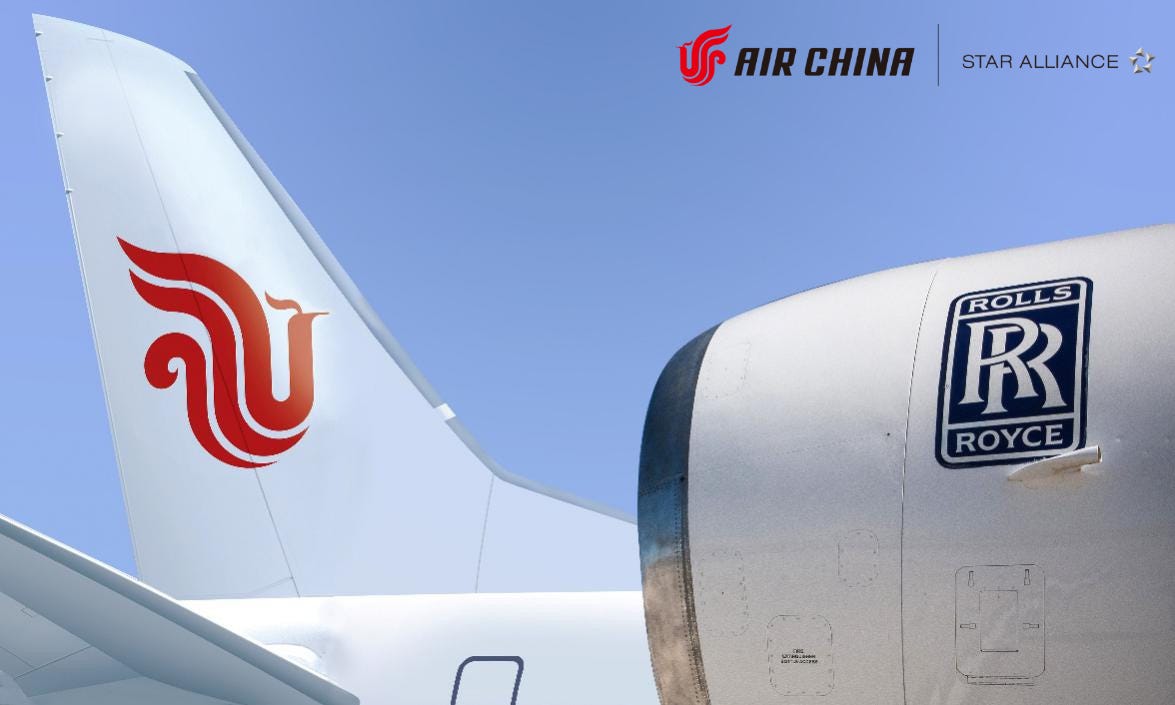
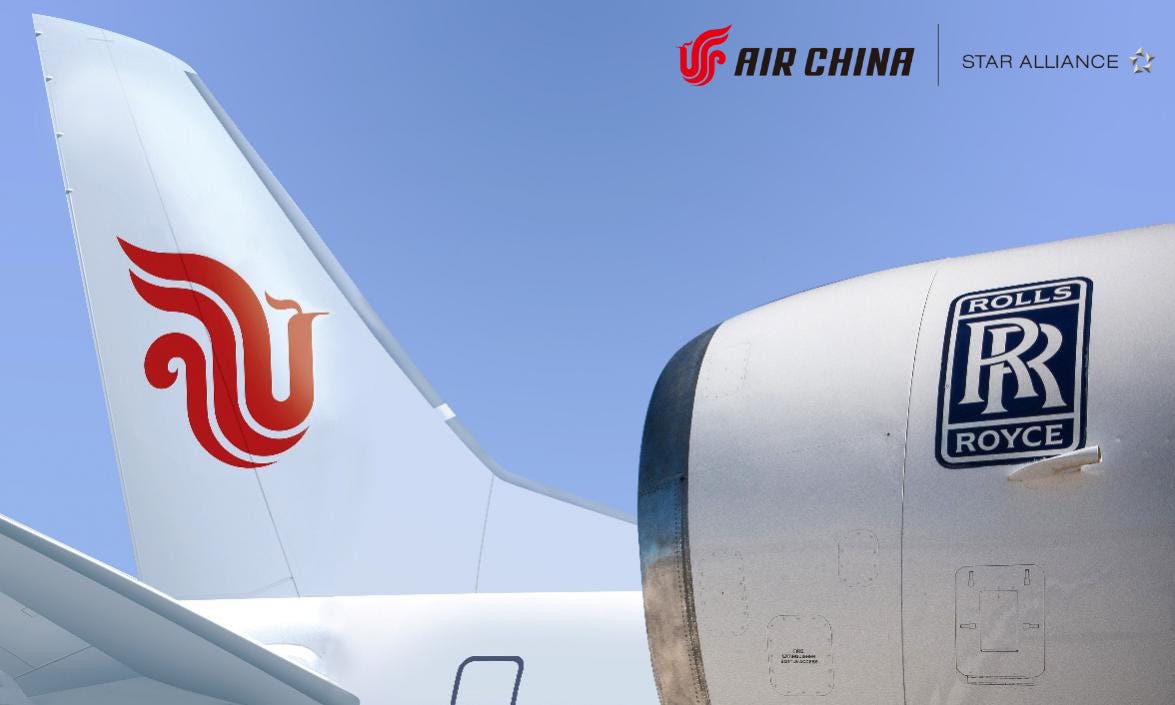
In light of this history, the recent commencement of full operations at Rolls-Royce’s latest joint-venture factory in China may lay the groundwork for a major Chinese breakthrough in commercial turbofan engine production technological capability, which would be key to the C929’s success. Set up in collaboration with Air China, Beijing Aero Engine Services Company Ltd (BAESL) was announced in 2022 at the China International Fair for Trade in Services and officially opened in December 2025 within the Tianzhu Free Trade Zone.
The sprawling maintenance, repair, and overhaul (MRO) facility is located close to Beijing Capital International Airport, with Rolls-Royce positioning the factory to provide overhaul services for its mainstream Trent engine models, 20 percent of which can be found on airliners operated by Chinese airlines.
With reliability and longevity the main obstacle faced by the CJ-2000 turbofan, it’s almost certain that Rolls-Royce’s latest MRO joint venture factory will ultimately facilitate technology transfer from the UK to China to make turbofan engines on par with Western-manufactured ones. After all, the very point of joint ventures between international partners is to trade technical and operational knowledge transfer for market access.
“Market-for-technology” policy has for decades compelled foreign firms to transfer technology, intellectual property and trade secrets to domestic partners in exchange for access to the Chinese market. That has cost the west technological superiority in wind turbine components, from the Spanish firm Gamesa; high-speed rail, from Siemens, Alstom, and Kawasaki, which were required to enter JVs with Chinese SOEs; automobiles, with General Motors and Volkswagen required to form 50/50 joint ventures with local partners involving the transfer of powertrain and electric vehicle technologies; solar energy, with Beijing Solar Energy Technology Co., Ltd. Importing copper-aluminum composite solar strip production from Canada’s Shantap International Corporation; and cloud computing, with the American giant Apple transferring iCloud user data management to a local Chinese firm.
While 2020 legislation officially banned administrative forced technology transfer, concerns persist. Implicit pressures and sector-specific requirements remain the nature of military-civil fusion as a key cornerstone concept in China’s economic and technological modernization strategy. The same domestic Chinese workforce and scientific engineering talent trained up at BAESL will ultimately form the bedrock of Chinese domestic jet engine R&D efforts, critical not just to its commercial aviation aspirations but its air force modernization and diversification efforts away from traditional reliance on Russian jet engines. With the UK’s weak economic outlook it leaves London with little room for choice.
The story of China’s C929 and the accompanying development of the CJ-2000 turbofan engine remains an interesting, if perhaps soon-to-be rare example of interdependent collaboration and cooperation between the Middle Kingdom and the wider Western world. This is in part made easier by the recent fractures within Western geopolitics with the United States under the second Trump administration, which is going out of its way to drive culture war wedges into its transatlantic relations. With China still struggling with high-end computing capacity and relying on foreign-designed chip architecture and software, for instance, Trump has raised howls of outrage from the defense industry over the sale of Nvidia’s advanced AI chips to China in exchange for a 25 percent or surcharge on the sales revenue.
It is also a demonstration of China’s long-term strategy. Despite recent reports indicating President Xi Jinping and the CCP have recognized inevitable East-West technological and economic decoupling by renewed emphasis on national security interests, it’s clear that at least in the realm of aeronautical engineering China is still very much the student. Made In China 2025 might have been quietly dropped since 2018 owing to growing backlash from Western political establishments, but the C929 and CJ-2000’s ongoing development alongside BAESL’s opening in mainland China prove that the original political goals set in 2015 by Xi to establish Chinese great power status vis-à-vis the US and Western world remain alive and well.
Andy Wong Ming Jun writes about defense strategy for Asia Sentinel