Published on
January 27, 2026

Hong Kong is driving this game-changing travel rail expansion to make cross-border journeys faster, simpler, and far more connected, as a newly upgraded high-speed rail timetable removes transfer barriers, adds direct routes to key mainland cities, and strengthens the city’s role as a central gateway within the Greater Bay Area. By expanding nonstop access across Guangdong and extending reach to longer-distance destinations, the overhaul cuts travel time, reduces planning complexity, and positions rail as the most efficient choice for both business and leisure travelers while supporting deeper regional integration and long-term mobility growth.
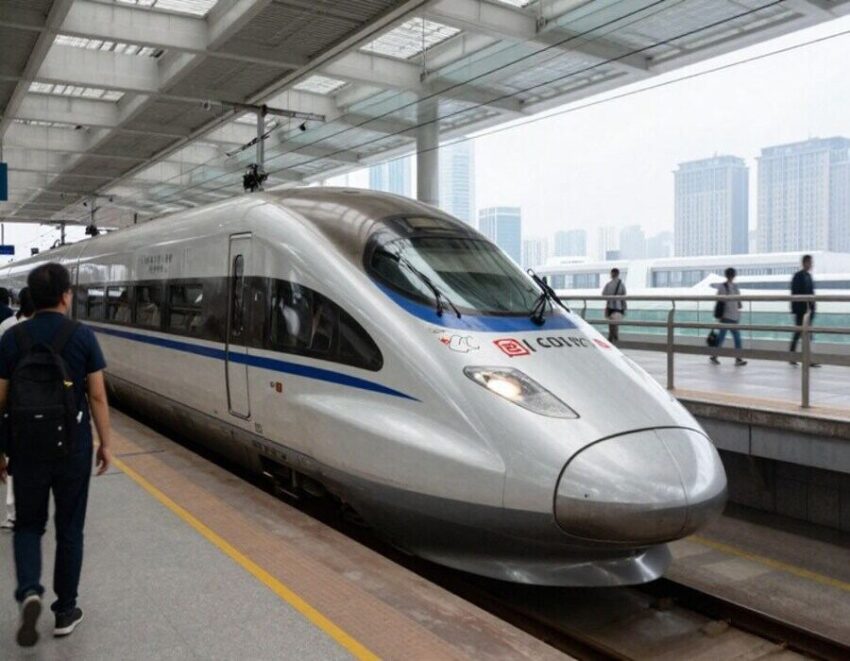
Hong Kong’s high-speed rail system has stepped into a new chapter, reshaping how the city connects with mainland China and quietly changing the rhythm of cross-border travel. With a newly updated timetable now in effect, passengers can reach a wider range of mainland destinations directly from Hong Kong, without the hassle of transfers. The change may look technical on paper, but on the ground it translates into shorter journeys, simpler planning, and a stronger sense that the city is firmly plugged into the rail heartbeat of the Greater Bay Area.
At the center of the update is expanded direct access to cities across Guangdong province. Travelers can now board a train in Hong Kong and arrive straight into places such as Huizhou, Shanwei, Jieyang, and Qingyuan. These are cities that play important roles in manufacturing, logistics, education, and tourism, yet until now required train changes or more complex routing. Removing those breaks in the journey makes rail travel more appealing, especially for frequent business travelers and families making short leisure trips.
The impact is immediate for daily and weekly commuters. Time once spent navigating connections or waiting on platforms is now saved. For business passengers, this means more predictable schedules and fewer delays. For leisure travelers, it lowers the psychological barrier to spontaneous trips. A weekend escape or a short visit becomes easier when the journey is direct and clearly laid out.
This expansion also reinforces Hong Kong’s position as a transport gateway within the Greater Bay Area. The region’s long-term vision depends heavily on fast, reliable links between its cities, and rail plays a crucial role in that strategy. By widening the list of directly connected destinations, Hong Kong’s high-speed rail station becomes more than a terminal. It acts as a central node, linking the city to industrial hubs, emerging urban centers, and cultural destinations across southern China.
To encourage passengers to try the expanded network, short-term promotional offers have been rolled out alongside the timetable change. These include buy-one-get-one-free deals and fare reductions of up to twenty Hong Kong dollars on selected routes. While temporary, these offers serve a clear purpose: to nudge travelers into exploring new destinations and to build early momentum for the enhanced services. For many passengers, a discounted ticket is often the push needed to test a new route or reconsider rail over other forms of transport.
Advertisement
Advertisement
Beyond the immediate benefits to travelers, the timetable update points to deeper changes ahead. Authorities are preparing to introduce revised railway standards that combine mainland technical expertise with Hong Kong’s established operational practices. This is not just about running trains faster. The aim is to speed up construction, improve efficiency, and reduce costs in future rail projects. By aligning standards more closely, planners hope to streamline approvals and avoid duplication, lessons learned from years of large-scale infrastructure development across the border.
These new standards are expected to influence upcoming projects within the Greater Bay Area, where rail demand continues to grow. They may also shape railway development beyond the region, with the potential to be applied nationally and even in overseas projects where Chinese rail technology is involved. In that sense, Hong Kong’s rail system becomes a testing ground for hybrid practices that balance international expectations with mainland engineering scale.
Advertisement
Advertisement
The expansion does not stop at southern China. The updated timetable also introduces new long-distance stations, pushing Hong Kong’s rail reach deeper into the country. Additions such as Miluodong in Hunan, Quanzhounan in Fujian, and Wuxidong in Jiangsu extend the network’s footprint and open up fresh travel options. These cities sit along key economic and population corridors, making them relevant not only for tourism but also for trade, education, and family connections.
For travelers, this means more choices without the need to fly. High-speed rail offers a different travel experience, one that blends speed with city-center access and fewer security formalities compared to air travel. As more distant destinations appear on the departure boards in Hong Kong, rail becomes a realistic alternative for journeys that once felt too long or complicated.
Taken together, the timetable update reflects a broader push to place high-speed rail at the heart of regional and long-distance mobility. It supports economic integration, encourages people-to-people exchanges, and quietly reshapes travel habits. For Hong Kong, the changes underline a strategic direction: deeper connectivity, smoother movement, and a transport system designed to keep pace with the evolving Greater Bay Area.
Hong Kong has launched this game-changing travel rail expansion to eliminate transfers, cut journey times, and unlock direct high-speed access to more mainland cities, reinforcing its role as a vital gateway within the Greater Bay Area.
What looks like a simple timetable revision is, in reality, a statement of intent. Hong Kong is betting on rail as a connector, a growth engine, and a practical tool for everyday travel. As more passengers experience the convenience of direct routes and expanded destinations, the high-speed rail network is likely to become an even more central part of how the city moves, works, and stays connected with the rest of China.


