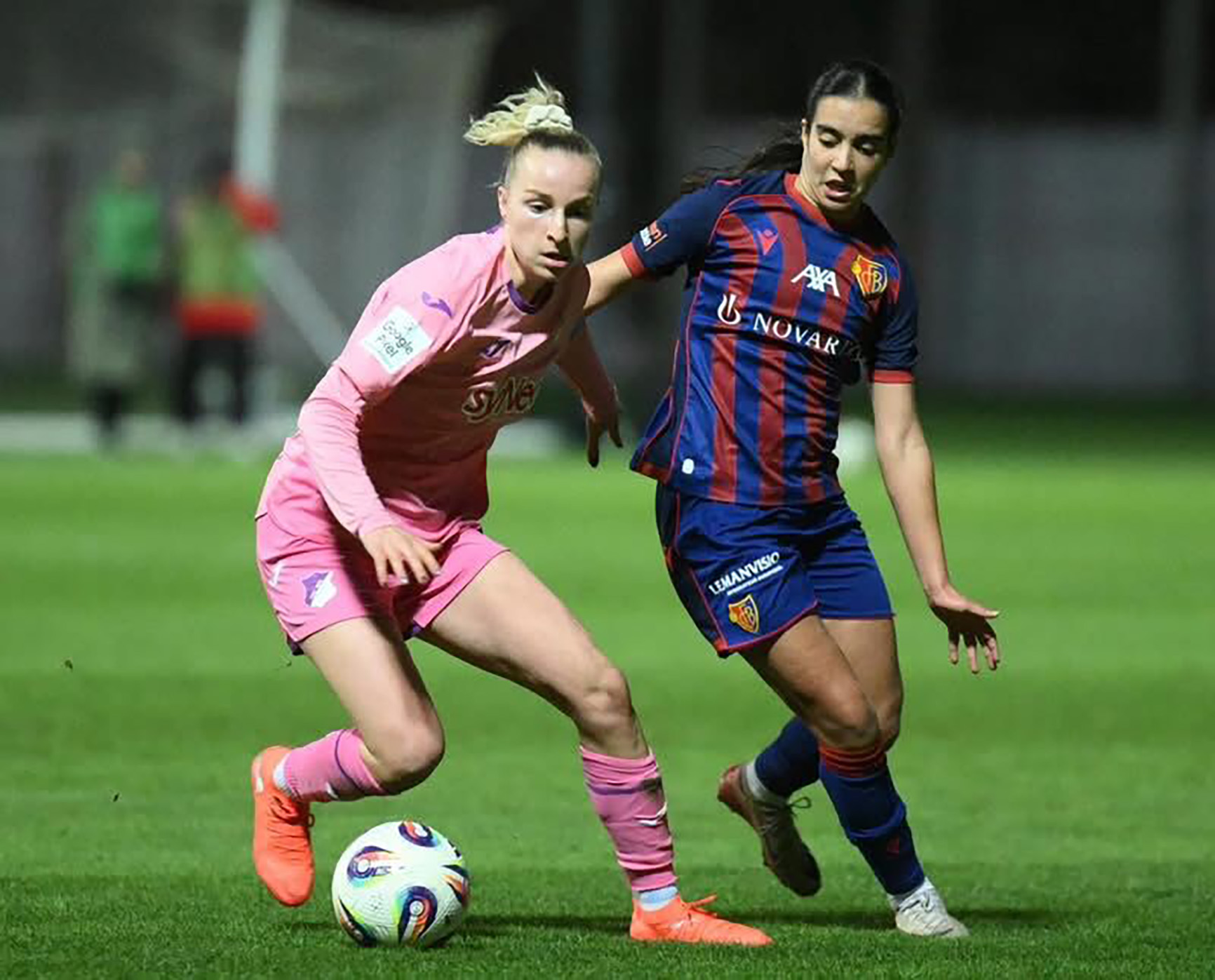
As TSG 1899 Hoffenheim prepare for the second half of the 2025-26 Frauen-Bundesliga season in Malta, captain Vanessa Diehm believes women’s football in Germany is entering an exciting period of development, driven by reforms and the anticipation of a home European Championship.
Just 21 years old, Diehm has already assumed the captaincy at Hoffenheim – a responsibility that reflects her maturity, tactical intelligence, and influence within the squad.
The Women’s Bundesliga is currently undergoing one of the most significant transformations in its history.
After years of discussion and gradual improvement, the 14 top-tier clubs have officially formed the Women’s Bundesliga Association, a collective organisation aimed at strengthening governance, driving commercial growth, and ensuring long-term sustainability.
This landmark step demonstrates the clubs’ determination to take greater control of their future and further elevate the league’s visibility and stature.
The association’s president, Katharina Kiel, described the formation as a ‘historic day’ for German women’s football, signalling a commitment to higher standards of professionalism and structural stability.
Hoffenheim are among the founding members, aligning themselves with clubs striving to improve investment structures, youth pathways, and overall competitive quality.
“I hope there will be a push for women’s football in Germany,” Diehm told the Times of Malta.
“I think we are on a good way, also with the UEFA Women’s Euro 2029 now in Germany. I think we have to stay on this wave and fill the stadiums.”
Germany will host EURO 2029, a tournament that is expected to significantly impact the domestic women’s football landscape.
It will be the first major women’s international tournament held in the country since 2001 and arrives at a moment when the women’s top-flight is strengthening both structurally and commercially.
Diehm sees it as a moment of great opportunity for both established players and her generation.
“Yeah, it will hopefully be a great boost, also for us now,” she said.
“I think I am at a good age to maybe play in it in three years. It is a big tournament and I really hope there will be a great audience in Germany.”
As part of their preparations for the second half of the season, Hoffenheim travelled to Malta for a winter training camp, joining top European clubs including VfL Wolfsburg, PSV Vrouwen and FC Basel at the VisitMalta Women Club Trophy in January 2026.
The camp offered ideal weather conditions, strong opposition, and an opportunity to sharpen match rhythm.
“Yeah, very cool. I have never been here,” Diehm said.
“It is a really nice place to be. We have a good hotel, good pitches, and now the sun – it could not be better.”
However, while she is optimistic about the direction of women’s football, Diehm also acknowledges that important steps remain.
She believes deeper integration between the men’s and women’s game could accelerate progress.
“Maybe we can connect men’s football more with women’s football,” she explained.
“For example, with tickets – when you buy a ticket for a men’s match, you also get a ticket for a women’s match. And also sharing more facilities, like pitches and other resources. I think that would be the next step.”
With the Frauen-Bundesliga gaining more independence, Germany preparing to host EURO 2029, and clubs like Hoffenheim investing in long-term development, Diehm represents a new generation of leaders determined to help women’s football continue to grow both on and off the pitch.