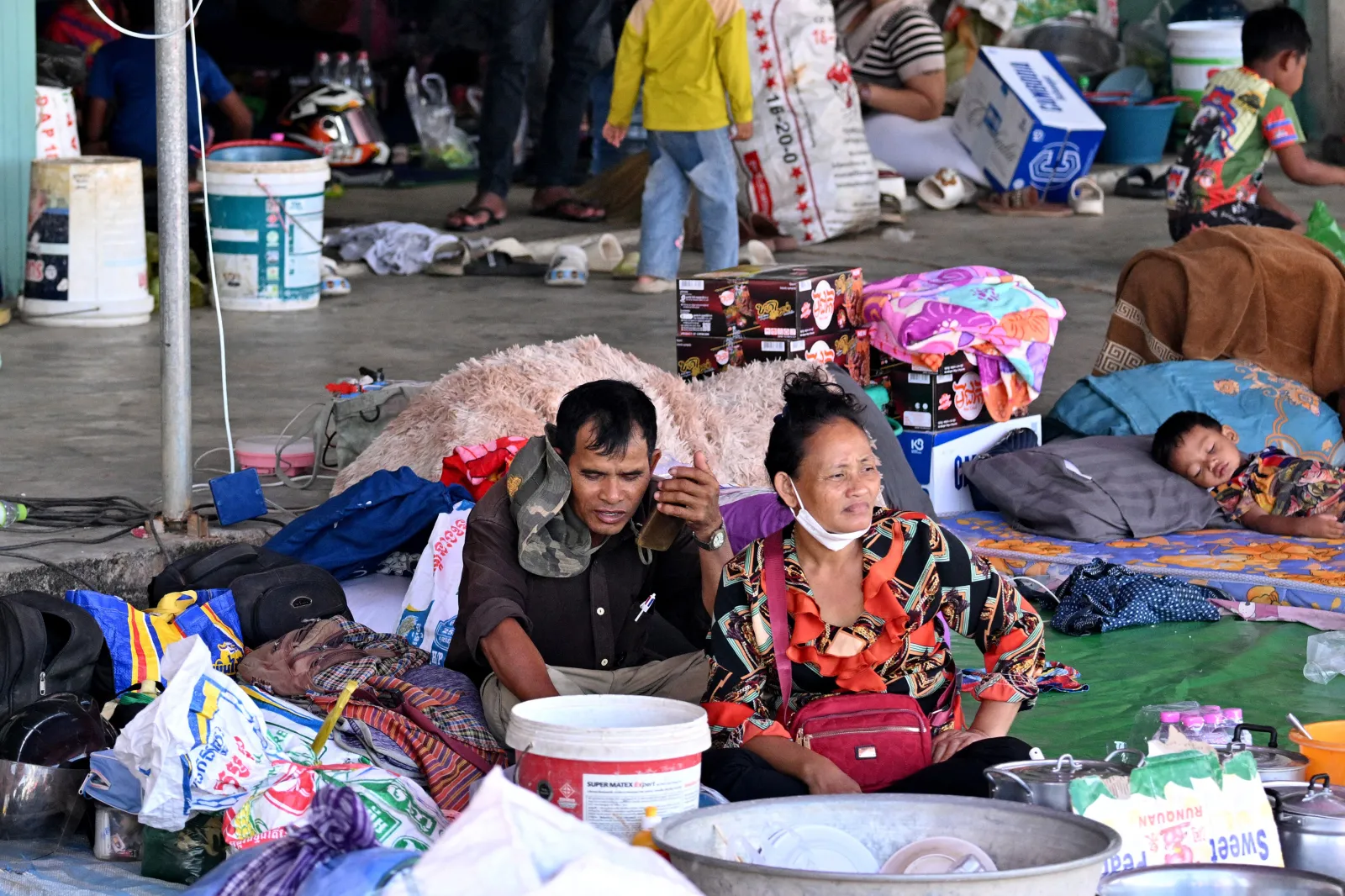
The ongoing border skirmish between Thailand and Cambodia continues, with a December 7 exchange of fire breaking the fragile ceasefire signed in Kuala Lumpur less than five months before.
China, a diplomatic heavyweight and major source of weapons for both countries, seems to be taking a wait-and-see approach as the conflict rages on its doorstep.
Cambodia is widely viewed as a client state of Beijing. Phnom Penh is heavily dependent on Chinese investment, receiving $12 billion in Chinese funding between 2013 and 2022.

Cambodia also leans heavily on China for arms sales, and the modernization of Ream Naval Base, which officially opened earlier this year, was carried out with Beijing’s assistance—raising concerns in Washington that the People’s Liberation Army Navy might enjoy privileged access to the deep-water port and further strengthen its posture in the region.
However, China has so far played a largely passive role in the Thai-Cambodian conflict, despite its influence over Cambodia and the U.S.’ diminished sway in Bangkok. The dynamic raises questions about whether Beijing lacks the ability or just the will to take a more central role in peace efforts.
Newsweek reached out to the White House and to the Chinese, Thai and Cambodian foreign ministries by email with requests for comment.
Beijing Steps Back
“China will continue to do what it can to promote talks for peace, bridge the two sides, and play a constructive role through its own way to rebuild mutual trust between Cambodia and Thailand,” Chinese Foreign Ministry spokesperson Guo Jiakun said during a regular press conference Friday.
He said China’s top diplomat Wang Yi had spoken with his Thai and Cambodian counterparts the previous day and that Deng Xijun, the ministry’s Special Envoy for Asian Affairs, had departed Thursday on a diplomatic trip to both countries.
When border tensions erupted into five days of fighting in July, it was President Donald Trump—not China’s Xi Jinping—whom Cambodian Prime Minister Hun Manet nominated for a Nobel Peace Prize. Trump had reportedly threatened to suspend tariff negotiations with both nations if the clashes continued, effectively leveraging the U.S.’ status as the top export destination for both Cambodia and Thailand.
And there was no mention of China in the Cambodian prime minister’s December 13 Facebook post, where it said he had spoken with Trump and Malaysian Prime Minister Anwar Ibrahim to explore ways to restore the ceasefire. He also invited the two countries’ intelligence services to help “verify” which side it was that had broken the agreement.
China’s Strategic Aims
Teo Hwee Leng, associate senior fellow at the ISEAS-Yusof Ishak Institute in Singapore, said China is treading carefully to avoid worsening a conflict that could undermine its foreign policy goal of drawing Southeast Asia deeper into its orbit.
“There is also the danger of the Thailand-Cambodian conflict descending into a proxy war involving China and the U.S., since Thailand is America’s treaty ally and Cambodia is China’s only declared iron-clad friend in Southeast Asia,” he told Newsweek.
Leng noted that China has emphasized its weapons deliveries to Cambodia occurred before the conflict and expressed willingness to engage in efforts to reduce tensions—such as removing land mines from the mine-riddled Thai-Cambodian border.
An Opportunity for Trump?
The crisis may offer Washington an opportunity to improve ties with Cambodia.
“Cambodian Prime Minister Hun Manet has not only called on the U.S. to play a role but also appreciates America’s role helping to ease tensions and likely seeks greater room to maneuver between major powers,” Leng said.
He noted that Hun Manet spent several years in the U.S., graduating from West Point and later earning a graduate degree from New York University. However, Leng added, a full diplomatic realignment is unlikely.
Secretary of State Marco Rubio spoke with his Thai counterpart Sihasak Phuangketkeow on Thursday and expressed concern over the “continued violence,” urging Thailand to take “concrete actions to de-escalate the situation and return to implementing the Kuala Lumpur Peace Accords,” according to a U.S. State Department statement.