In the world of technology, for years, we have lived under the premise that the United States, together with its allies in Taiwan (TSMC) and the Netherlands (ASML), had complete control over cutting-edge technology. If you wanted advanced processors of 7 nanometers or less, you had to go through the Western loop. But China, specifically Huawei, with the help of the SMIC foundry, has just made a move that resonates even in the offices of Apple, Intel and AMD.
Thanks to YouTuber Nate Gentile’s curiosity, information has come to light about a Huawei laptop that has left the tech community in shock. Above all, because it does not appear on official websites outside China, it is almost a ghost, but its interior tells a story of impressive technological resilience. This device is equipped with a processor manufactured with 7-nanometer technology, produced entirely in China. Why is this a scandal? Because theoretically, due to the 2019 sanctions, China does not have access to the extreme ultraviolet lithography (EUV) machines needed to manufacture these chips.
How did they achieve the “impossible” without Western technology?
The big question we all ask ourselves is: How did they do it? The answer lies in the Youtuber’s own video, where he shows us the pure engineering of the Chinese foundry SMIC. Unable to purchase the most advanced machines from ASML, Chinese engineers have used older machines (DUV or Deep Ultraviolet) and applied a technique known as “multi-patterning.”
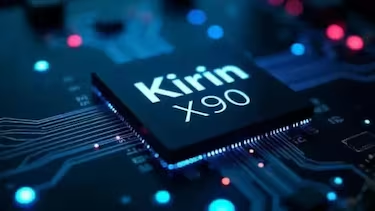
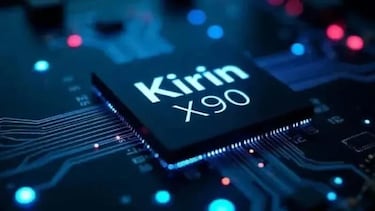
Imagine you want to paint a very detailed graffiti mural, but you only have a thick nozzle. What you do is go over it several times, layer by layer, using different stencils to achieve the desired definition. It’s a costly, complex process where many chips end up defective, but it works. They have developed a chip, identified in the system as Kirin X90 (or a variant of the 9000S), which performs competently, demonstrating that the barrier to entry imposed by the United States has been overcome.
What does this mean for the microprocessor market?
This is where things get interesting for us, the consumers. Although this particular laptop comes with a very closed HarmonyOS operating system where you cannot install Windows or access the “root,” the message is clear: the alternative exists.
- Total independence: By controlling both the hardware (chip) and software (HarmonyOS), China is creating an ecosystem where optimization can reach levels only seen at Apple.
- Price competition: In the long term, the entry of a third player capable of manufacturing its own high-performance semiconductors will force Intel and AMD to stay on their toes, which historically translates into better prices and greater innovation for everyone.
- Security and sovereignty: For the Asian market, this means no longer depending on the White House’s political decisions to have cutting-edge technology.
Is it really a threat to Apple, Intel, and AMD today?
This first step does not seek to dethrone tomorrow’s most powerful Core i9. China’s goal right now is self-sufficiency. However, the speed at which they have gone from being “blocked” to producing 7nm chips is dizzying.
Intel and AMD have dominated the PC and server market because there was no other viable option in high-performance x86 (or high-consumption ARM). But if China manages to refine this process and improve its production rate, the global laptop market and, above all, the gigantic Chinese domestic market, will stop buying from the Americans. And that, folks, is a loss of billions that Intel and AMD will feel in their balance sheets.
This processor is more than just silicon; it is a statement of intent. The race for nanometers is no longer a monologue of the West, and China has just proven that it has the legs to run the marathon.
Related stories


Follow MeriStation USA on X (formerly known as Twitter). Your video game and entertainment website for all the news, updates, and breaking news from the world of video games, movies, series, manga, and anime. Previews, reviews, interviews, trailers, gameplay, podcasts and more! Follow us now!