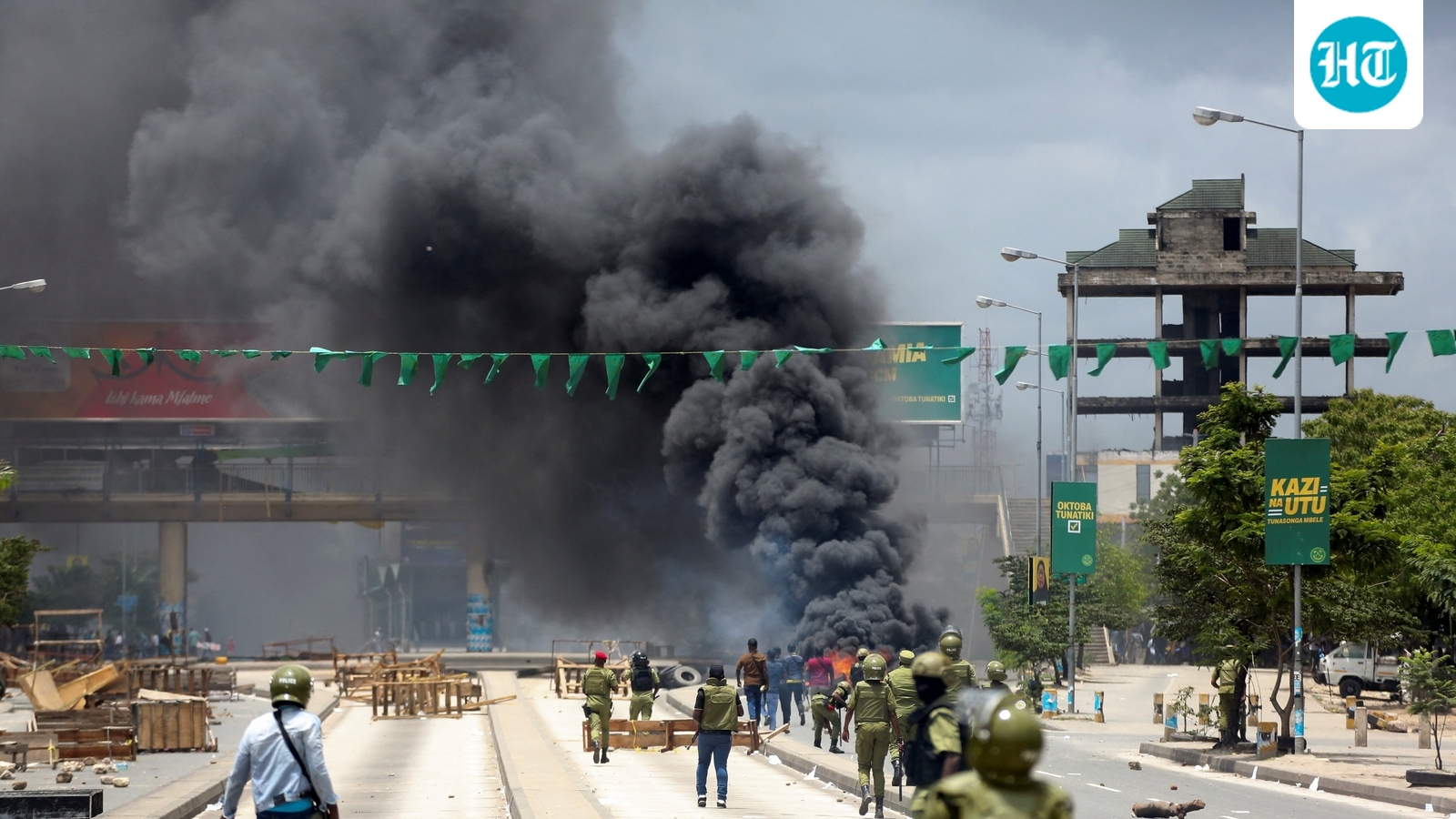
The wave of antigovernment protests that has seen young Gen Z protesters rise up against their countries’ old ruling classes this year has hit a roadblock in Tanzania: a government willing to use lethal force to stop them in their tracks.
Political activist David Nyakakye last month hoped to unseat an unpopular government, just as demonstrators have already done this year in Madagascar and Nepal. A presidential election was under way, and the 25-year-old and other activists took to the streets in Arusha in northern Tanzania, furious over their diminishing economic opportunities and the way two of President Samia Suluhu Hassan’s main challengers were barred from the vote.
“We thought the police wouldn’t be able to stop us, since this was happening in many places at the same time,” he said. “After a few days, I stopped going after many of my friends were either killed or arrested.”
In cities and townships, families have been gathering for the funerals of the crackdown victims. Opposition parties estimate that as many as 1,000 people may have been killed in the unrest.
The government has yet to release official figures. Instead, authorities have warned mobile phone users not to share photos and videos from the protests. Those who defy the warning, police say, will face treason charges, which could potentially lead to a death sentence.
“The attacks on demonstrators were so vicious,” said John Mnyika, the secretary-general of the opposition party Chadema. “We may never know the exact number of people who were killed in total.”

The 65-year-old Hassan went on to win the Oct. 29 election with nearly 98% of the vote, which was slammed by observers as neither free nor fair. According to the Tanzanian constitution, a presidential election cannot be contested in court. Nyakakye, meanwhile, has barely left his home. The internet connection to his neighborhood was cut, the streets outside packed with police patrol trucks. Hospitals across Arusha are still filled with wounded protesters, according to residents and local activists said. Those who could get online began likening Hassan to the former Ugandan dictator Idi Amin.
Police and the presidency didn’t return messages seeking comment. Tanzania’s military chief told state TV that the protesters were criminals.
Tanzania’s crackdown illustrates how governments across the developing world are growing wary of how large, young populations with few opportunities carry the potential to upturn the established order. Economists promised this demographic cohort would deliver a dividend, but in many instances it has turned into a tinderbox as people struggle to find work. Migrating has also become more difficult, removing an important release valve in many countries.
Around a third of Tanzanians ages 18 to 25 are unemployed, according to recent data from nonprofit research network Afrobarometer, and the economy in recent years has been pummeled by drought and rising inflation. Some kind of confrontation appeared increasingly likely in the run-up to the Oct. 29 election.

But Hassan, who first came to power in 2021 as a reformer, succeeding John Magufuli, who died in office, appeared to have prepared for the moment.
Months earlier, she had tasked her youngest son, Abdul Halim Hafidh Ameir, to lead a special intelligence unit known as Watu Wasiojulikana—or Unknown Assailants. The unit has been at the core of her election bid, according to interviews with officials and activists.
“Ameir is Suhulu’s main political weapon,” said one political activist. “He has an armory, handcuffs, cars, and money to run his programs.”
Despite not holding a formal position, the 38-year-old has ordered the detention of journalists, suppressed antigovernment protests and commanded a unit that opposition politicians and rights activists say had abducted and tortured government critics.
In a country with a median age of 18, Tanzanian activists had anticipated that young people, using social media, would be a major force in antigovernment protests. But as demonstrations spread, the government declared a night-to-dawn curfew and severed internet access. The internet observer group NetBlocks said its data indicated that major mobile and fixed-line networks had virtually collapsed for six days. Men dressed in civilian clothes, armed with Kalashnikov rifles, patrolled the streets hunting down protesters. Police fired live bullets and tear gas at crowds.
Local activists identified the men as members of the intelligence unit, largely drawn from Zanzibar, Hassan’s home region, and working under the orders of the president’s son.
Ameir’s influence is likely to grow. Current and former officials describe him as an unrelenting figure who expects subordinates to follow orders without question. He has led government delegations to meetings with regional leaders, including Uganda’s Yoweri Museveni, one of Africa’s longest-serving presidents. Ameir, who is Hassan’s youngest son of her four children, is also known for his lavish lifestyle, sometimes sharing pictures of his luxury cars—Rolls-Royces and Bentleys among them—on social media.

In the months leading up to last month’s election, Ameir assigned his operatives a special assignment to track down regime critics and to conduct a countrywide electoral manipulation, aimed at deflating the vote share of regime opponents, according to officials familiar with the unit’s operations.
“Central intelligence is commanded not to interfere with him. Two former chiefs were fired for trying to interfere with him,” a former government official who worked in the unit said. “All government suppliers, to be paid, have to see him.”
The potential for unrest remains as worsening living conditions undermine what had been one of the region’s most stable economies, potentially threatening its valuable tourism industry and disrupting shipments of copper and cobalt from Zambia and the Democratic Republic of Congo.
“Hassan will need to work to repair some of the damage caused to her credibility,” said Jervin Naidoo, an analyst at Oxford Economics. “The election unrest reflects growing public fatigue with Tanzania’s restrictive political system.”
Write to Nicholas Bariyo at nicholas.bariyo@wsj.com

