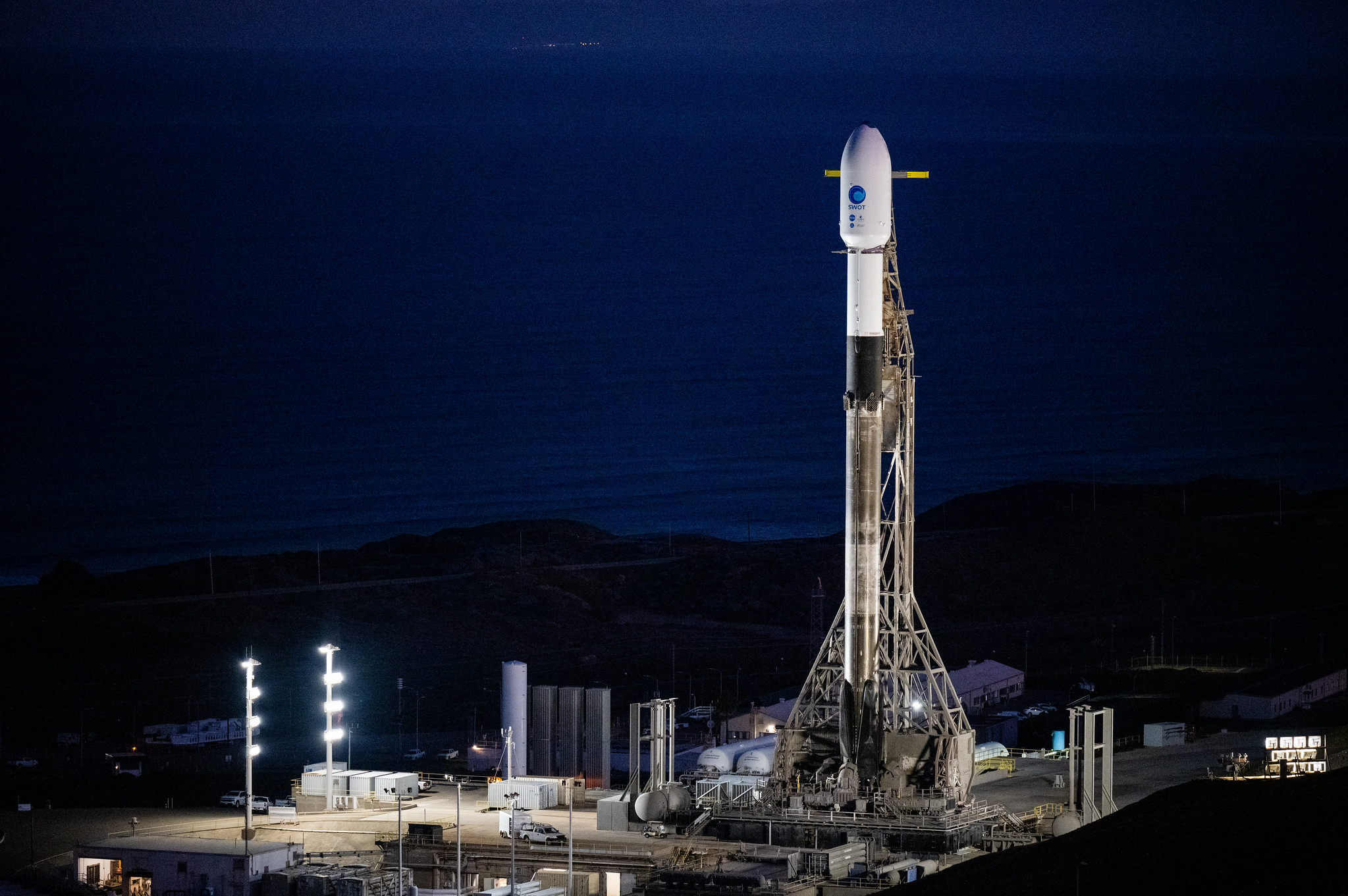
A Federal Aviation Administration order restricting commercial space launches to nighttime hours due to the government shutdown may delay a SpaceX rocket mission that had been aiming for Tuesday at Vandenberg Space Force Base.
But it’s not clear if a late Sunday vote in the U.S. Senate to end the 40-day shutdown will allow the Transporter-15 mission to make its planned departure date.
Late last week, FAA officials ordered that all commercial space launches and reentries be restricted to between 10 p.m. and 6 a.m. local time due to the federal government shutdown.
Transporter-15, a collection of small satellites for various customers, had been scheduled for liftoff between 10:18 and 11:15 a.m. Tuesday but was postponed, a Space Launch Delta 30 spokesperson said Friday.
“Space Launch Delta 30 will continue to collaborate closely with the FAA while ensuring the alignment of our efforts with national security priorities,” Vandenberg representatives said.
The FAA order seemingly conflicts with Vandenberg’s efforts to avoid middle-of-the-night launches amid complaints from Central Coast residents.
Typically, a payload’s placement in space dictates the time a launch will occur.
“Consistent with the USSF Commercial Space Strategy, we will proceed with nighttime launches as necessary for continued U.S. economic leadership in space and to leverage U.S. innovation on orbit to meet national security objectives.”
The order set to take effect Monday covers only commercial space launches licensed by the FAA.
Despite the order, the FAA’s notices to pilots continues to depict the Vandenberg launch occurring late Tuesday morning.
SpaceX removed the planned launch from its list of upcoming missions, moving it to the bottom of the lineup but still listing Tuesday as the possible date.
An upcoming NASA mission with international involvement appears on track for its liftoff from Vandenberg next weekend.
The same directive affecting commercial space launches ordered airlines at 40 airports to reduce the number of flights.
Local airports were not among the 40 high-traffic facilities named in the order, but destinations served by Santa Barbara, Santa Maria and San Luis Obispo airports were affected so passengers may experience delays and cancellations during their travels.
“Since the beginning of the shutdown, controllers have been working without pay, and staffing triggers at air traffic facilities across the country have been increasing,” an FAA representative said in a written statement. “This has resulted in increased reports of strain on the system from both pilots and air traffic controllers.”