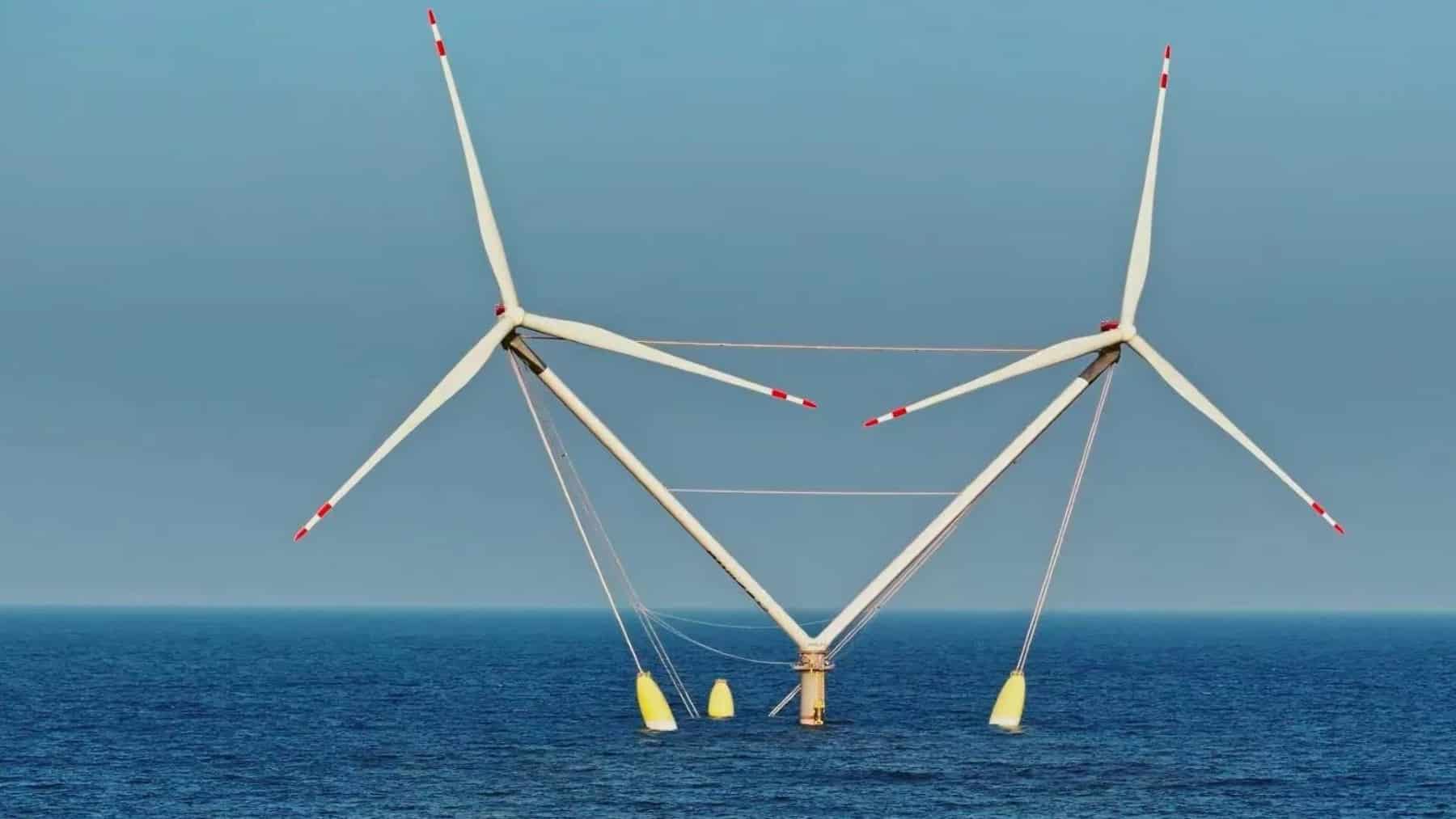
MingYang Smart Energy is developing a 50-MW floating twin-rotor wind turbine that will generate power at low wind speeds. This technology demonstrates China’s rapid growth in clean energy innovation, as the U.S. is mainly oblivious, possibly underestimating a significant global transition of renewable energy leadership and technology. Is this the push China needs to stamp its foot as an international renewable energy giant?
When two rotors and the open sea redefine what’s possible in wind energy
MingYang is making a significant leap in offshore wind by developing large floating structures, each with two large turbines mounted on it. This “twin-headed” model maximizes energy generation, is easier to install, and cuts costs for consumers. MingYang is progressing from earlier, smaller models to significantly larger turbines of the latest-generation style.
MingYang Smart Energy, a prominent wind-turbine maker in China, is rapidly moving into offshore and floating wind technology. With enormous 50-MW twin-rotor designs, it illustrates China’s ambition to lead the world in offshore wind, expanding capacity, rotor size, and floating platforms to gather energy in deeper waters beyond fixed-bottom turbine locations.
MingYang’s “OceanX” platform presents a significant advancement in offshore wind technology: a twin-rotor V-shaped floating structure set up in Yangjiang, China. By utilizing floating foundations, deep-water mooring, and twin wind turbines, MingYang challenges the legacy of incremental change and develops entirely new concepts that capture the promise of offshore wind engineering.
The 50 MW twin-head floating wind turbine: What it is and why it is important
A “twin-headed” turbine means that it is a floating V-shaped platform that has two wind turbine rotors mounted on the same structure. MingYang Smart Energy’s previous machine was rated at 16.6 MW (two 8.3 MW rotors), but they are now moving to a 50 MW dual rotor version.
The expression “even on windless days” is marketing shorthand: MingYang’s dual-rotor turbines still require wind, but their massive rotor diameter, large swept area, and dual-rotor configuration enable operation in very low-wind conditions (about 3 m/s). This expands the available siting preclusions, increases uptime, and potentially changes the economics of floating offshore wind for good, just like this powerful AerogeneratorX, reshaping the energy future.
Why the West is sleeping on this hidden innovation that is changing the future
Despite MingYang’s advances, U.S. and Western economies remain less established in twin-rotor, large-scale floating wind. Some effects include regulatory challenges, traditional supply chains, new design investment risk, and fewer prototypes. Meanwhile, MingYang is moving forward rapidly, suggesting the U.S. could be out-innovated in this offshore wind sub-market.
The gap presents considerable risks: a delay in floating wind technology can lead to lost economic opportunities, diminished clean energy leadership, and reduced influence on global supply chains. Since offshore wind is becoming increasingly crucial for decarbonization and energy security, the West needs to quickly ramp up development or seek partnerships to remain competitive in the rapidly changing renewable energy marketplace.
A glimpse into the success journey of achieving this project
The project of designing a floating turbine capable of generating 50-MW of output power is extremely complex. Several factors have to be put into consideration, such as the engineering design, as well as the feasibility of the turbines. If America lets the occasion pass, it could give up business, jobs in the green energy market, and its position in global clean-energy supply chains.
What China did was innovative to achieve that size, performance, and still retain certain flexibility to suit the environment. Should this 50W 2-headed floating wind turbine in MingYang achieve its goal, it will change the perception of wind power in the world. The fact that it achieves low wind velocities and is mounted in offshore locations affirms its advantage over conventional wind turbines, just like this groundbreaking bladeless turbine by Japan.
Disclaimer: Our coverage of events affecting companies is purely informative and descriptive. Under no circumstances does it seek to promote an opinion or create a trend, nor can it be taken as investment advice or a recommendation of any kind.
