A yellow heat health alert is already in place covering London, Yorkshire and the Humber, the East Midlands, east of England, the South East and South West from midday on Monday until Wednesday at 6pm.
Met Office Deputy Chief Meteorologist Tom Crabtree said: “Warmth is the focus in the forecast in the first half of this week, with temperatures likely to peak on Tuesday around the mid-30s, but remaining above average in the second half of the week, particularly further to the southeast.
“The exception to the widely warm conditions will be northwest Scotland on Monday, where showers will be more frequent. Warmth will develop there from Tuesday with temperatures peaking in the mid to high 20s.”
UV will be high across much of England and Wales today and moderate for Northern Ireland and Scotland ☀️
Here is some information around UV and sun health https://t.co/kZdKwawz8p pic.twitter.com/H5pRW3Yv6G
— Met Office (@metoffice) August 10, 2025
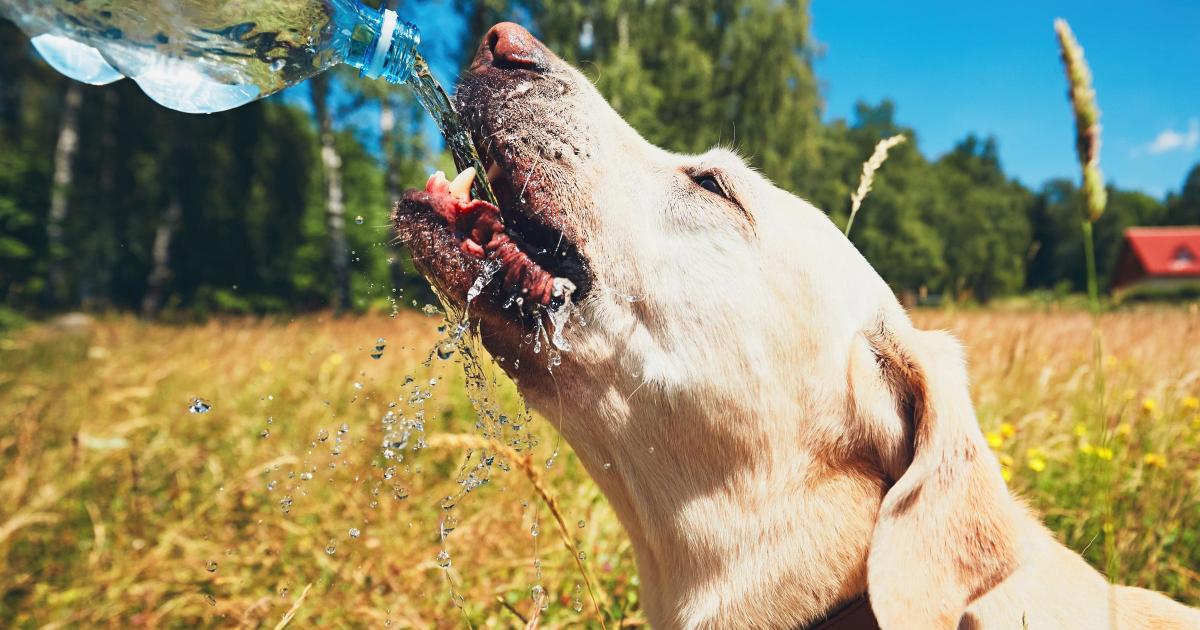
The heat, while welcome for many of us, brings with it a risk for our four-legged friends.
As temperatures peak, many dogs are at risk of heatstroke, as well as blisters and difficulty walking from hot pavements.
Research from Admiral Pet Insurance and Pawsquad has revealed that pavements could reach 50C during a 30C heatwave, while artificial grass could get as hot as 65C.
Veterinary surgeon Dr Mark Boddy, CEO of PawSquad shares advice on how best to help your dog, if they’re overheating:
“If you suspect heatstroke, move your pet to a cooler area, offer them a drink of water, and use cool water to dampen their body. Fan them gently.
“Don’t cool your dog too quickly by putting them in freezing cold water as this can actually have an adverse effect. You could try using a wet towel to cool your dog, which is fine for short periods. However, the towel mustn’t be left on too long as the dog will heat up underneath.
“As a dog’s body temperature slowly rises, it causes damage to the tissues and organs. In severe cases, heatstroke can cause their organs to fail which leads to death. Even if your pet seems better, seek veterinary care promptly to ensure there are no underlying issues.
“By being proactive and attentive, you can spare your pet from the dangers of heatstroke. Your furry friend’s well-being is worth every precaution.”
Recommended reading:
How to avoid heatstroke in dogs
- Familiarise yourself with the signs of heatstroke, such as heavy panting and difficulty breathing, drooling, lethargy, vomiting and collapse.
- Plan ahead with your walk. Don’t venture too far from home, and ensure you walk in the shade and on grass where possible and stay within easy reach of water.
- Avoid walking during the hottest parts of the day – try to go out before 8am and after 8pm during particularly hot spells of weather.
- Take it easy – According to research by The Kennel Club, over-exercising or exercising your dog on hot days accounts for around 75% of heatstroke cases. Other common causes include not being able to cope in hot weather (around 13% of cases), being in a hot vehicle (around 5%) and being in a hot building (around 3%).
- Take water with you – for you and your dog!
- Have your phone on you – (fully charged) in case of emergencies.
- Consider attaching a lead to a harness rather than to their collar – leads that pull on a collar can press on their airways and stop them from cooling down as effectively.
- Remember: Dogs don’t sweat like people do – they have small sweat glands on the pads of their paws, but this doesn’t make a great deal of difference when they try to cool down. You may notice them panting. This is another dog cooling technique that can work but is not hugely effective. Dogs are not efficient creatures when it comes to cooling down.
- All dogs are different – a dog’s reaction to heat is largely variable by things like age, breed and existing health conditions.
- The bigger the dog could mean the bigger the risk – PawSquad advises large dog owners to use caution when it comes to dog walking once it hits 21°C, with this warning for medium and small dog breeds being advised at 23°C.
Pritpal Powar, Head of Admiral Pet Insurance added: “While we naturally want to enjoy the sun with our dogs, we always need to have the potential impact of the temperature at the forefront of our minds – and not just when we’re taking them in the car, but also on walks and even playing or lounging in the garden.
“With a good understanding of how different surfaces can affect our dogs and how different breeds and sizes are impacted by the heat, we can still enjoy the warm weather if we take precautions.
“Services like PawSquad, which is available for free to our customers, offer dog owners peace of mind if the worst does happen. Additionally, if your pet is unwell as a result of the sun and needs a trip to the vet, having insurance means you’ll have fewer things to worry about so you can focus on helping your pet when they need you the most.”