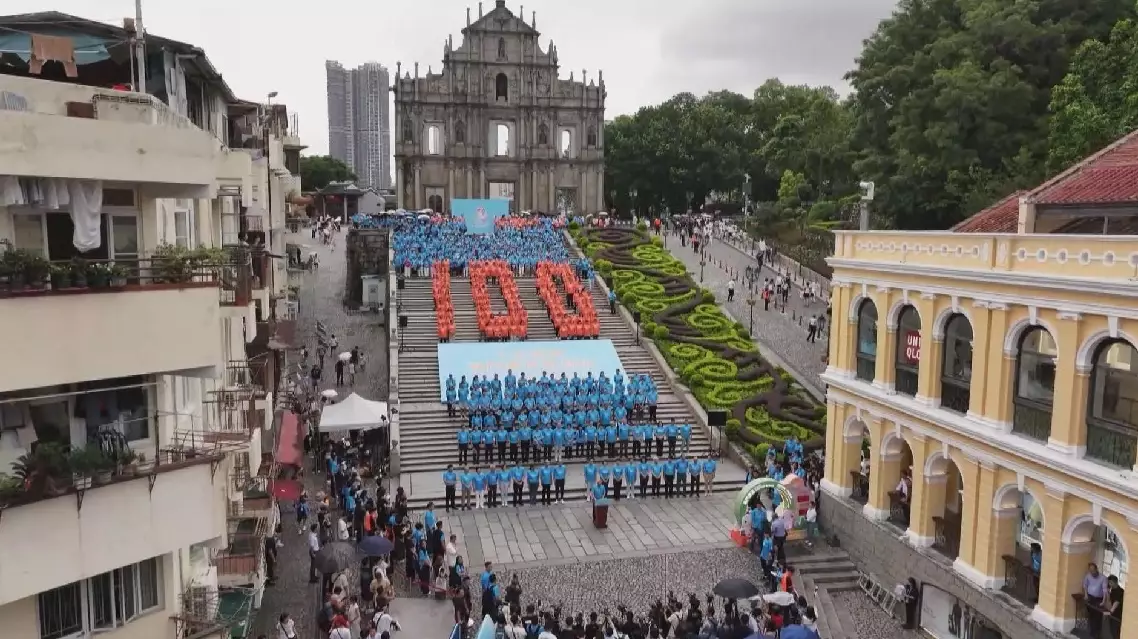
China’s Macao Special Administrative Region (SAR) on Friday hosted a variety of events across the city to mark the 100-day countdown to the opening of the 15th National Games of China.
At the iconic Ruins of St. Paul’s, the “100-day countdown fitness walk” started with enthusiasm.
Hundreds of participants set off in high spirits, walking through Macao’s historic streets all the way to Senado Square, where vibrant performances followed to liven up the celebration.
At Macao’s Iao Hon Market Park Square, a lively evening gala was held to mark the countdown.
Lion dances, sports demonstrations, and singing performances brought the celebration to a climax.
“It’s incredibly exciting that the National Games will be co-held in Macao for the first time. As a local, I feel so proud to be volunteering for this event. I wish all athletes great success in Macao, and I warmly welcome everyone to visit our city for the competitions and tourism!” said a resident of Macao.
“We’re thrilled that the country has given Macao this opportunity to co-host such a major event. We welcome all national athletes and visitors to experience Macao’s vitality. Together, let’s make this a ‘Passionate National Games, Vibrant Greater Bay Area’!” said another resident of Macao.
Earlier in the day, the licensed merchandise retail store for the Macao competition zone of the 15th National Games officially opened at the Tap Seac Multisport Pavilion, offering a range of official merchandise, including plush toys, commemorative badges, daily necessities, and handicrafts.
“We want to bring the National Games atmosphere into every neighborhood, ensuring that every Macao resident feels connected to this event. This isn’t just a government initiative, it’s an event for all citizens to participate in,” said Pun Weng Kun, director of the preparatory office for Organizing the Macao Competition Zone.
Co-hosted by Guangdong, the Hong Kong SAR and Macao SAR, the grand games will take place from Nov 9 to 21.
Macao marks 100-day countdown to National Games with citywide events
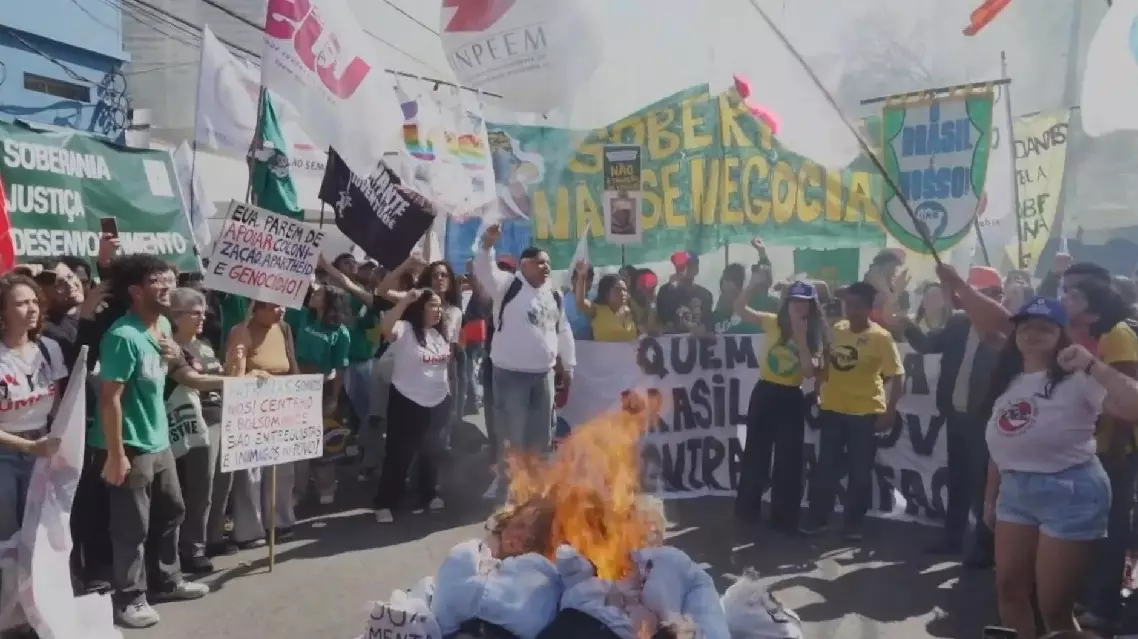
Protesters gathered outside the U.S. Consulate in Sao Paulo on Friday to denounce a 50 percent tariff on Brazilian exports and to oppose what they called U.S. interference in the country’s sovereignty.
U.S. President Donald Trump on Wednesday signed an executive order imposing an additional 40 percent tariff on Brazilian goods, bringing the total tariff to 50 percent.
The move has sparked widespread anger in the South American country, with many viewing Trump’s actions as direct interference in Brazil’s domestic politics.
“We’re going to show that no external force will make us change our Constitution or our legal framework. Sovereignty must be upheld at all costs,” said Marcio da Cruz, a protester.
On July 9, Trump announced plans to impose steep tariffs on Brazil, linking the move to his opposition to former Brazilian President Jair Bolsonaro’s trial over an alleged attempt to seize power after losing his reelection bid in 2022.
In mid-July, Washington suspended visas for eight Brazilian Supreme Federal Court justices overseeing Bolsonaro’s trial, prompting President Luiz Inacio Lula da Silva to declare on July 17 that Brazil would not tolerate foreign interference in its internal affairs.
Protesters echoed the president’s stance at Friday’s demonstration.
“We don’t want interference from the United States here in our country. Our country is sovereign, it has a government, it has a Constitution, and it needs to be respected. And those who committed crimes, like Bolsonaro, need to be behind bars very soon,” said Alcides Amazonas, taking part in the rally.
The impact of the tariffs has been softened by a broad list of exceptions outlined in the U.S. government’s decree, which exempts more than 700 product categories from the new 50 percent duties, including Embraer aircraft and orange juice.
However, beef and coffee — two of Brazil’s top exports to the American market — were not spared.
Initially expected to take effect on August 1, the new tariffs have been delayed. They will now apply to goods entering the U.S. from October 6 onward, giving exporters a short window to adapt.
According to Brazil’s Development Ministry, nearly 36 percent of the country’s exports to the U.S. remain affected by the new tariffs.
President Lula’s government is still pushing for additional exemptions, hoping to leverage U.S. domestic concerns over inflation in key products like coffee and beef. But with politics driving the agenda, negotiations face steep challenges.
“The tariffs, as they were imposed, are clearly a political interference in the Brazilian domestic process, both legal and political, and have the intention to force Brazil to shift towards the right in the forthcoming presidential elections next year. That’s not just a matter of saving Mr. Bolsonaro, but instead to prompt Brazilian electors — voters — to side with the right-wing side of Brazilian politics,” said Vinicius Vieira, an international politics professor.
Brazilians rally against U.S. tariffs, political interference