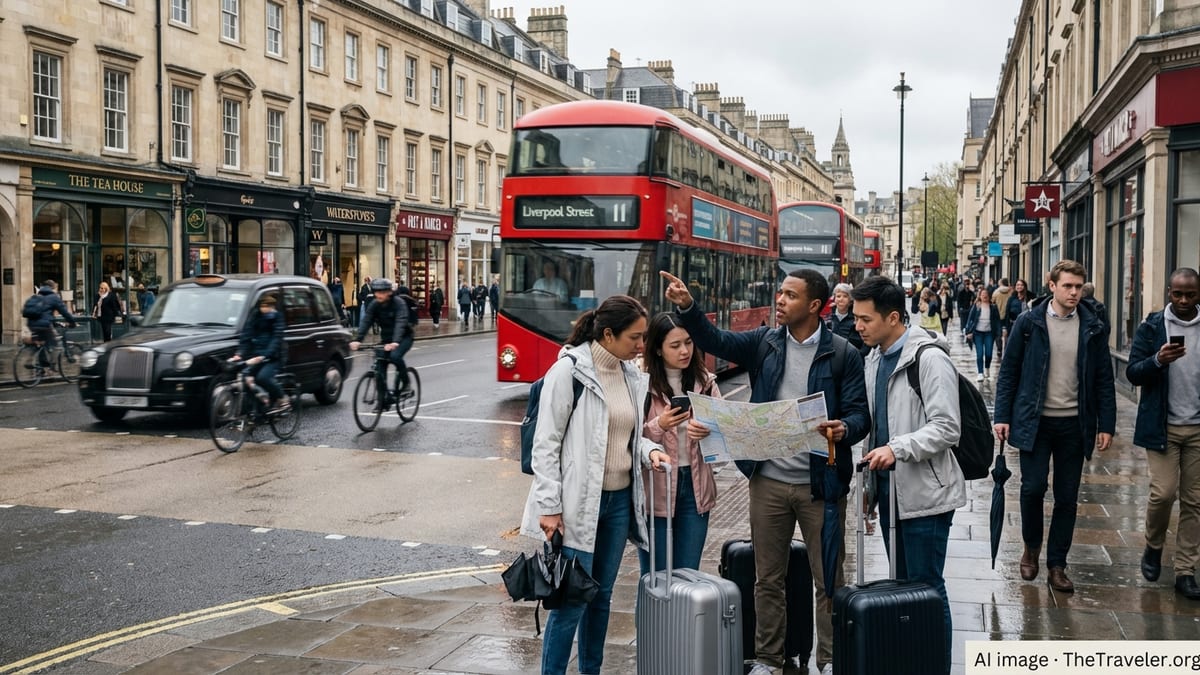
The United Kingdom is one of the world’s most visited destinations, a compact country where medieval castles sit beside glass towers and coastal paths lead back to buzzing cities by night. Yet even experienced travellers are often caught out by small but important differences in money, transport, etiquette and safety. Avoiding a few common pitfalls will help you spend less time stressed and more time enjoying pubs, museums and countryside views.
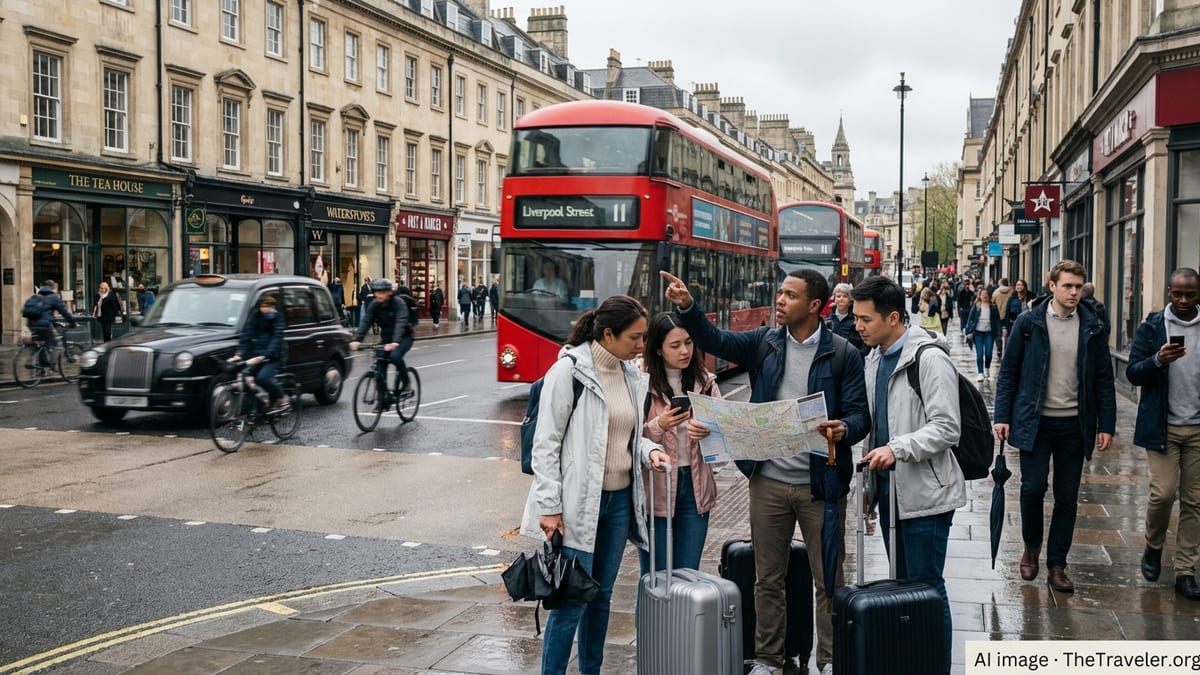
1. Underestimating the Weather and Packing the Wrong Clothes
The UK’s reputation for unpredictable weather is well deserved. You can step out into clear blue skies in the morning and be drenched in a chilly shower by mid-afternoon, even in July. Winters are generally milder than in parts of North America or continental Europe, but wind and damp air can make it feel colder than the thermometer suggests. Travellers who pack only heavy coats or only lightweight outfits often find themselves uncomfortable, overheating one minute and shivering the next.
The most practical approach is to think in layers rather than single statement pieces. A breathable base layer, light sweater or fleece and a thin waterproof shell will adapt to most conditions, especially in cities such as London, Edinburgh and Manchester. A compact umbrella or packable rain jacket is useful year-round, and waterproof footwear or at least water-resistant trainers can make the difference between an enjoyable walking tour and an afternoon of soggy misery.
It is also worth considering the regional differences and your itinerary. Coastal destinations and highland areas can be cooler and windier than southern cities, even in late spring and early autumn. If you plan to hike in places like the Lake District, Snowdonia or the Scottish Highlands, bring a sturdier waterproof jacket, proper walking shoes with grip and a warm hat and gloves outside of high summer. Urban travellers can get away with smarter, lighter layers, but everyone benefits from checking the forecast and then packing for a little worse than predicted.
Finally, remember that British indoor spaces may feel cooler than what some visitors are used to. Central heating is common but often used sparingly, and air conditioning is less prevalent than in parts of North America or Asia. A light cardigan or scarf tucked into your day bag can be handy for draughty trains, stone-built attractions or pubs with doors that open frequently to the street.
2. Mismanaging Money, Cards and Tipping Etiquette
Money habits in the UK can surprise visitors. The country is highly card-friendly, and contactless payments are now routine even in many small shops and cafes. At the same time, you may still encounter places that only accept cards, or small independent businesses that prefer cash. Travellers who rely on a single method of payment can find themselves either scrambling to find a working ATM or frustrated that their large banknotes are refused for tiny purchases.
A good rule is to bring at least two different cards, ideally on separate networks, plus a modest amount of cash in pound sterling for markets, rural pubs or public toilets that still require coins. Many UK transport systems, especially in London, are designed around contactless payments. Tapping in and out with a card or phone on the Underground and urban trains is often cheaper than buying paper tickets. Just remember that each traveller needs their own card or device to avoid incorrect charges and daily caps not applying.
Tipping is another area where expectations differ from countries like the United States. In most British restaurants, a discretionary service charge of around 10 to 12.5 percent may be added to the bill, especially in cities and mid to high-end venues. If it is included, there is usually no need to tip extra unless service was exceptional. If it is not included and you were happy with the experience, adding roughly 10 to 15 percent is considered generous and polite, but not obligatory in the way it is in some countries.
In pubs, tipping is less formal. Locals rarely add a percentage to every round. Instead, if you feel well looked after, it is acceptable to say “and one for yourself” and add a small amount to cover a staff drink, or simply leave some coins on the bar. For taxis, rounding up the fare or adding around 10 percent for longer journeys is appreciated. Hotel porters may be tipped a couple of pounds per bag, and housekeeping staff a small amount at the end of a stay. When in doubt, modest tips for good service are welcome, but you will not offend anyone by asking discreetly at your hotel what is customary.
3. Confusion with Transport, Driving and Getting Around
Transport is where many visitors to the UK waste both time and money. In big cities such as London and Manchester, public transit networks are extensive and well integrated. Trains, trams, underground systems and buses run frequently, but new arrivals can be overwhelmed by ticket types and routes. Some travellers default to hailing black taxis or ordering ride-hailing cars from airports, only to discover later that rail links or coach services would have been faster and far cheaper.
Before you travel, it helps to research how best to reach your accommodation from the airport or ferry port. In London, for instance, dedicated airport trains, the Underground and newer high-frequency rail lines can all be better value than a taxi, particularly during rush hour when roads clog quickly. Journey-planning apps are widely used and usually provide real-time disruption alerts, which can save you from long waits on platforms. Across the country, booking longer-distance trains in advance often secures much lower fares than last-minute tickets bought at the station.
Those who choose to drive face a different set of challenges. The UK drives on the left, which can be disorienting if you are used to right-hand traffic. Roundabouts, narrow country lanes with stone walls and urban congestion zones add further complexity. Rental cars are usually manual by default, so if you only drive automatic at home, you should specifically reserve an automatic vehicle. Some cities have low-emission or congestion charges that require online payment, and parking restrictions are tightly enforced with fines for overstaying or parking in the wrong place.
If you do drive, take extra time the first day to adjust to the road layout, and avoid setting off immediately into dense city traffic after an overnight flight. For many travellers, especially those focusing on London and other large cities, driving is unnecessary and more hassle than it is worth. Trains, buses and domestic flights connect most major destinations; for rural areas, combining train travel with local buses, taxis or pre-arranged transfers often provides a safer and more relaxing experience.
4. Ignoring Local Etiquette, Queues and Pub Culture
The UK’s cultural norms are subtle but deeply felt, and visitors who overlook them may find locals turning frosty. Nowhere is this more evident than in queueing. Lines for buses, cash machines, museum entrances and even food stands are taken seriously. Joining from the side, pushing ahead or hovering near the front is frowned upon. If you are unsure where the line begins, a simple “Is this the end of the queue?” is a polite way to find your place without causing offence.
Escalator etiquette is another small but important detail, particularly on the London Underground. The standard practice is to stand on the right-hand side and walk on the left. Blocking the walking side with luggage or groups can frustrate commuters rushing to work. On public transport, loud phone calls, playing music without headphones and occupying extra seats with bags are also considered poor manners, even on relatively empty services.
Pubs are central to social life in much of the UK, but their customs may be unfamiliar. In most traditional pubs, you order and pay at the bar rather than waiting for table service. It is common for groups to buy drinks in “rounds,” with each person taking a turn to pay for everyone. If you do not wish to participate, it is better to say so early on than to accept drinks without ever offering to buy one. Food ordering varies: some pubs offer full table service, while others expect you to note your table number and order at the bar. A quick look around or a polite question to staff will clarify the system.
Politeness is highly valued in everyday interactions. Saying “please,” “thank you,” and “sorry” even for minor inconveniences is routine. While British humour can be dry and sometimes self-deprecating, strangers may be reserved at first. Avoid very personal questions early in a conversation and be cautious with topics like politics or historical disputes unless you know people well. Respecting these unspoken codes makes it easier to connect with locals, whether you are asking for directions in a small town or chatting to fellow travellers in a hostel.
5. Overplanning, Rushing and Only Seeing London
The UK is compact on a world map, but distances can feel longer in practice, especially when factoring in traffic, rail connections and weather delays. Many first-time visitors attempt to see London, Edinburgh, the Lake District, Bath, the Cotswolds and several coastal towns in a single week. The result is often a blur of hotel check-ins, early trains and hurried photo stops with little time to experience each place properly.
A more rewarding approach is to build your itinerary around a smaller number of bases and explore each region in depth. For example, you might combine several days in London with a few days in one other area such as the Scottish capital, the university cities of Oxford or Cambridge, or the landscapes of North Wales or Cornwall. Train journeys between major cities can still take several hours, and frequent packing and unpacking soon becomes tiring. Leaving gaps in your schedule for wandering, lingering in a café or adjusting for the weather leads to more memorable moments than tightly timed checklists.
Another frequent oversight is treating London as the UK in miniature and neglecting the variety beyond the capital. While London offers world-class museums, theatre and dining, the character of the country changes noticeably from region to region. The Georgian crescents of Bath, the medieval walls of York, the industrial heritage of Glasgow, the coastal paths of Devon and the mountains of Scotland and Wales all show different sides of British life and history. Even a day or two beyond London can reshape your impression of the country.
If your time is limited, accept that you will not see everything and plan to return instead of compressing entire regions into a single rushed excursion. Many travellers find that choosing a theme, such as literary sites, castles, walking routes or live music, helps them structure a more relaxed and meaningful trip.
6. Overlooking Practicalities: Power, Connectivity and Safety
Some of the most frustrating travel mistakes in the UK are practical ones that are easy to avoid with a little preparation. Electrical sockets in the UK use a three-pin Type G plug, and the standard voltage is higher than in some other regions. Arriving without the proper adapter or voltage-compatible devices can leave you unable to charge phones, cameras or laptops when you need them most. Universal adapters that include a UK option are widely available and worth packing in your cabin bag so you can use them immediately on arrival.
Mobile connectivity is generally strong in cities and along main transport routes, but can drop off in rural or mountainous areas. Relying entirely on map apps without offline access or printed backup can be risky on remote hikes or late-night journeys. International roaming charges may also surprise travellers whose plans do not include the UK. Purchasing a local SIM card or eSIM can be cost-effective for longer stays, especially if you plan to use navigation, translation and messaging apps frequently.
In terms of safety, the UK is considered a relatively safe destination, but urban petty crime does occur, especially in busy tourist districts and around major transport hubs. Opportunistic theft of mobile phones and bags is a noted problem in large cities. Travellers who walk while distracted by screens or who place bags and coats loosely on the backs of chairs on café terraces are more vulnerable. Keeping valuables zipped inside bags worn to the front or across the body, and pausing by a building or away from the kerb when checking directions on your phone, can reduce your risk.
It is also wise to note the emergency numbers used in the UK. Dialling 999 or 112 connects you to police, ambulance or fire services. For non-emergency medical issues, a pharmacist can often provide advice, and walk-in clinics or urgent care centres operate in many towns and cities. Travel insurance that covers medical assistance, lost luggage and trip disruption remains important, even in destinations with public healthcare systems.
7. Misunderstanding Food, Dining Hours and Reservations
British food has improved dramatically in recent decades, with diverse international options and a renewed interest in local ingredients. Yet visitors still fall into a few predictable traps. One is assuming that table service operates the same way everywhere. As mentioned, pubs often expect you to order and pay at the bar, while many casual cafes have counter service where you receive a number or tray. Sitting down and waiting for staff who will never come is a quick route to frustration.
Dining hours can also be different from what some travellers expect. While big cities offer late-night options, many restaurants in smaller towns and rural areas stop serving dinner earlier than in southern Europe or North America. Kitchens might close around 9 or even 8:30 in quieter locations, especially on Sundays. Lunch service can be fairly rigid, with some venues closing mid-afternoon and reopening later. Planning ahead, particularly on Sundays and in winter when daylight is short, will help you avoid wandering through unfamiliar streets looking for somewhere still serving hot food.
Reservations are advisable at popular restaurants, especially on Friday and Saturday nights and during peak tourist seasons and public holidays. In cities like Edinburgh during festival periods or London over major sporting and cultural events, walk-in tables can be hard to find. Making a booking a few days in advance can give you more choice and reduce the temptation to settle for an underwhelming meal simply because it is the only place with space.
Finally, do not overlook the appeal of traditional British dishes and local specialities, from fish and chips at the seaside to regional pies, curries and afternoon tea. Asking locals for recommendations is often the fastest way to find spots that are good value rather than tourist traps. Be prepared for portion sizes that may differ from what you are used to, and if you have dietary requirements, communicate them clearly; most places are accustomed to accommodating vegetarians, vegans and common allergies, but you may find fewer options in very small or remote establishments.
8. Misreading Public Behaviour and Communication Styles
Even where the language is shared, communication styles can trip up visitors in the UK. British English includes many idioms and understated phrases that may not mean exactly what they appear to. Phrases such as “not bad,” “quite good” or “that’s interesting” can sometimes signal polite doubt rather than genuine enthusiasm. Similarly, a friendly “you all right?” is usually a casual greeting rather than a serious inquiry about your wellbeing.
Public behaviour tends toward the reserved. Speaking loudly on buses or trains, playing music through speakers or engaging in heated arguments in public will draw attention and, at times, disapproval. That does not mean people are unfriendly, but they may be slower to open up than in some cultures. Light small talk about the weather, travel plans, sports or shared experiences in a queue is usually safe territory and can lead to more substantial conversation if the other person is willing.
Humour is another area where intentions can be misread. Sarcasm and irony are common, and teasing among friends can be a sign of affection rather than hostility. However, it is easy for visitors to miss the tone, especially in fast-moving group conversations. When uncertain, it is usually best to respond with a smile or a neutral comment rather than attempting to match the humour immediately.
Being attentive to these nuances helps when dealing with service staff, transport workers and hosts. If you are told that something “might be a bit of a wait,” interpret it as a genuine heads-up rather than a minor aside. When asking for help, politeness and patience are often rewarded with extra effort, whereas visible irritation is unlikely to speed things up.
9. Neglecting Seasonal Factors and Major Events
Many travellers choose their UK dates based on personal schedules or headline attractions, without fully considering seasonal patterns and major events. This can lead to unexpected crowds, higher prices and booked-out hotels. Summer months and school holidays are especially busy in coastal resorts, national parks and well-known cities. During these times, public transport is more crowded, popular attractions may require timed tickets, and accommodation in scenic areas can sell out months in advance.
Equally, the UK hosts a significant number of festivals, sporting events and cultural celebrations that can transform a city. Edinburgh during its August festivals, for example, is a completely different place from the quieter months of the year, with packed streets, late-night shows and premium prices. Major football matches, royal events, parades and Christmas markets can create wonderful atmospheres but also bring road closures, security checks and congestion in central areas.
Failing to check what is happening during your travel dates can mean arriving in the middle of a large event you had no intention of attending, or missing something you would have loved. Before finalising bookings, it is worth scanning official city or regional tourism calendars for your intended destinations. If you prefer quieter travel, shoulder seasons such as late spring and early autumn often provide a balance of manageable crowds, relatively mild weather and reasonable prices.
On the other hand, embracing seasonal experiences can be one of the highlights of a UK trip. Winter visits might include cosy pub fires and festive lights, while summer trips can take in long evenings in beer gardens, open-air theatre and countryside walks. Just be sure to match your expectations to the realities on the ground, packing and planning accordingly so you are not caught off guard by crowds, closures or the early darkness of midwinter.
FAQ
Q1. Do I need a travel adapter for the United Kingdom?
Yes, the UK uses a three-pin Type G plug. Most visitors need a travel adapter, and it is wise to bring at least one in your hand luggage.
Q2. Is it safe to drink tap water across the UK?
In most of the UK, tap water is considered safe to drink. If you are unsure in very old buildings or rural areas, ask your accommodation or host.
Q3. How much should I tip in restaurants and pubs?
In restaurants, around 10 to 15 percent is typical if service is not already added. In pubs, tipping is more casual and usually limited to small amounts for good service.
Q4. Is it worth renting a car, or should I rely on trains and buses?
For city-focused trips, public transport is usually easier and cheaper than driving. A rental car can be useful in remote rural areas, but driving on the left and parking rules require extra care.
Q5. What is the best way to pay for public transport in London?
Contactless bank cards or mobile wallets are widely accepted on London buses, the Underground and some trains. Each traveller needs their own card or device to benefit from daily fare caps.
Q6. Are UK cities generally safe for solo travellers?
Most UK cities are considered reasonably safe, including for solo travellers, but normal precautions apply. Stay aware of your surroundings, especially at night and in crowded tourist areas.
Q7. Do I need to book attractions in advance?
For very popular attractions, peak weekends and school holidays, booking in advance is recommended. At quieter times, you can often buy tickets on the day, but timed entry is increasingly common.
Q8. What should I wear to blend in with locals?
Smart-casual clothing is the norm in many UK cities. Neutral colours, layered outfits and comfortable shoes will help you fit in while still being practical for the weather.
Q9. Is public transport accessible for travellers with limited mobility?
Accessibility varies by city and system. Many newer trains and buses are step-free, but some older Underground and rail stations still involve stairs. Planning routes in advance is important.
Q10. How far in advance should I book accommodation?
For peak summer, major events and popular holiday periods, booking several months ahead is sensible. In shoulder seasons and quieter areas, a few weeks’ notice often provides enough choice.