I use free apps every day, and I write about them constantly. In many cases, they’re genuinely great. Some of the most useful software on my phone and computer doesn’t cost me a cent upfront. But that doesn’t mean it’s actually free.
That’s one reason I’ve become such a fan of active, well-supported open source apps. With them, the tradeoff is usually clear. With many mainstream “free” apps, it isn’t. As a consumer, you’re often paying in ways you may not have stopped to think about. Your data, your attention, your time, or your ability to easily leave later. In this article, we’ll look at three common ways free apps cost you without charging a dime, with real examples of each so you can decide which tradeoffs you’re actually comfortable making.
Data is the price of most free apps

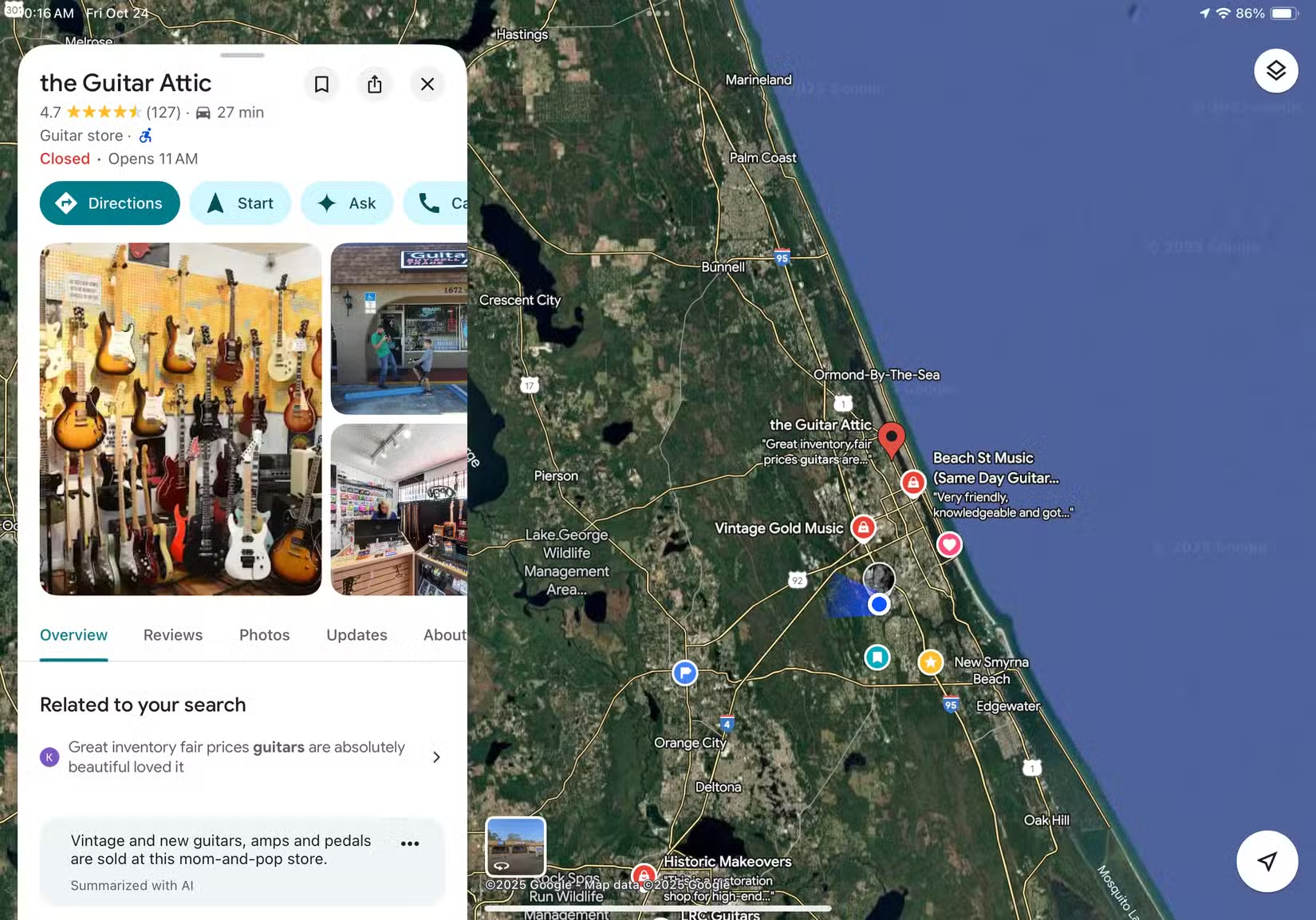
I use Google Maps and Waze constantly. They’re on my phone every day, whether I’m commuting around town, avoiding traffic, or heading out on a road trip. They’re incredibly good at what they do. Both apps rely on a steady stream of location data to deliver real-time traffic, better routing, and accurate arrival times. From a pure usability standpoint, that data makes the experience better for everyone using them.

The tradeoff is that Google doesn’t just use that data to get you from point A to point B. It also builds a detailed picture of where you go, when you go there, how often you visit certain places, and how your routines change over time. That information can be used to improve services, train models, and yes, serve more relevant ads, depending on your settings.
For many people, that’s an acceptable exchange for apps that work that well. For others, it’s a little unsettling to realize that a company knows everywhere you’ve been and when you were there. This is the core cost of “free” navigation apps. You’re not paying with money, but you are paying with one of the most personal data sets you generate.

The Truth Behind Free VPNs—and Why You Couldn’t Pay Me to Use One
“Free” always sounds good—until it isn’t. When it comes to VPNs, what you don’t know can hurt you.
And it’s not just mapping apps. Any app you grant location access can participate in these data collection models. Social apps like Facebook, along with weather apps, retail apps, and even some games, can collect location data when permission is enabled. Sometimes it’s used for obvious features, sometimes it happens in the background. Location access is one of the most valuable permissions you can give an app, which makes it important to understand exactly who you’re handing that data to and what they plan to do with it.
Attention is the real currency

I use Instagram, and I’m as guilty as anyone here. I’ve absolutely opened Instagram to check something and looked up thirty minutes later wondering where the time went. These apps are free, fun, and endlessly scrollable, and they’re incredibly good at keeping your eyes on the screen. That’s not accidental. Attention is the core currency of these platforms, and everything about them is designed to capture as much of it as possible.
The more time you spend scrolling, watching, liking, and engaging, the more valuable you become to the platform. Your attention feeds recommendation algorithms, drives ad impressions, and helps shape the content everyone else sees next. In exchange, you get entertainment, connection, and a feed that at times feels magically tailored to your interests. For a lot of people, that’s a fair deal. The cost just isn’t measured in dollars. It’s measured in minutes, focus, and mental energy, and once you start paying attention to how easily that time disappears, it becomes clear that “free” doesn’t really mean free at all.
Lock-in is the real cost of free storage

I’ve spent a lot of time trying to tame photo chaos, and that’s how I ended up paying every month for Apple iCloud. I’ve written about the tricks I’ve used to minimize storage costs and keep things under control, but the reality is that once your photos are there, leaving isn’t simple. The same thing happens with Google Photos. Both services make it incredibly easy to upload, organize, search, and relive your photos, and that convenience is real. The lock-in starts when your library grows large enough that moving it feels less like an option and more like a project you keep putting off.

Why open source isn’t free (and never was)
It doesn’t let you do everything and you might still have to pay.
At that point, the pressure to upgrade doesn’t feel aggressive. It feels inevitable. You hit a storage limit, new photos stop syncing, or backups fail, and the paid tier becomes the path of least resistance. Technically, you can export everything and move on, but anyone who’s tried knows how time-consuming and messy that process can be. This is how free tiers turn into subscriptions without much friction. You’re not forced to pay, but the cost of leaving, in time, effort, and disruption, starts to outweigh the monthly fee. That’s the real lock-in. Not because these services are bad, but because they work so well that walking away feels harder than paying.
Free software isn’t the enemy here, and neither is convenience. The real issue is understanding the tradeoffs you’re making and deciding whether they’re worth it to you. Sometimes they absolutely are. Other times, they’re not, and that’s okay too. The important part is awareness. When you know what you’re giving up, whether it’s data, time, flexibility, or future choice, you’re no longer getting something for nothing. You’re making a decision, and that’s a much better place to be than thinking the cost doesn’t exist at all.