In global politics, where dominance is often measured by loud declarations and displays of power, China behaves like a master of the game of Go, carefully and silently placing its stones, favoring strategic depth over superficial spectacle.
At first glance, all the prerequisites for hegemony seem to be in place: the world’s second largest economy, a technological leap forward, an expanding global infrastructure network, and one of the strongest militaries on the planet. Yet, instead of proclaiming itself the leader of a new world order, Beijing speaks of “peaceful development,” a “community with a shared future for mankind,” and “multipolarity.” This is neither accidental nor a temporary tactic, but a deliberate, multi-vector strategy rooted in deep historical memory, philosophical traditions, and pragmatic calculation.
The foundation of this approach lies in Chinese civilization itself, which is characterized by a cyclical rather than linear view of history. Confucianism, with its emphasis on harmony, social hierarchy, and restraint; Daoism, with the principle of wu wei (non-action, or actionless action); and the military philosophy of Sun Tzu, which advocates victory without battle — all shape a distinctive paradigm of thinking. Contemporary Chinese leaders think in terms of decades and centuries, not electoral cycles. They remember the “century of humiliation” (from the mid-19th to the mid-20th century), when a weakened China became a semi-colony of foreign powers. This traumatic experience taught a lasting lesson: openly claiming supremacy provokes rivals to unite against you. Hence, Deng Xiaoping’s principle of “hide your strength, bide your time” (tao guang yang hui) remains relevant. This is not about weakness, but the patience of a hunter who understands that the best moment to act comes not when desired, but when all conditions align.
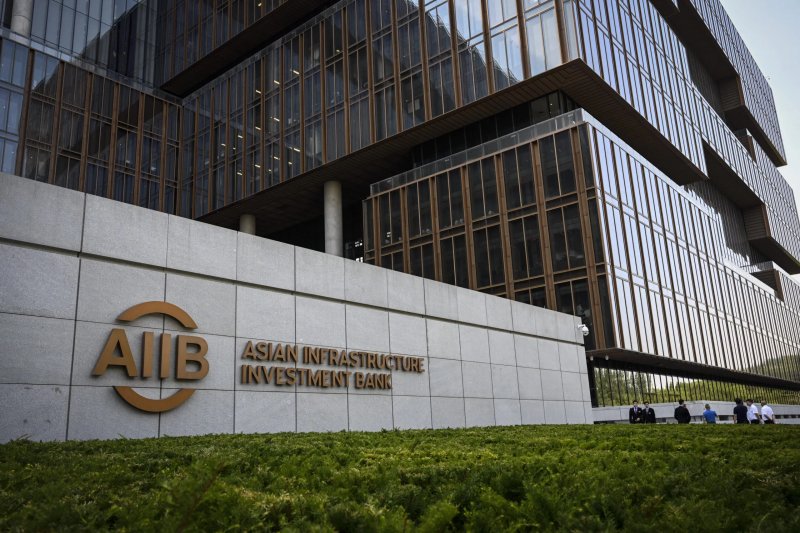
This patience is reflected in a foreign policy model that can be described as “leadership through participation rather than domination.” China avoids rhetoric that would place direct responsibility on it for global stability or the resolution of every crisis. Instead, it expands influence through institutions: it created the Asian Infrastructure Investment Bank (AIIB), actively promotes BRICS+, and advances its initiatives within the Shanghai Cooperation Organization (SCO). Rather than dismantling existing systems such as the IMF or the World Bank, China builds parallel ones in which it plays a central role, offering alternatives without direct confrontation.

Photo: African Business
The economic dimension of this strategy is its cornerstone. The ambitious Belt and Road Initiative (BRI) is neither aid nor charity, but a tool for creating interdependence. China becomes an indispensable economic partner, creditor, and builder for dozens of countries across Asia, Europe, and Africa. Such influence is more resilient and less costly than a military presence.
At the same time, domestically, China is engaged in a massive restructuring of its economy, shifting from an export- and investment-driven growth model to one based on domestic consumption and high technology (“dual circulation”). Addressing internal challenges such as enormous debt, an aging population, environmental stress, and technological competition with the West requires focus and resources. Global leadership in the classical, American sense implies enormous costs: maintaining military bases worldwide, sustaining alliances, and intervening in regional conflicts. For China, these costs currently outweigh the potential benefits.
A crucial element of Beijing’s strategy is the deliberate avoidance of the “Thucydides Trap” — the fatal conflict between a rising power (China) and an established hegemon (the United States). An open declaration of global leadership would directly challenge Washington and could accelerate confrontation. Instead, China has chosen a path of asymmetric competition. It does not (yet) seek to match the United States in aircraft carrier strike groups, but it actively develops cyber capabilities, artificial intelligence technologies, and its space program. It expands its presence in Africa, Latin America, and Central Asia — regions that have traditionally been on the periphery of Western attention. This is a strategy of circumvention rather than frontal assault.
Moreover, China recognizes that in the 21st century the very concept of leadership is changing. The world is becoming more fragmented; networks matter more than hierarchies. The formal title of “global leader” brings not only privileges but also immense responsibility, criticism, and the obligation to solve others’ problems. It is far more advantageous to be a key, indispensable player in critical domains: supply chains, high-tech manufacturing, and development financing. China seeks to control the “arteries” of the global economy rather than govern the entire “political map.”
Naturally, this path is not without challenges and contradictions. Rising nationalist sentiment within China puts pressure on the leadership to pursue a tougher, more overtly “great power” foreign policy. Territorial disputes in the South China Sea and around Taiwan remain potential flashpoints that could force Beijing into more assertive actions. Growing distrust among neighbors — India, ASEAN countries, and the European Union — drives them to seek counterbalances to Chinese influence, pushing them back toward the United States.

Photo: Reuters
Thus, China’s reluctance to rush into donning the mantle of global leader is not a sign of uncertainty, but the highest form of strategic confidence. It is a choice in favor of a long game, where influence accumulates gradually through economic interdependence, institutional construction, and technological sovereignty. China is not rejecting leadership; it is redefining it on its own terms — not as unilateral domination, but as the position of a central power within a multipolar network, where real authority is measured not by the volume of declarations, but by the depth of connections and the ability to set the rules in critical areas.
In this sense, China is already an architect of an alternative world order, preferring to build it quietly, brick by brick, without advertising the final blueprint. Its goal is not to lead the existing world, but to gradually create a new one in which its values and interests are embedded in the very fabric of global governance. For that purpose, haste is indeed counterproductive.
By Asif Aydinli

