Frugal fashion: When did cheap become cool?
We all know that some clothing is expensive but believe it or not, cheap is in.
Apparently, some young people are putting cheap clothing on their holiday wish lists from companies like Amazon or Shein.
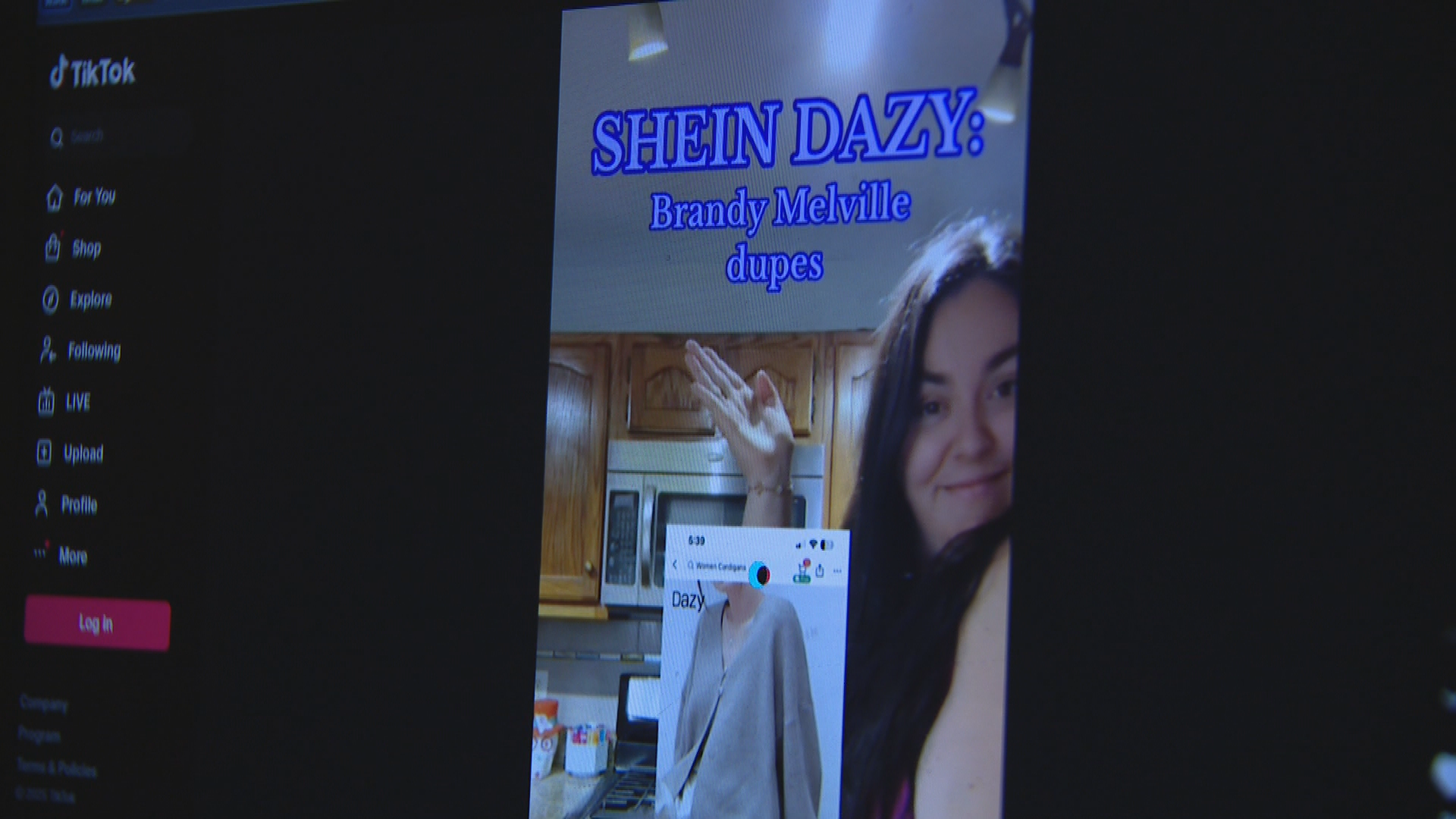
Lacoste, Aeropostale, the North Face, Hollister, and Brandy Melville were the must-have brands of years past for some.
NBC 10’s Emily Volz reports that frugal but fashionable traces its origins to the pandemic.
These days, designers are still cool. But cool doesn’t have to be expensive.
So, what changed within the last few years to make a $15 dupe something that’s suddenly sought after?
“I think it really took off during COVID,” said Sara Jablon-Roberts, a fashion and merchandising educator.
“I think the shift happened with COVID,” echoed Dominick Miserandino, the CEO of RTM Nexus. “COVID kicked in and we all discovered the joy of ordering online.”
“And during COVID, beauty was an easy thing to buy and to play with, but some of these beauty brands are very expensive,” said Jablon-Roberts.
Jablon-Roberts said the rise of dupe culture really started with the beauty industry and the rise of influencer marketing.
“Influencers have found that finding the right dupe is a shortcut to virality,” she said.
“We’re in a social world too, so you’re going to see a lot of people seeing these goods instantaneously — seeing their friend in Canada or their friend in England ordering a good from Temu and saying, ‘Wait a minute. Can I do that?'” Miserandino said.
Add to that, the fact that consumer costs have climbed roughly 25% since the start of the pandemic, according to a Bankrate analysis of Bureau of Labor Statistics data.
“Everybody needs to save money,” Jablon-Roberts said.
In five years, is it going to be cool to say I got it for $5 on Amazon?
“I think that factor you’re going to see more, because economy — ‘It’s the economy, stupid’ is the old political phrase,” Miserandino said.
You may also be wondering about luxury retailers. Don’t they hate these knockoffs?
Not necessarily.
Because young consumers have come to see those brand-name items as something to aspire to, they will often splurge on them, once they have the resources.