Published on
November 18, 2025
By: Tuhin Sarkar
The United States joins Germany, Australia, and the UK in facing unprecedented employee layoffs due to the drastic decline in the tourism industry. This shocking trend has resulted in significant economic strains across these countries, as major players in the travel, airline, and hospitality sectors have been forced to cut thousands of jobs. The tourism industry has taken a massive hit, and employee layoffs are now a growing reality. As economic strains worsen, the ripple effects are being felt worldwide. Stay with us as Travel And Tour World reveals the latest updates on this developing crisis.
In 2025, the once-booming airline, travel, cruise, and hotel industries are facing a disastrous wave of employment layoffs and cost-cutting strategies. The US, United Kingdom, and Germany have become the epicentres of these layoffs, where companies are slashing jobs at an unprecedented rate. But why is this happening? What does this mean for global workers, and how can we navigate the storm? Buckle up as we dive into this controversial issue and uncover the shocking reasons behind the massive job cuts, from labour disputes to economic strains.
A Global Layoff Crisis: What’s Happening in the US, UK, and Germany?
In 2025, the United States is facing an employment crisis in the airline, hotel, and travel industries. The US has seen some of the most significant cost-cutting measures, as companies like Southwest Airlines and American Airlines have announced massive layoffs. These airlines are laying off at least 15% of their corporate workforce, with thousands of employees losing their jobs. In the US hotel sector, Marriott International has also taken drastic steps to cut its workforce by over 800 positions. This isn’t just a US problem; the United Kingdom and Germany are also feeling the pressure, with labour disputes intensifying and workers in travel and hospitality facing harsh cuts.
Why Are Airlines, Hotels, and Cruise Sectors Cutting Jobs?
The airline, hotel, and cruise industries are some of the most affected by this wave of employment layoffs. The reasons behind these drastic decisions are complex but mainly boil down to economic pressures and the need for cost-cutting. The pandemic-induced boom in travel led to rapid hiring, but now the industry faces a slowdown in consumer demand and reduced revenue. Airlines, like American Airlines, are struggling with fuel price hikes, inflation, and a decline in post-pandemic travel. To cope, they are opting for employee layoffs, restructuring, and outsourcing jobs to cut costs. In the United Kingdom, the tourism and hotel sector is also grappling with declining revenue growth and employee reductions due to weaker-than-expected performance in the industry.
United States: Ground Zero for Massive Layoffs
The United States stands out as the hardest-hit country in terms of employment layoffs in the airline, hotel, and travel sectors. The scale of the cuts is staggering, with Southwest Airlines alone cutting approximately 1,750 jobs due to restructuring. American Airlines, which has already cut thousands of jobs, plans to eliminate more than 5,000 positions as part of its cost-cutting strategy. What’s more, these mass layoffs don’t just affect airlines. The hotel industry is also feeling the heat, with Marriott International announcing layoffs of over 800 employees. The US is facing an economic crisis, and the labour disputes between workers and employers are reaching new levels of intensity. Workers are fighting for job security, but it seems the economic pressures are forcing companies to make ruthless decisions.
Germany’s Struggle: A Surge in Airline Job Cuts
In Germany, the labour dispute over job cuts has reached a boiling point. The Lufthansa Group has plans to eliminate around 4,000 administrative roles over the next few years. This is part of a broader strategy to trim costs and boost efficiency in an ever-tightening economic climate. The reality is that German workers, especially those in the travel and airline sectors, are under attack. The German economy has been under pressure due to increasing energy costs, inflation, and a decrease in consumer spending. The Lufthansa job cuts are not just numbers; they represent the wider trend in the industry as companies globally turn to labour reductions to stay afloat. Germany’s airline sector is now in crisis mode, as workers and unions challenge the growing wave of layoffs.
The UK Faces Tough Challenges in Travel and Hospitality Employment
Across the United Kingdom, the travel, hotel, and tourism sectors are undergoing a massive transformation. As the UK continues to face economic challenges, the hospitality industry has been hit hard by reduced travel demand, rising operational costs, and unemployment. Companies in the hotel and leisure sector, such as Hyatt Hotels, have had to lay off employees to survive. Labour disputes in the UK are escalating, and employees are protesting the cuts and job reductions. For instance, hotel chains are downsizing, while tourism companies face declining sales due to a decrease in international visitors. It is clear that the UK is struggling with the same issues plaguing the US and Germany, leading to widespread cost-cutting measures that have seen thousands of workers laid off.
The Impact of Labour Disputes and Employment Layoffs
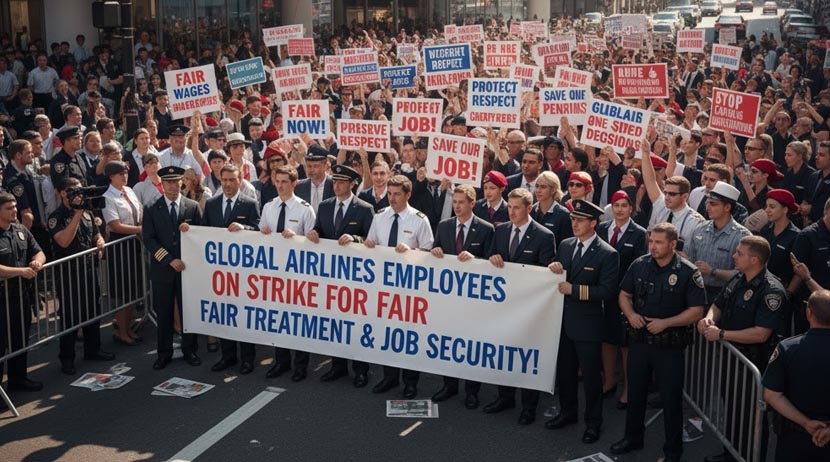
The labour dispute surrounding these employment layoffs is a global issue, particularly in the US, UK, and Germany. As workers fight back against these cuts, they are finding themselves in a tense battle for job security. Unions are stepping up to demand better conditions, wages, and job protection, but it seems that the cost-cutting fever sweeping across the globe is making it increasingly difficult to win these battles. Labour disputes are more intense than ever, with workers on the front lines, fighting for their livelihoods while companies cite economic downturns and revenue loss as justifications for their decisions. The issue of employment layoffs is no longer just about jobs—it’s about the future of industries and the livelihoods of millions of people across the world.
What’s Next? The Future of Employment in Travel and Hospitality
The future of employment layoffs in the airline, hotel, and travel sectors is uncertain. With the ongoing economic strain, it’s highly likely that cost-cutting measures will continue to be a dominant strategy for companies. Airlines, in particular, are struggling with fluctuating fuel prices and a slowing recovery post-pandemic. Meanwhile, the hotel sector faces an uncertain future as global travel demand continues to be unpredictable. The US, Germany, and United Kingdom will need to adapt quickly if they hope to keep their industries competitive while maintaining employment standards. Workers will need to fight back against the tide of job cuts, but with economic uncertainty looming, the battle for job security is becoming increasingly difficult.
A Shocking Shift in the Global Job Market
The landscape of the global job market in the airline, hotel, and travel sectors has dramatically shifted in 2025. Employment layoffs are not just numbers—they represent the lives of workers in the US, Germany, and the UK, who are fighting to keep their jobs amid labour disputes and cost-cutting measures. With these industries facing economic downturns, employment layoffs are expected to continue, reshaping the future of travel and hospitality in these countries. As we look ahead, it’s clear that the battle between workers and employers will only intensify. Labour disputes will continue to dominate the headlines, as the global economy tries to recover from the shockwaves of these massive job cuts.