Published on
March 3, 2026

Image generated with Ai
United States, Israel and Iran have sent shockwaves through global aviation and tourism markets as escalating hostilities trigger sharp oil price spikes and widespread Middle East airspace closures, forcing airlines to reroute or suspend hundreds of flights and pushing investor confidence lower across major carriers including Emirates, Qatar Airways and Lufthansa. With jet fuel accounting for roughly a quarter of airline operating costs and Dubai International Airport alone handling more than ninety-five million passengers last year, even short-term disruptions carry massive financial consequences for airlines and hospitality giants such as Hilton, Marriott and Accor that depend on steady international arrivals. Major Gulf hubs have faced operational constraints, alternative routes between Europe and Asia have lengthened flight times, and ticket prices on unaffected corridors have surged as travelers scramble for seats, creating one of the most significant aviation stress tests since the pandemic era. For tourists planning trips between the United Kingdom, India, Europe and the Middle East, the rapidly evolving situation is reshaping flight options, hotel availability and travel budgets in real time, turning a geopolitical crisis into a global travel reckoning.
United States, Israel, Iran, United Kingdom and India Shock Global Markets as Emirates, Qatar Airways and Lufthansa Stocks Slide
The escalating conflict between the United States, Israel and Iran has pushed global oil prices sharply higher and forced widespread airspace closures across the Middle East. The result is immediate pressure on airline stocks, sudden route suspensions and a ripple effect across tourism and hospitality markets from London to Mumbai. Major Gulf hubs including Dubai, Doha and Abu Dhabi have faced operational disruption, creating one of the most significant aviation shocks since the pandemic era. For travelers, airlines and hotels alike, the situation is reshaping global travel flows in real time.
United States, Israel, Iran, United Kingdom and India Disrupt Global Flight Networks as Emirates, Qatar Airways and Lufthansa Rework Schedules
Advertisement
Advertisement
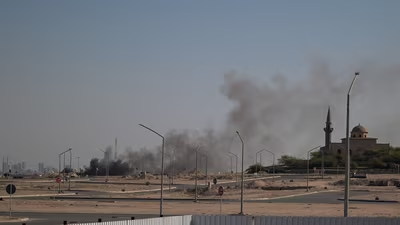
Airspace closures over Iran, Iraq and parts of the Gulf have forced carriers to reroute or suspend services. Dubai International Airport, which handled 95.2 million passengers in 2025 and is forecast to approach nearly 100 million in 2026, has faced operational constraints during peak escalation days. Doha’s Hamad International Airport and Abu Dhabi International Airport have also experienced limited operations at various points.
Emirates, Qatar Airways and Etihad Airways have adjusted flight schedules, with some services operating under special clearance while others remain paused depending on route safety. Lufthansa has suspended or rerouted select Middle East services and adjusted European connections affected by extended flight times. British Airways and Air India have similarly revised operations to avoid restricted airspace.
Advertisement
Advertisement
Rerouting around conflict zones increases flight times by up to two to three hours on some Europe–Asia routes. Longer flight paths mean higher fuel burn, tighter aircraft rotation schedules and reduced seat supply. When capacity drops suddenly, fares rise quickly.
United States, Israel, Iran, United Kingdom and India Trigger Oil Price Surge as Emirates, Qatar Airways and Lufthansa Face Fuel Cost Pressure
Jet fuel is one of the largest cost components for airlines, typically representing roughly a quarter of total operating expenses. When crude oil spikes due to geopolitical tension and concerns over Strait of Hormuz shipping flows, airline margins shrink rapidly.
Several Asian carriers, including Japan Airlines, Korean Air and Cathay Pacific, have seen stock price declines as investors react to fuel risk. Qantas has confirmed it has significant fuel hedging in place for the remainder of its financial year, yet still acknowledged the impact of sustained oil volatility. European carriers such as Lufthansa face similar exposure.
For Gulf carriers like Emirates and Qatar Airways, the dual challenge is operational disruption and cost pressure. Even with strong balance sheets, a prolonged oil rally increases per-seat operating costs and can influence fare strategies across global networks.
Airlines Feel the Shock as Global Stocks React and Capacity Tightens
Airline shares across Asia and Europe have moved lower during peak escalation days. Investors worry about rising fuel bills, route uncertainty and potential travel demand slowdowns. At the same time, paradoxically, some carriers outside the immediate conflict zone are seeing surges in bookings as passengers seek alternative routing options.
On routes such as Hong Kong to London or Sydney to London, economy inventory has tightened rapidly. Some near-term departures have shown limited availability, with premium cabins filling as last-minute travelers secure seats. This demand shift demonstrates how quickly global travel flows adjust when major transit hubs are disrupted.
Dubai, Doha and Abu Dhabi: Tourism Hubs at the Center of the Storm
Dubai remains one of the world’s most visited cities. The emirate recorded nearly 19.6 million international overnight visitors in 2025, underscoring its reliance on seamless air connectivity. When airspace restrictions disrupt schedules, inbound tourism is immediately affected.
Hotels across Dubai, including properties operated by Hilton, Marriott, Accor and IHG, face a two-way impact. On one hand, new arrivals may cancel or postpone trips. On the other, stranded passengers often extend stays, temporarily boosting occupancy near airport zones and central districts.
Luxury brands such as Jumeirah, Atlantis and international chains like Hyatt and Radisson may see short-term volatility in booking patterns. Conference and exhibition travel is particularly sensitive, as MICE events depend on predictable flight access.
United Kingdom and India: Key Markets Facing Travel Disruption
The United Kingdom and India rank among the largest source markets for Dubai and Gulf destinations. Strong VFR, business and leisure flows connect London, Manchester, Mumbai, Delhi and other major cities to Gulf hubs daily.
When flights are suspended or rerouted, thousands of travelers must rebook. Alternative connections through Southeast Asia or Europe can lengthen journeys significantly. For Indian travelers, especially those connecting onward to North America via Gulf hubs, disruptions create cascading delays. For UK travelers, limited seat availability and higher fares can increase trip costs substantially.
Air India, British Airways and Virgin Atlantic have adjusted schedules to accommodate new routing requirements. Travelers should expect longer travel times and potential stopovers in secondary hubs.
Germany, France and Europe: Lufthansa and Continental Connectivity Under Pressure
Lufthansa, Air France-KLM and other European carriers have modified Middle East operations to prioritize crew safety and regulatory compliance. Extended flight times strain crew duty limits, sometimes forcing additional cancellations even on non-Gulf sectors.
For European travelers planning trips to Asia, Australia or the Middle East, rerouting via alternative corridors such as Central Asia or southern Europe may be required. This operational complexity adds unpredictability to travel plans.
Hospitality Giants Hilton, Marriott and Accor Navigate Volatility
Hilton operates more than 7,000 properties globally, with a strong presence across the Middle East and Europe. Marriott International manages over 8,500 hotels worldwide, while Accor maintains extensive operations across luxury and midscale segments in Gulf markets.
In times of aviation disruption, hotel groups activate flexible booking policies. Many properties near major airports accommodate extended stays for stranded passengers. Revenue management teams adjust room rates dynamically based on occupancy shifts.
In Dubai and Doha, airport-adjacent hotels often see immediate spikes in occupancy during disruption periods. However, resort properties may face cancellations if inbound tourism drops sharply.
How the Oil Surge Shapes Airfares and Travel Planning
Oil price spikes directly influence airfare pricing. Airlines hedge part of their fuel exposure, but not all costs are locked in. If crude prices remain elevated for weeks, carriers may introduce fuel surcharges or adjust fare classes.
Travelers planning long-haul journeys between Europe and Asia should book early and monitor airline notifications closely. Flexible tickets provide added security during volatile periods. Premium cabins may fill quickly as business travelers seek assured connections.
Airline Strategy: Hedging, Rerouting and Capacity Management
Qantas has publicly noted strong fuel hedging coverage for its financial year. Japan Airlines has indicated possible adjustments to fuel surcharges on international tickets. These measures are designed to manage cost spikes without immediate drastic fare hikes.
Gulf carriers, known for widebody fleets including Airbus A380 and Boeing 777 aircraft, must manage aircraft utilization carefully. Longer sectors reduce the number of daily rotations, tightening capacity even if flights operate.
Lufthansa and other European airlines are balancing network integrity with safety and regulatory compliance. Some services to the Middle East remain suspended until airspace stability improves.
Tourism Confidence: Short-Term Shock, Long-Term Resilience
Historically, major hubs like Dubai have demonstrated resilience following geopolitical disruptions. The city’s diversified source markets and global brand appeal often drive rapid recovery once flight operations normalize.
The United Arab Emirates continues to position itself as a safe, well-regulated aviation environment. Airport authorities coordinate closely with airlines and international regulators to resume services safely when conditions allow.
Travel Tips for Tourists Navigating the Current Disruption
Check airline notifications before heading to the airport. Do not assume a flight will operate without confirmation. Allow extra connection time if rerouted. Keep all receipts for accommodation and meals if stranded, as compensation policies may require documentation.
Consider comprehensive travel insurance covering trip interruption. Flexible hotel bookings offer peace of mind. Monitor embassy advisories when traveling through affected regions.
If transiting via Dubai, Doha or Abu Dhabi, confirm whether transit visas are required if you need to exit the airport unexpectedly. Carry essential medications and personal items in cabin baggage in case of overnight delays.
India, Saudi Arabia, China and Italy: Markets to Watch
India and Saudi Arabia generate significant traffic flows into Gulf hubs. China has been one of the fastest-growing recovery markets post-pandemic. Italy and Egypt have shown double-digit growth in certain segments.
Any prolonged airspace disruption could temporarily slow inbound flows from these countries. However, pent-up demand often rebounds quickly once schedules stabilize.
Financial Markets Signal Caution but Travel Demand Persists
Airline stock declines reflect investor concern about rising costs and operational risks. Yet passenger demand remains strong on alternative routes. This dual dynamic highlights the complexity of modern aviation economics.
Travelers are adapting rapidly. Digital booking platforms show dynamic pricing adjustments within hours of major announcements. Hospitality groups deploy real-time revenue management systems to respond to occupancy shifts.
Looking Ahead: What Tourists Should Expect
Short-term volatility is likely to continue while geopolitical tensions persist. Oil markets remain sensitive to developments affecting shipping lanes and production flows. Airlines will continue to adjust schedules based on safety assessments.
For tourists, flexibility is the key advantage. Booking refundable fares, monitoring route updates and choosing reputable hotel brands with strong guest support systems can reduce stress.
Despite the turbulence, global travel demand remains robust. Major events, business travel and leisure tourism continue to drive bookings. Once airspace restrictions ease, airlines are expected to restore capacity quickly, particularly on high-demand corridors linking the United Kingdom, India, Europe and the Gulf.
The current disruption underscores how interconnected global aviation has become. A conflict in one region can reshape flight paths, hotel occupancy and tourism economics worldwide within days. Yet history suggests that major travel hubs rebound once stability returns.
United States, Israel and Iran have jolted global aviation as oil prices surge and Middle East airspace closures disrupt major hubs like Dubai and Doha, pressuring airlines including Emirates, Qatar Airways and Lufthansa. As flight routes lengthen and fares fluctuate, hotel giants such as Hilton, Marriott and Accor brace for sudden shifts in international tourist flows.
For now, vigilance, flexibility and informed planning remain the smartest tools for travelers navigating this rapidly evolving landscape.